
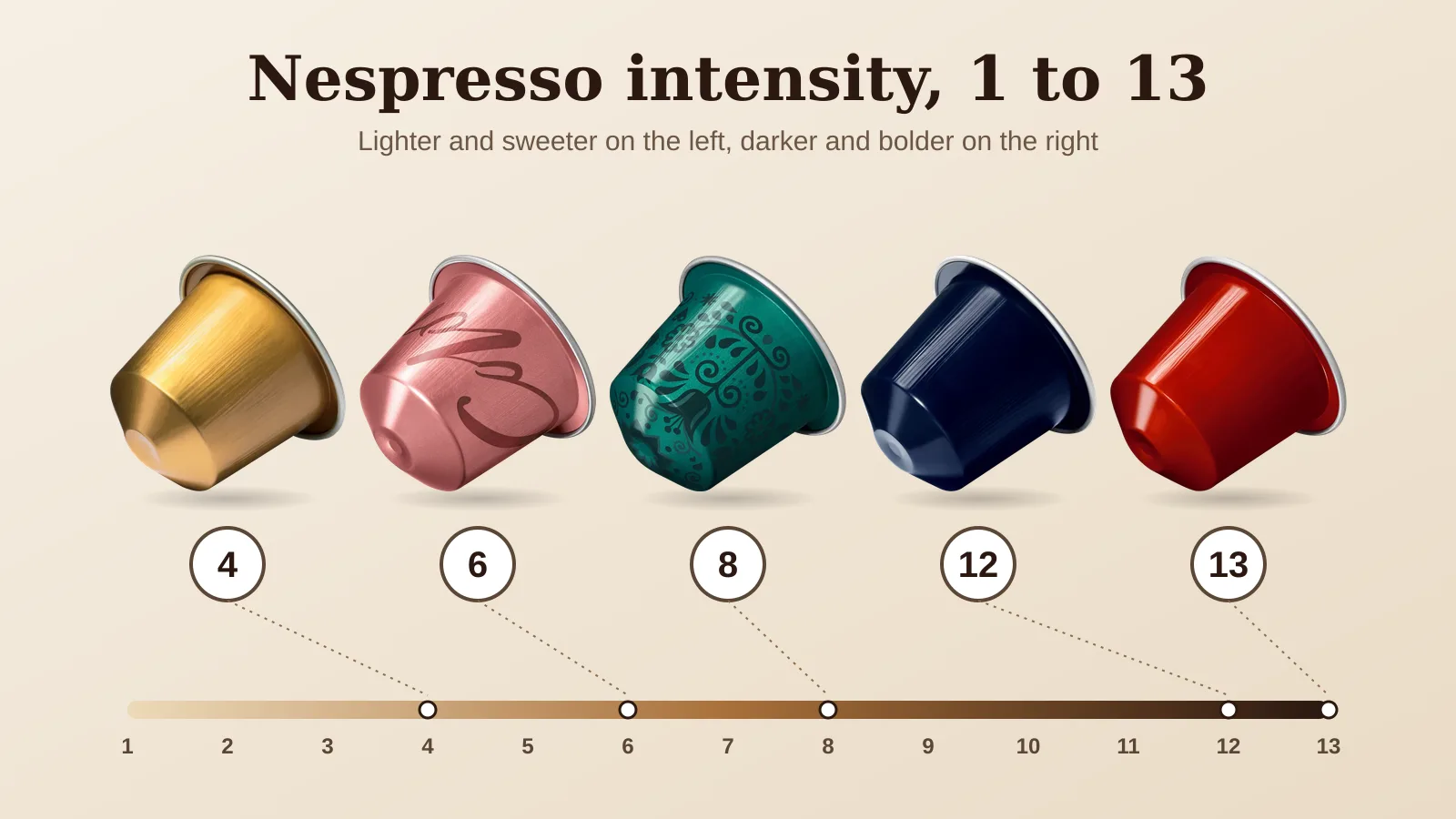

Nespresso intensity chart: what each number means
1–4
5–7
8–10
11–13
1–4
- What to expect
- Light, delicate, often sweet or floral
- Original examples
- Volluto (4)
5–7
- What to expect
- Balanced, rounded and easy to drink
- Original examples
- Colombia (6), Vienna Lungo (6), Tokyo Lungo (6)
8–10
- What to expect
- Roasty and full, with more bitterness
- Original examples
- Stockholm Lungo (8), Arpeggio (9)
11–13
- What to expect
- Dark, dense and bold; stands up to milk
- Original examples
- Napoli (13)
| Intensity | What to expect | Original examples |
|---|---|---|
| 1–4 | Light, delicate, often sweet or floral | Volluto (4) |
| 5–7 | Balanced, rounded and easy to drink | Colombia (6), Vienna Lungo (6), Tokyo Lungo (6) |
| 8–10 | Roasty and full, with more bitterness | Stockholm Lungo (8), Arpeggio (9) |
| 11–13 | Dark, dense and bold; stands up to milk | Napoli (13) |
Where the current pods sit on the scale
Original
Intensity 1–4
Intensity 5–8
Intensity 9–13









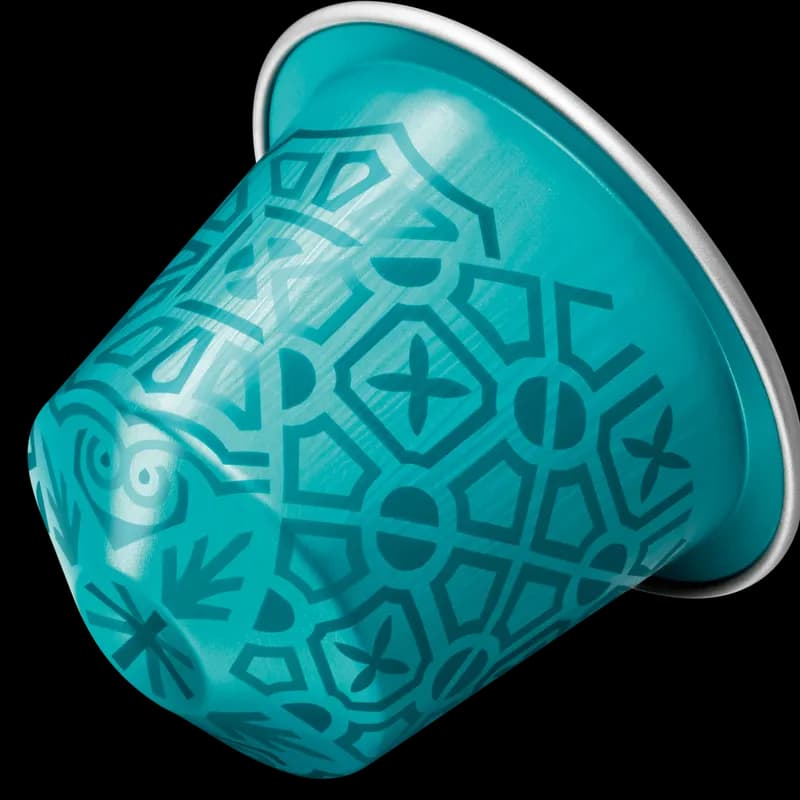


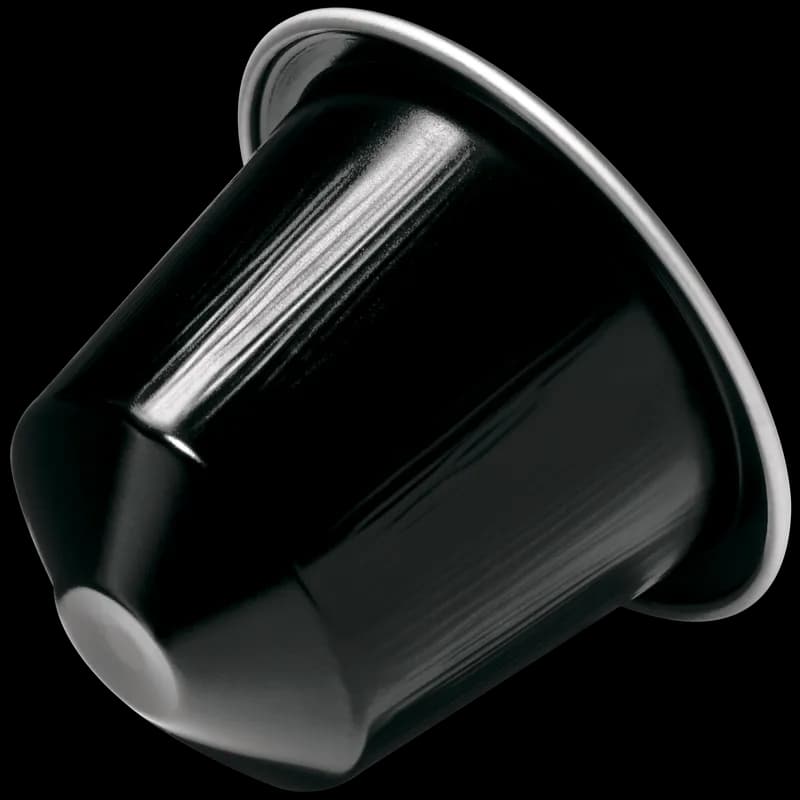


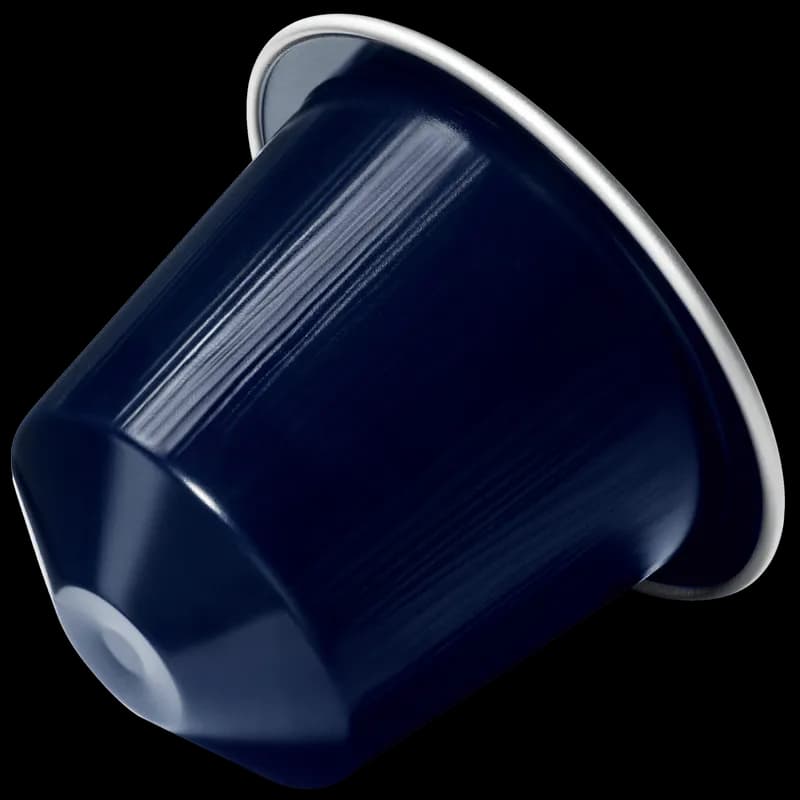

Vertuo
Intensity 1–4
Intensity 5–8
Intensity 9–13
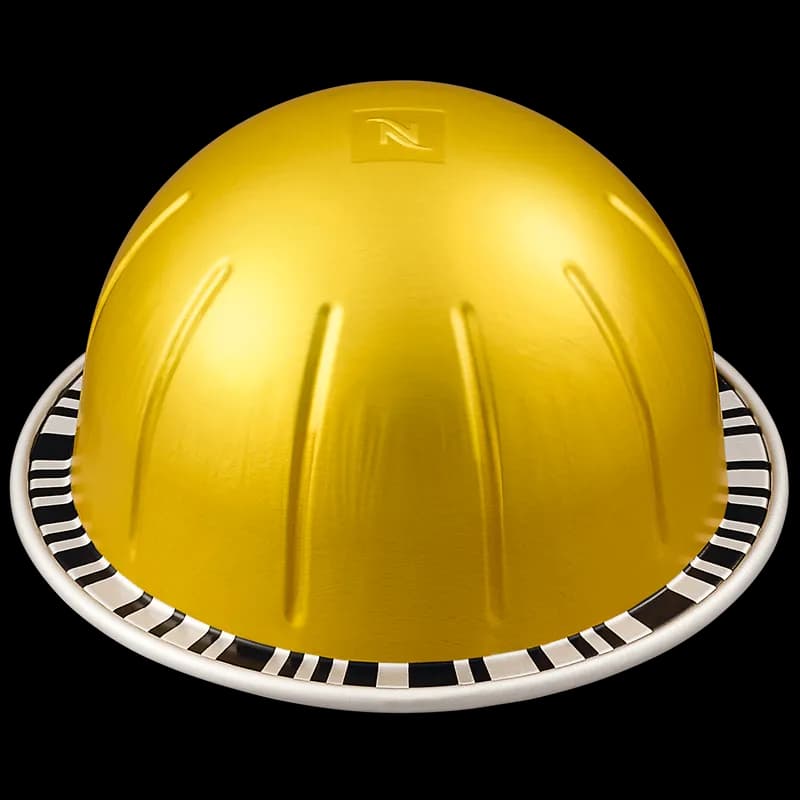

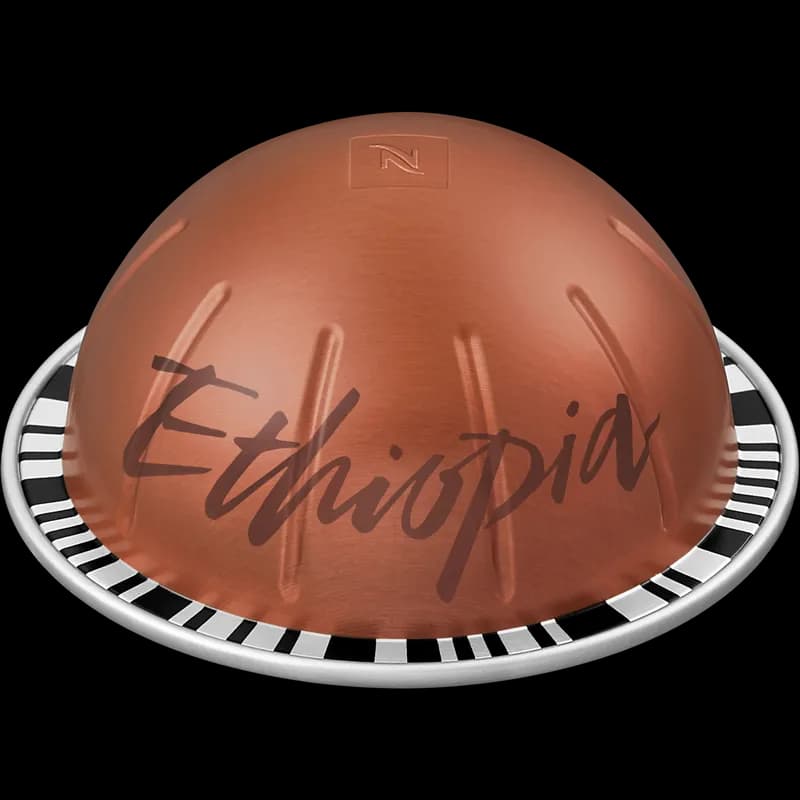
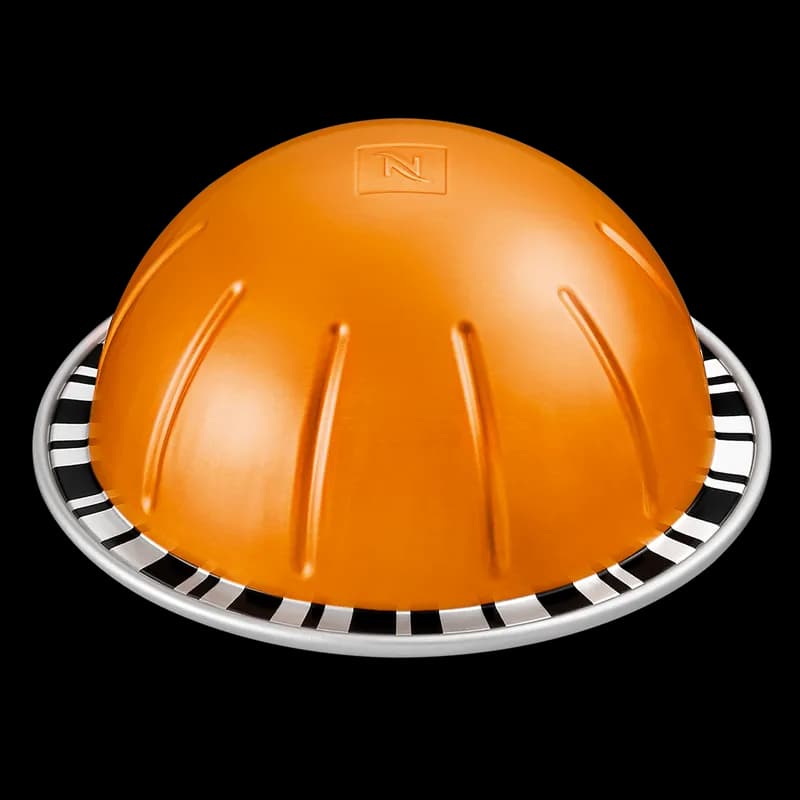
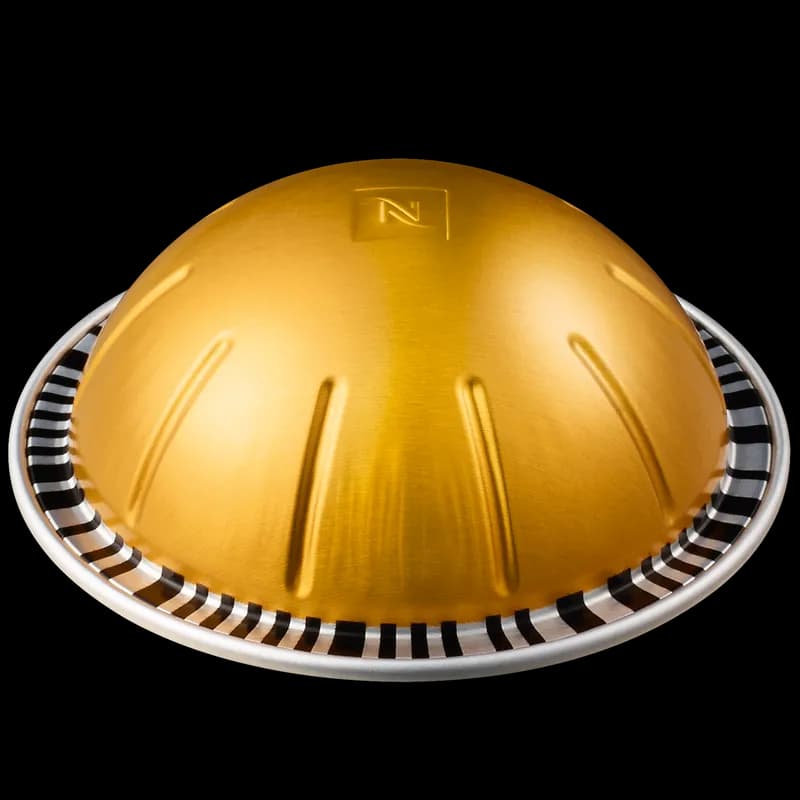


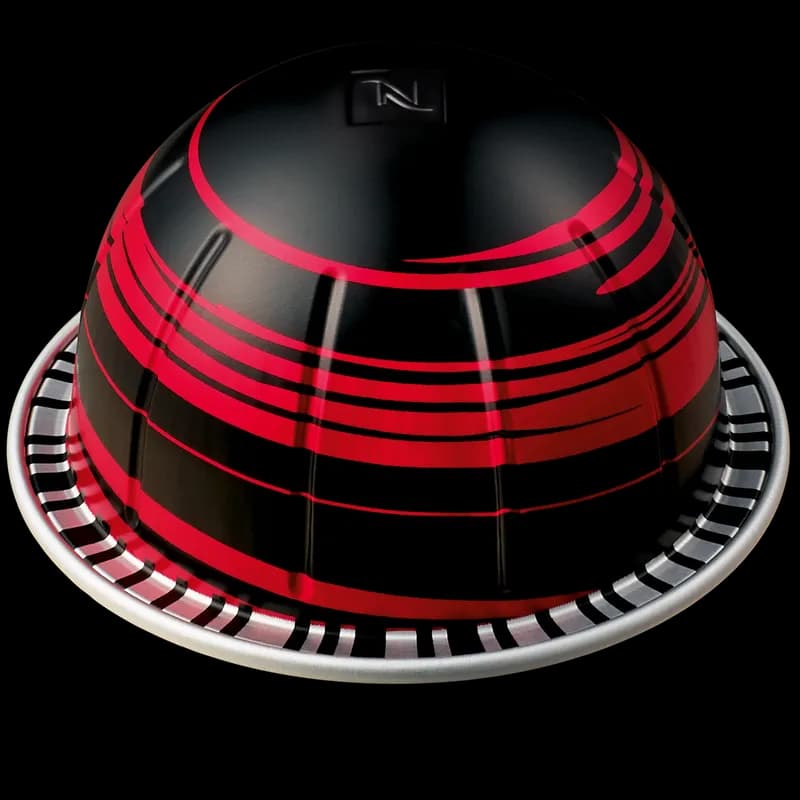

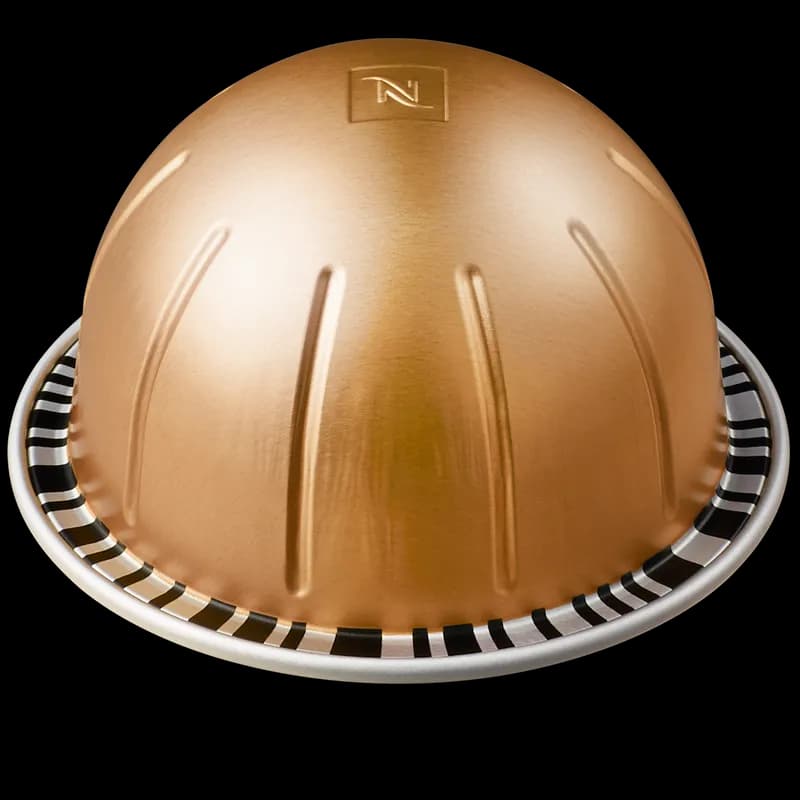
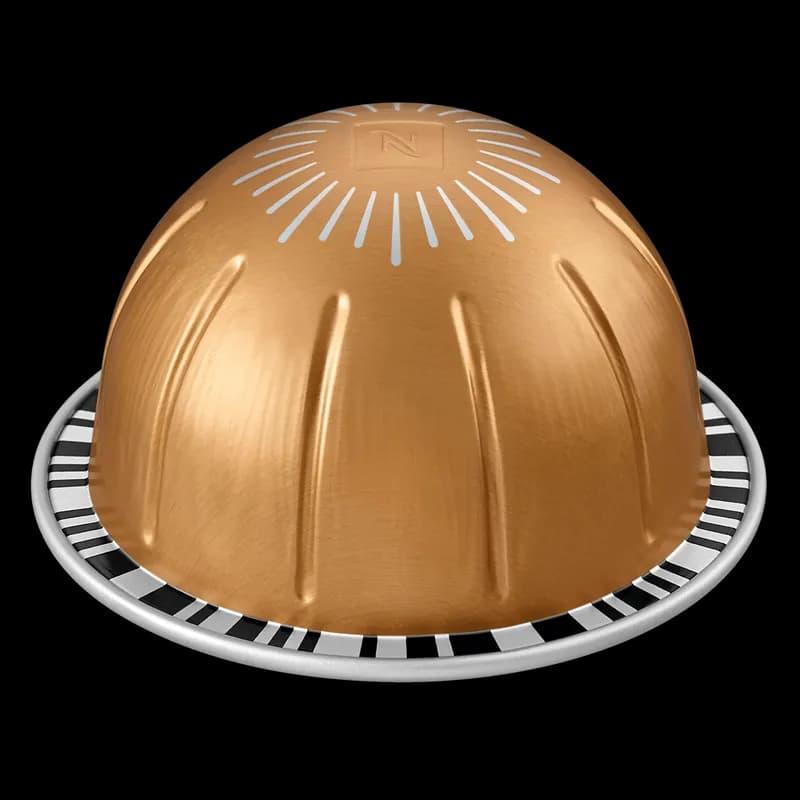


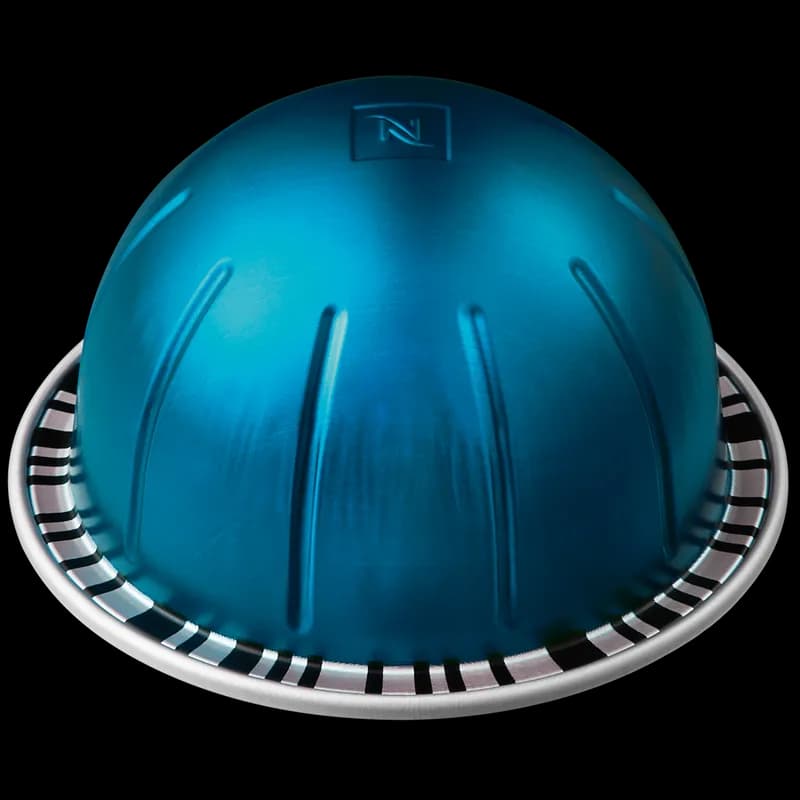

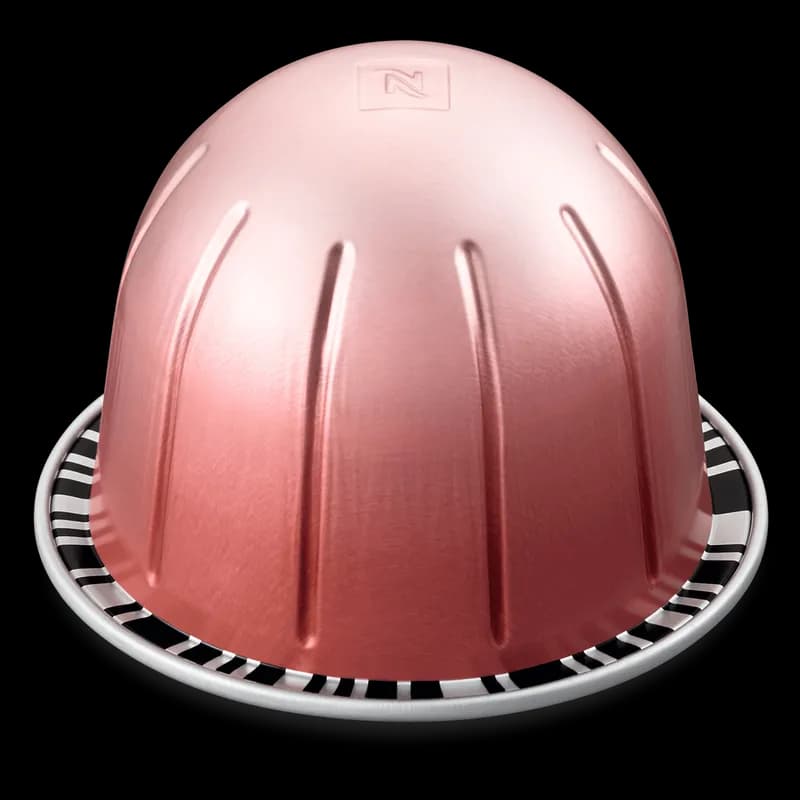

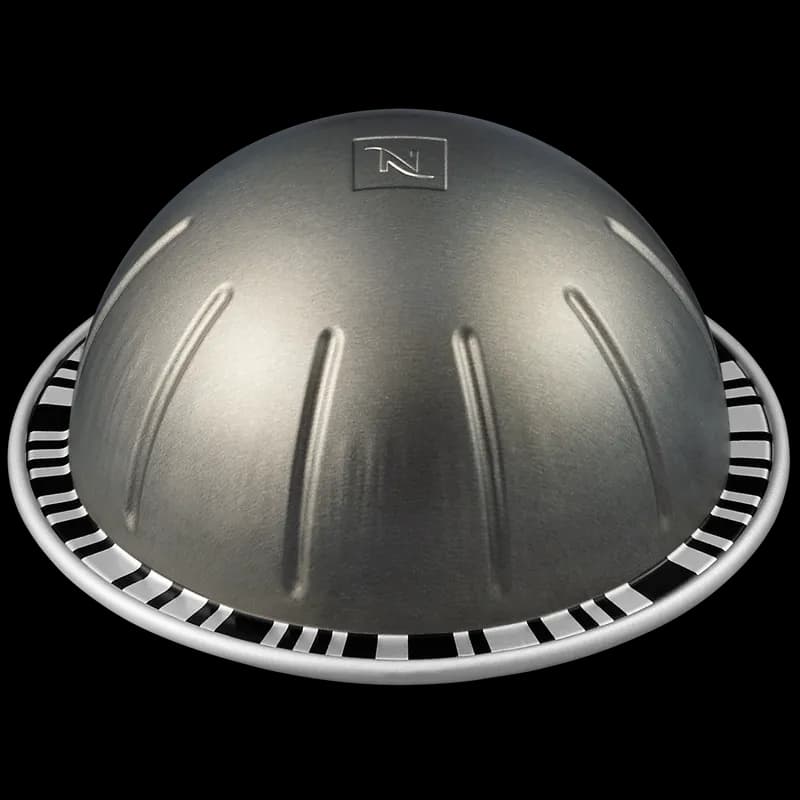
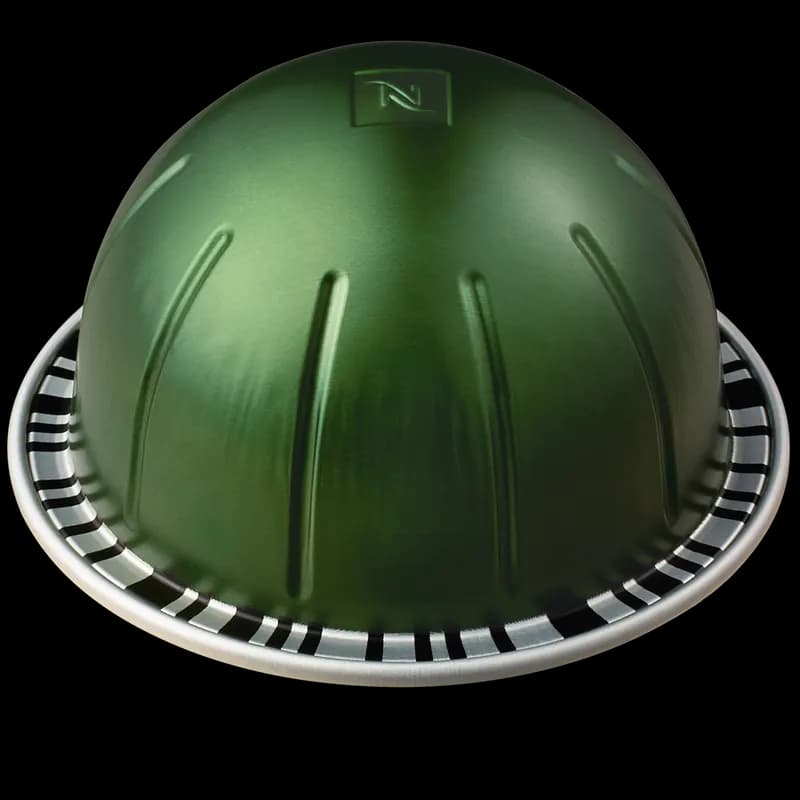
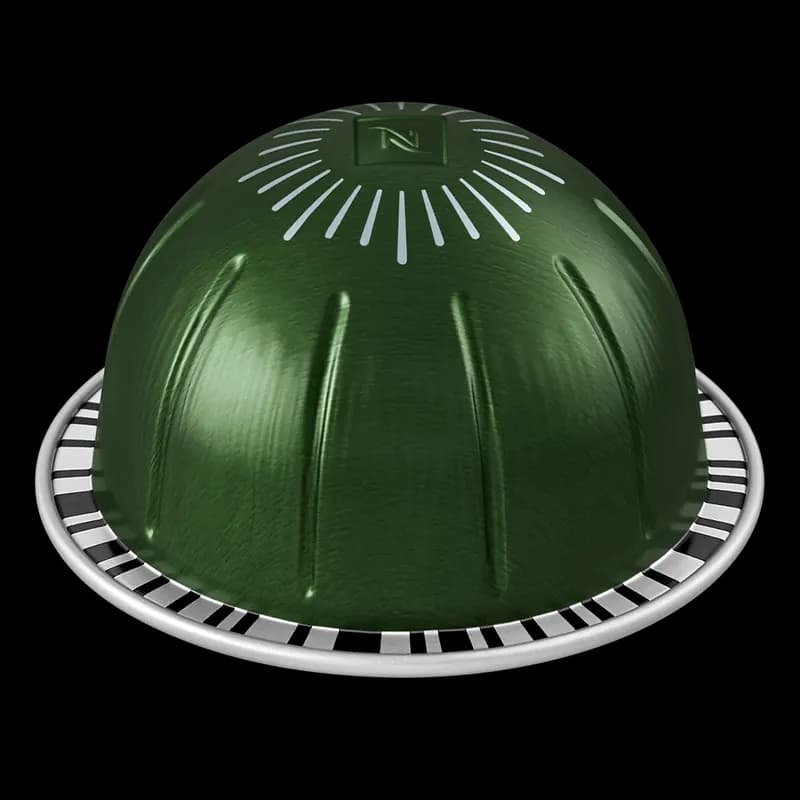
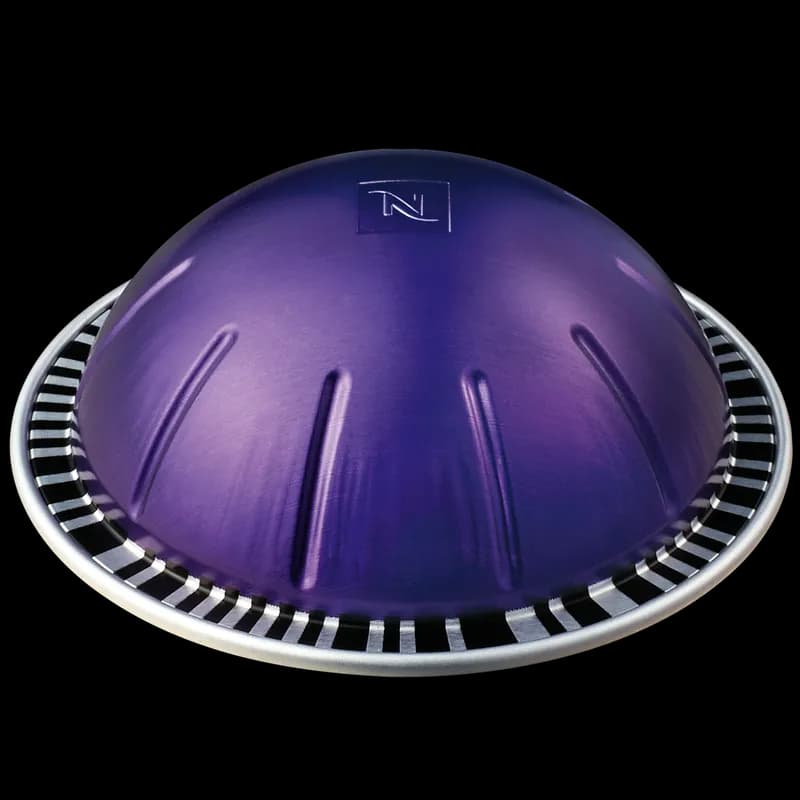
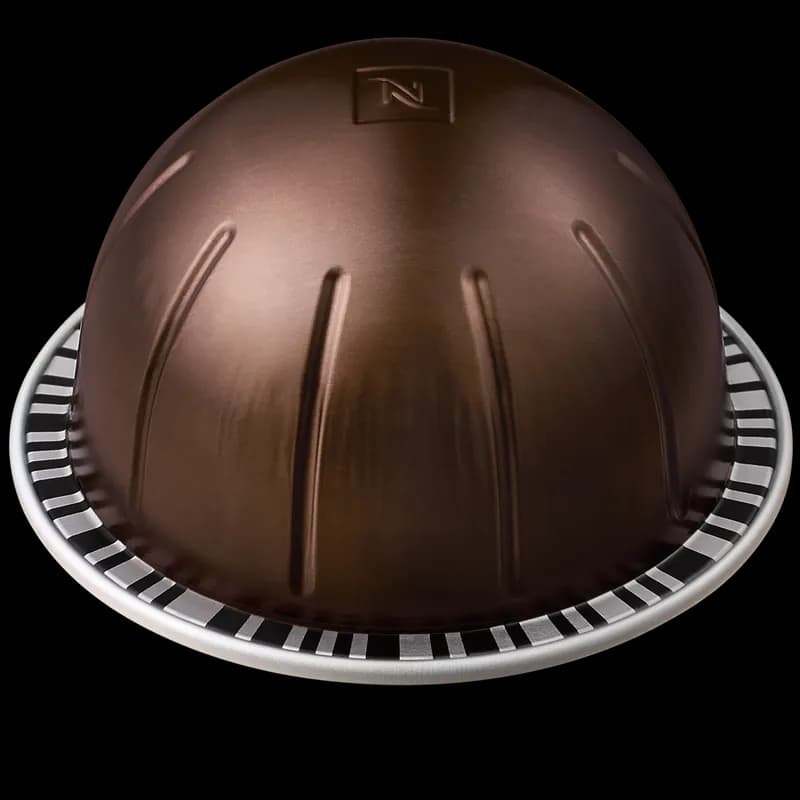


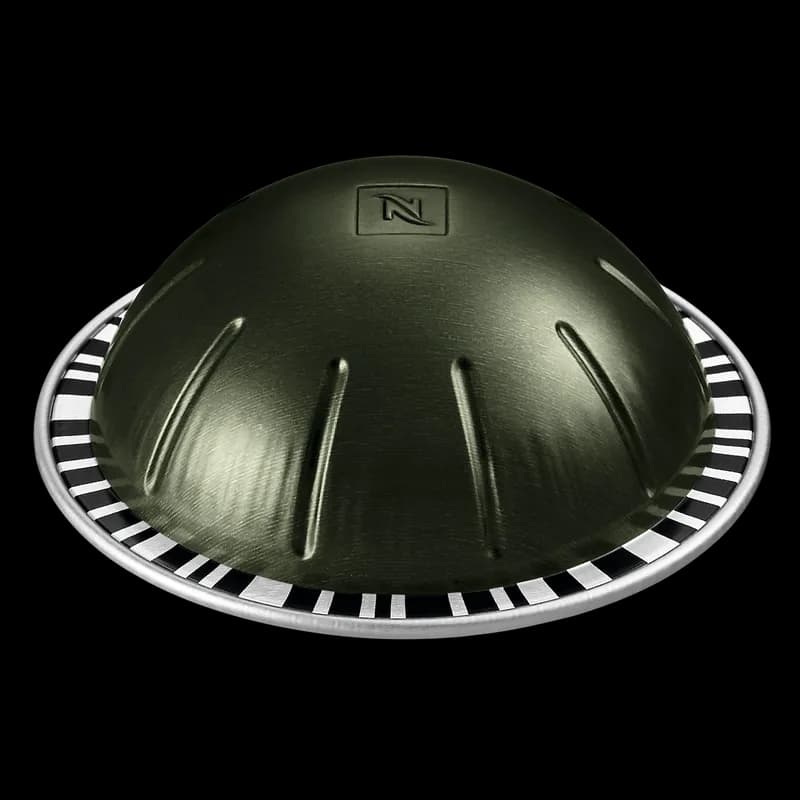
These ranges are our reading of Nespresso's published numbers. Nespresso itself groups the scale more loosely into lighter, balanced and bolder coffees.
What the number measures, and what it does not
Nespresso says intensity reflects the body, bitterness and roast character of a coffee. A high number usually means a darker roast, a thicker body and more bitterness. A low number points to a lighter, more delicate cup.
Caffeine is a separate question. It depends on the blend and on how much coffee ends up in the cup, so an intensity 13 pod is not automatically the one with the most caffeine. If caffeine matters to you, look for the caffeine figure on the capsule's product page instead of reading it from the intensity number.
Original and Vertuo: the same idea in two systems
Original capsules show intensity as a number on a 1–13 scale. Vertuo capsules also list an intensity on their own product pages, for example Melozio 6, Odacio 7 and Stormio 8. A Vertuo coffee fills a much larger cup (7.77 fl oz / 230 ml) than a short Original espresso (1.35 fl oz / 40 ml), so the same number does not taste the same in both. Compare numbers inside one system rather than across the two, and check which system you own before you shop.
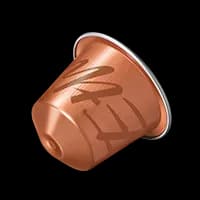
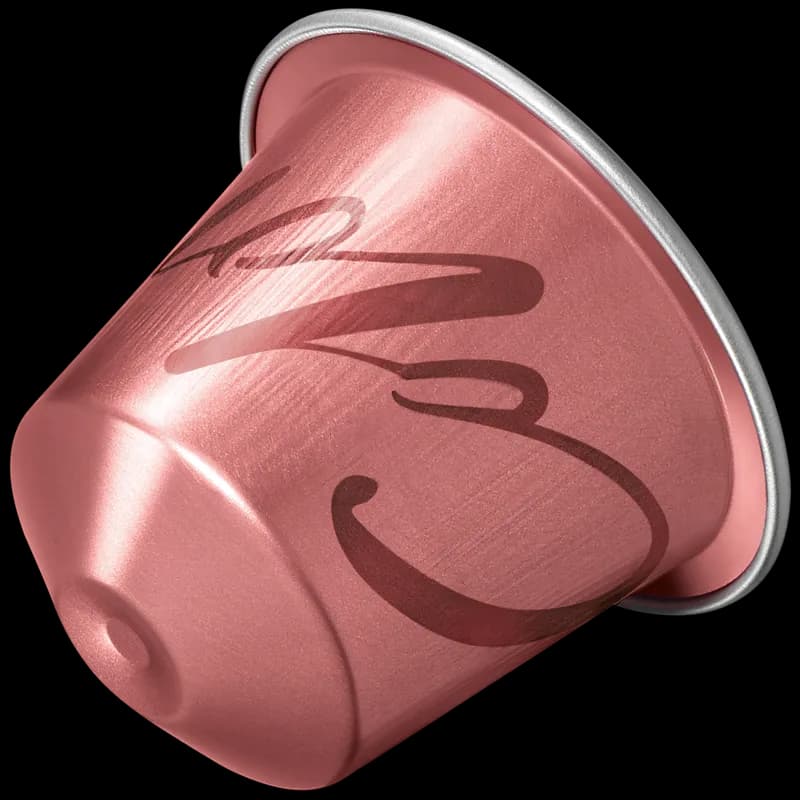
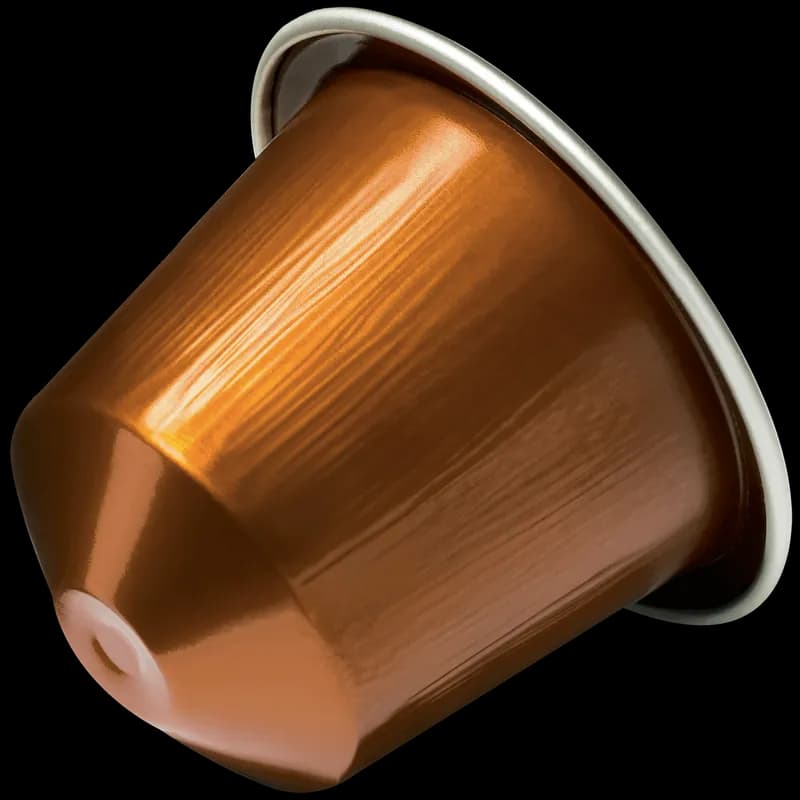
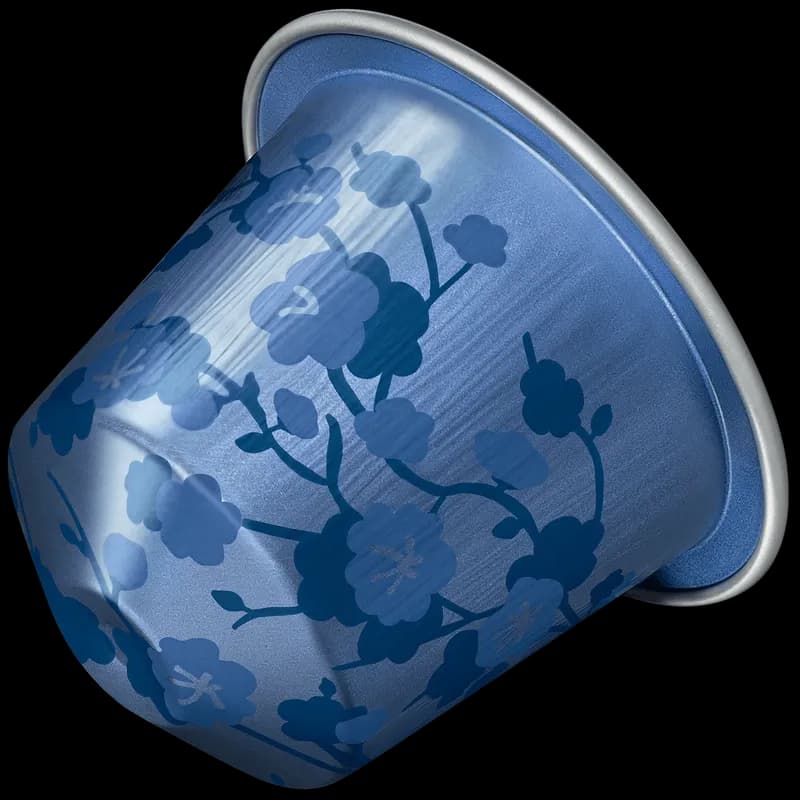
Four Original capsules across the scale
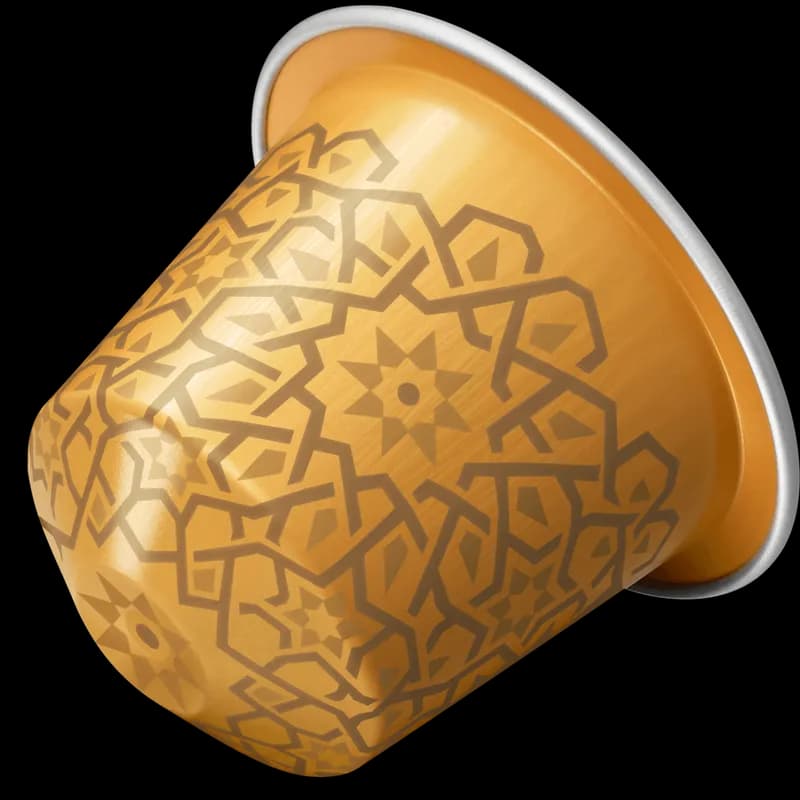
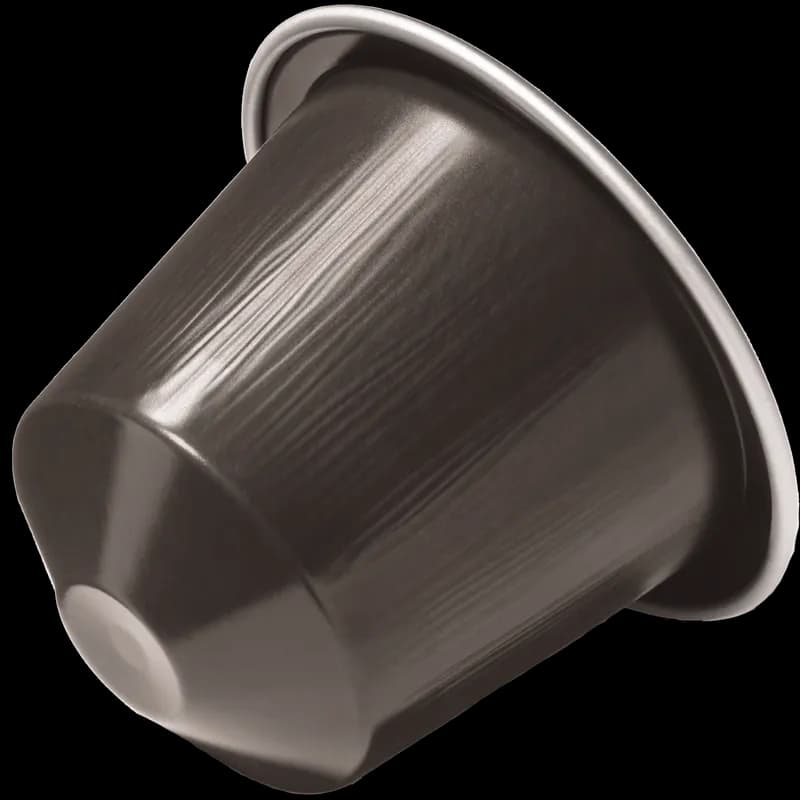
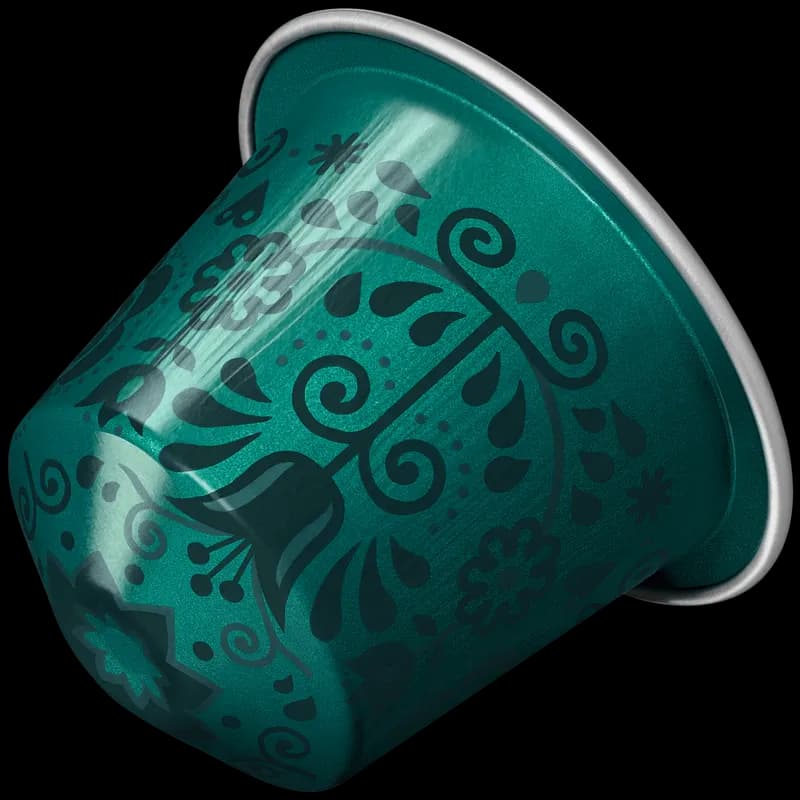
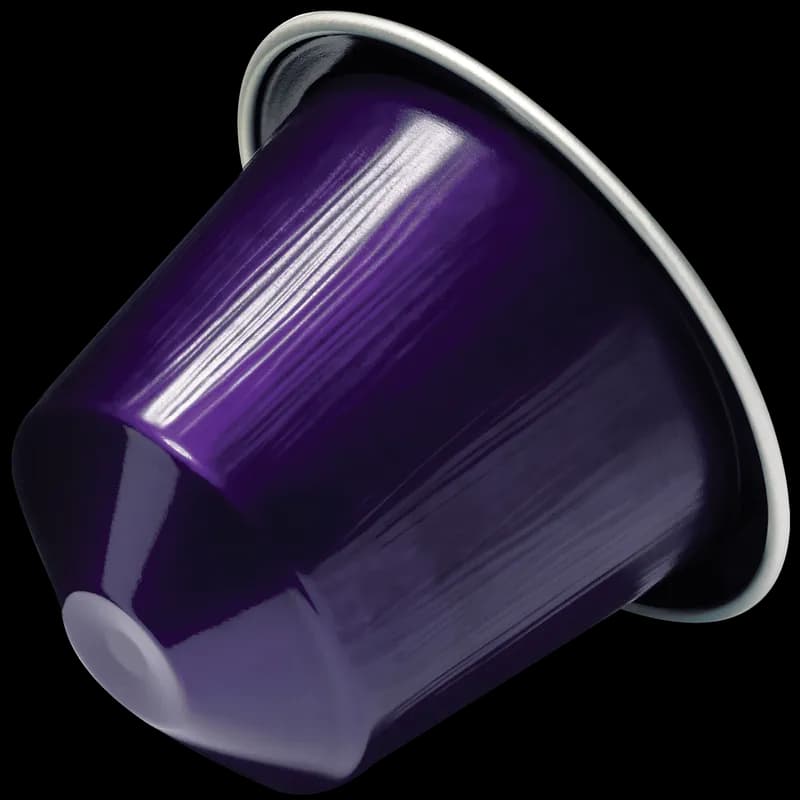
These four capsules spread across the Original scale, from light to very dark. Open one to check the current sleeve, cup sizes and taste notes.
How to choose your number
Smooth and sweet, with little bitterness: start between 4 and 6. Volluto and Colombia are typical places to begin.
A classic balanced espresso: 6 to 9 gives body without a heavy roast edge. Arpeggio at 9 is the familiar dark, creamy option.
Lattes and cappuccinos: look at 8 to 13. Milk softens the roast, so a bolder capsule keeps the coffee noticeable in the cup.
Longer lungo cups: a longer cup dilutes the same coffee, so a mid-range number such as 6 to 8 often tastes more balanced than a very low one.
Iced coffee: ice dilutes the cup as it melts, so bolder capsules usually hold up better.
Where to find the number and what sits next to it
On an Original capsule box or sleeve, the intensity number appears together with the recommended cup sizes, usually shown as small cup icons for ristretto, espresso and lungo. The number tells you how bold the coffee is, and the icons tell you how much water the capsule was designed for. On the online product page you will also find the flavor notes Nespresso uses, such as cocoa, biscuit or red fruit. Read the three together: the number for strength, the cup size for volume and the notes for flavor.
Roast, body and bitterness: the three things behind the number
Roast is how long and how dark the beans were cooked. A dark roast usually adds roasty, cocoa or toasted notes and pushes the number up. Body is the weight of the coffee in your mouth, from light and tea-like to thick and creamy. Bitterness is the sharp, lingering side of coffee, and it tends to rise with darker roasts.
Intensity combines these three, so a coffee can be bright and fruity at a low number or dark and bitter at a high one. The number does not rate quality, and it says little about sweetness or acidity.
Same number, different cup: how volume changes the taste
A capsule is designed for particular cup sizes, and the number describes the coffee inside it, not the drink you end up with. Vienna Lungo (6) is made for about 3.7 fl oz (110 ml), while Arpeggio (9) is a 1.35 fl oz (40 ml) espresso. If you stretch a high-intensity capsule into a long cup, the drink gets thinner and less balanced instead of milder. Start with the size printed on the sleeve and change only one thing at a time.
A simple three-capsule tasting plan
The fastest way to learn your number is to compare three capsules from the same system. Pick one low (4 to 5), one middle (6 to 7) and one high (9 or more). With Original, Volluto, Colombia and Arpeggio make an easy trio.
Brew each one at the size printed on its sleeve and taste it black first. Write down three things: sweet or sharp, light or heavy, short or lingering aftertaste. Repeat with milk if you drink lattes. Then shop inside the number range that matched your notes.
Vertuo coffees on the scale
Vertuo capsules list an intensity too, and the same reading rules apply inside Vertuo. Melozio (6), Odacio (7) and Stormio (8) are all 7.77 fl oz (230 ml) mug-size coffees, so comparing them shows how much roast you like at one volume. Bianco Doppio is a 2.7 fl oz double espresso made for milk drinks, so it belongs in a different comparison from the mug coffees.
Two common mistakes
Assuming a darker sleeve means a higher number. Colors help you recognize a named coffee, but they are not a strength code. Read the number printed on the sleeve, and use our pod color guide to match names and colors.
Comparing numbers across brands. Other Original-compatible brands may use their own intensity scales, so do not assume their numbers line up with Nespresso's. Compare within one brand.
Questions people ask
Does a higher number mean more caffeine?
No. Intensity describes body, bitterness and roast. Caffeine depends on the blend and the cup size, so check the capsule's own details if it matters.
What is the mildest Nespresso intensity?
The Original scale starts at 1. Volluto, at 4, is one of the lighter Original coffees we feature, with a biscuit sweetness and light fruit.
Is intensity 13 the strongest?
13 is the top of the Original scale, so Napoli at 13 is as intense as Original gets on Nespresso's own rating. It is a short, dark cup and works well with milk.
Which number is best for beginners?
A balanced 5 to 7 is an easy place to start. Once you know whether you want more sweetness or more roast, move down or up the scale.
Is a higher intensity number better?
No. A higher number means a bolder, roastier cup, not a better one. A balanced 5 to 7 is a popular starting point, while 9 to 13 suits people who like dark roasts or add milk.
Why do two capsules with the same intensity taste different?
The number combines body, bitterness and roast, but it leaves out aroma and sweetness. Two blends from different origins can share a number and still taste nothing alike, so read the flavor notes as well.
Is there a quick way to find the right Nespresso capsule?
Yes. WhichCapsule's free Find My Capsule quiz asks which machine you have and how you like your coffee, then ranks only the capsules that fit that machine, such as Stockholm Lungo and Bianco Doppio, with the reason for each match. Take the quiz.
Where to go next
Want a pick rather than a number? Take the capsule finder, compare Original and Vertuo, or read what pod colors mean.