
How-to
Common Nespresso Error Codes and Safe Fixes
Seeing a blinking light or error message on your Nespresso machine? Learn safe first checks, what error signals usually point to, and when to contact support.
By WhichCapsule · Mar 24, 2026, 03:12
How-to
Seeing a blinking light or error message on your Nespresso machine? Learn safe first checks, what error signals usually point to, and when to contact support.
By WhichCapsule · Mar 24, 2026, 03:12
A Nespresso error code is not always a numbered message. On many machines it appears as a blinking light, a colored ring, a repeated button pattern, a lock warning, or a message in a connected app. The important rule is simple: do not treat every light pattern as universal. Different Nespresso models can communicate problems differently, so use this guide to narrow the issue safely before checking your manual or support page.
Most Nespresso error signals point to water, cleaning, descaling, capsule position, closure, restart needs, or an internal fault. Start with simple checks: turn it off, let it cool, refill and reseat the tank, remove any capsule, empty the used-capsule container, clean accessible parts, and run a water-only cycle if your model allows it. Do not force the lever, open the machine body, or guess a button sequence.
First, identify your exact machine model. Error lights are model-specific, so a flashing orange light on one Vertuo machine may not mean the same thing as a blinking button on an Original machine. Use the manual, the official support page for your country, or the app connected to your machine if available.
Then check the basics. Make sure the water tank has fresh water and sits correctly. Empty the capsule container and drip tray. Open and close the lever, lid, or head only in the normal direction. If a capsule is stuck, do not use a knife, fork, screwdriver, or strong force.
| Error Signal | What It May Point To | Safe First Step |
|---|---|---|
| Repeated blinking after pressing brew | Empty tank, air in the line, blocked flow, or setup issue | Reseat the tank and try a water-only cycle |
| Descaling or cleaning alert | Scale buildup or required maintenance | Follow the model manual and use a suitable descaling product |
| Capsule will not read or brew | Wrong capsule type, damaged capsule, dirty capsule area, or unclosed head | Remove the capsule and clean accessible areas |
| Lever, lid, or head warning | Machine is not locked correctly | Open and close it gently without forcing |
| App or connectivity message | Pairing, firmware, Wi-Fi, or account issue | Restart the machine and check the app instructions |
| Fast flashing, unusual noise, smell, or leak | Possible internal fault | Stop using the machine and contact support |
This table is not a replacement for your manual. It is a safe way to decide what to check first.
Turn the machine off, unplug it if your model allows, and wait a few minutes. Let it cool if it has been running several cycles. Plug it back in, switch it on, and see whether the same signal returns.
A restart can clear a temporary alert, but it should not be used to ignore repeated faults. If the same warning appears every time, treat it as a real issue.
Remove and refill the water tank with fresh water. Make sure it is fully seated. Empty the used-capsule container and drip tray. Check that the cup platform and capsule bin are correctly positioned.
Open the capsule area normally. If there is a capsule inside, remove it only if it releases easily. Wipe the accessible capsule chamber and coffee outlet with a soft damp cloth. Never scrape the inside with metal tools.
Cleaning removes coffee residue, milk residue, and visible buildup from parts you can reach. Descaling deals with mineral scale inside the water path. They are related, but not the same.
If your error signal clearly points to descaling, follow your model’s descaling mode and complete the rinse cycle. Do not use vinegar, harsh cleaners, or homemade mixtures unless your official manual says they are suitable. If the machine has a milk system, clean the milk parts separately according to that model’s instructions.
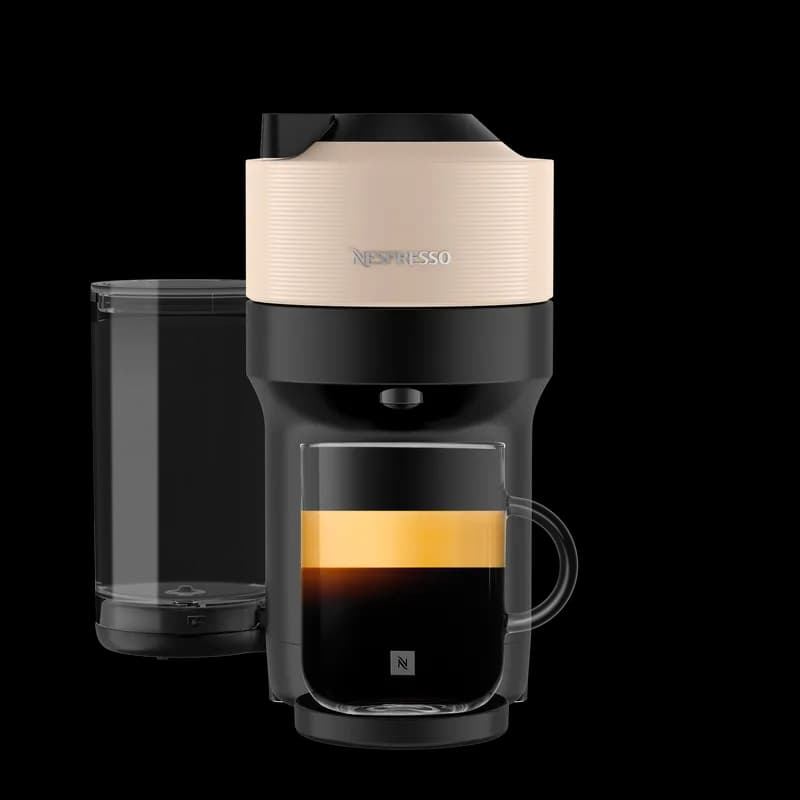
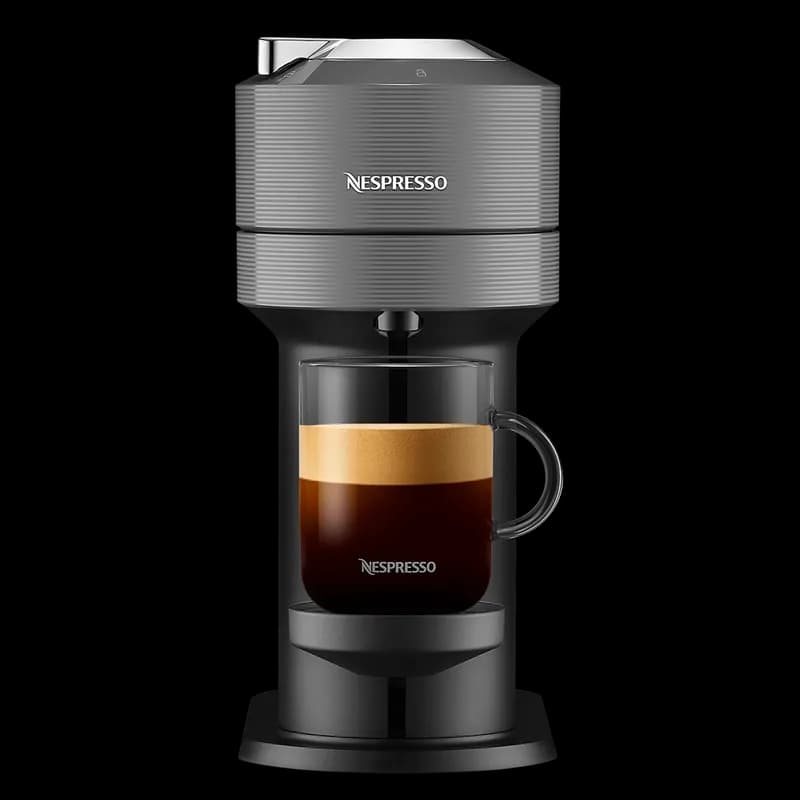
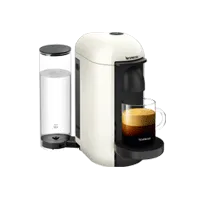
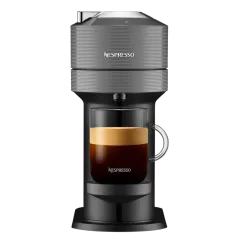
Nespresso Original machines and Vertuo machines use different capsule systems and different brewing logic. Original machines usually focus on espresso and lungo-style extraction. Vertuo machines read Vertuo pods and use pod format to control cup size and brewing behavior.
That matters for troubleshooting. A Vertuo machine may refuse to brew if the pod is damaged, unreadable, or the head is not locked. An Original machine may show problems through button blinking, flow, capsule position, or programmed cup-size behavior. Do not use Original capsules in Vertuo machines, and do not assume third-party capsules work with Vertuo unless the packaging clearly confirms it.
Stop troubleshooting and contact support if the machine leaks from the base, smells electrical, trips power, makes a grinding sound, overheats, repeatedly fails to pump water, or shows the same warning after basic cleaning and descaling. Those are not good moments for DIY repair.
No. Lights, colors, and button patterns vary by model. Always confirm with your exact model manual.
No. You can safely check water, capsules, removable parts, cleaning, descaling, and restart. Repeated leaks, electrical smells, or internal faults need support.
Sometimes it helps with settings or temporary alerts, but it does not fix scale, leaks, blocked parts, or electrical faults.
They can if they are the wrong type, damaged, or not suited to the machine. Do not assume third-party capsules work with Vertuo unless compatibility is clearly stated.
Guided recommendation
Use the machine quiz if you want a guided recommendation based on drinks, space and daily routine.
Find My MachineWritten reviews are coming soon.
Ratings are live, but no written comments have been added yet.