
For a US reader the practical effect is small, because the paper capsules were never sold here. They launched in 2023 in a group of European markets, and the US range stayed on aluminum. The news still answers a question many American owners ask: is there a compostable Nespresso pod coming, and should you wait for one?
Below is what the paper capsules were, why freshness ended them, how their climate figures compared with aluminum, and what to buy for an Original machine now. The Amazon cards are aluminum Original capsules. Prices change often; the cards show Amazon's current price.
Paper capsules and aluminum capsules compared
Material
- Paper capsule (2023 to 2026)
- About 82% paper pulp plus a compostable biopolymer
- Aluminum capsule
- Aluminum with a lacquer coating
Disposal
- Paper capsule (2023 to 2026)
- Home compost or food waste where accepted
- Aluminum capsule
- Nespresso recycling or curbside where accepted
Freshness
- Paper capsule (2023 to 2026)
- Short shelf life, the reason given for ending it
- Aluminum capsule
- Protects coffee for up to about a year
Footprint per small espresso
- Paper capsule (2023 to 2026)
- 79 g CO₂e (figure cited in reporting)
- Aluminum capsule
- 81 g CO₂e (figure cited in reporting)
Where sold
- Paper capsule (2023 to 2026)
- A group of European markets, never the US
- Aluminum capsule
- Everywhere Nespresso sells Original
Material and footprint figures as reported at launch and in the September 2026 coverage. The footprint gap is small, so the choice was never mainly about climate numbers.
What was announced and why
According to AWP's report and the Nestlé confirmation that followed, Nespresso decided to stop making the paper capsules. Two reasons were given: the coffee inside did not stay fresh long enough, and consumer feedback on the product experience was not what the company wanted. The boutiques that still had stock were selling it down over roughly a month.
Nespresso has not said it is leaving compostable packaging for good. The coverage framed the move as ending this version, and the aluminum Original capsule remains the main format. In Switzerland, where the story broke, the reported recycling rate for Nespresso aluminum capsules is 73%, which is part of why the company keeps defending aluminum.
WhichCapsule note: Reported September 28, 2026 and confirmed by a Nestlé spokesperson; nothing changes for US capsules.
What the paper capsules actually were
Nespresso developed the capsule with the packaging company Huhtamaki. The body was pressed paper pulp, about 82% of the capsule's weight, with a thin compostable biopolymer layer inside to hold the coffee and keep oxygen out. They fitted Original machines and were tested in 14 European markets before the 2023 launch.
The paper capsules sat beside the aluminum line rather than replacing it, and a used one could go in a home compost or, where councils accepted it, the food-waste bin. That was the whole promise: no recycling bag, no metal. The trade-off only became clear once the capsules had spent time in warehouses and kitchen drawers.
WhichCapsule note: Paper pulp outside, a compostable film inside, Original machines only.
Why shelf life decided it
Ground coffee goes stale through oxygen and moisture. Aluminum is a near-perfect barrier, so a sealed aluminum capsule keeps its aroma for up to about a year. Paper with a biopolymer film lets more through, so the coffee loses aroma sooner and the window between roasting and a good cup shrinks.
That matters more for a capsule brand than it seems. Nespresso ships capsules through warehouses and retailers, and many owners keep a few months of sleeves at home. Our guide on whether Nespresso pods expire explains the best-before date and how storage changes it.
WhichCapsule note: Aluminum blocks oxygen almost completely; paper with a film does not, so the coffee aged faster.
Paper or aluminum: the climate numbers
The figures quoted in the reporting put a small espresso in a paper capsule at 79 g of CO₂ equivalent and the same espresso in aluminum at 81 g. The difference is about 2%, because most of a cup's footprint comes from growing, roasting and shipping the coffee, not from the capsule.
Aluminum's case rests on recycling. When the capsule goes back through Nespresso's recycling program or a curbside system that accepts it, the metal is melted and reused. When it goes in the trash, the paper capsule would have been the better option. In the US the deciding question is whether you actually return your used capsules.
WhichCapsule note: 79 g against 81 g per small espresso: the capsule is a small part of the footprint either way.
What to buy for an Original machine now
If you want Nespresso's own coffee, the aluminum capsules are the only option, and recycling them is what closes the loop. Nespresso's recycling bags go back by mail or to a drop-off point, and some cities take the capsules curbside. Volluto and Livanto are mild, round starting points; Arpeggio is darker and stronger. An assortment lets you try several before you commit to sleeves.
If you want something you can put in the compost, third-party brands still sell compostable Original-compatible capsules. They fit the same machines, but freshness varies by brand and some need a home compost that runs warm. Our compostable Nespresso-compatible pods guide compares them.
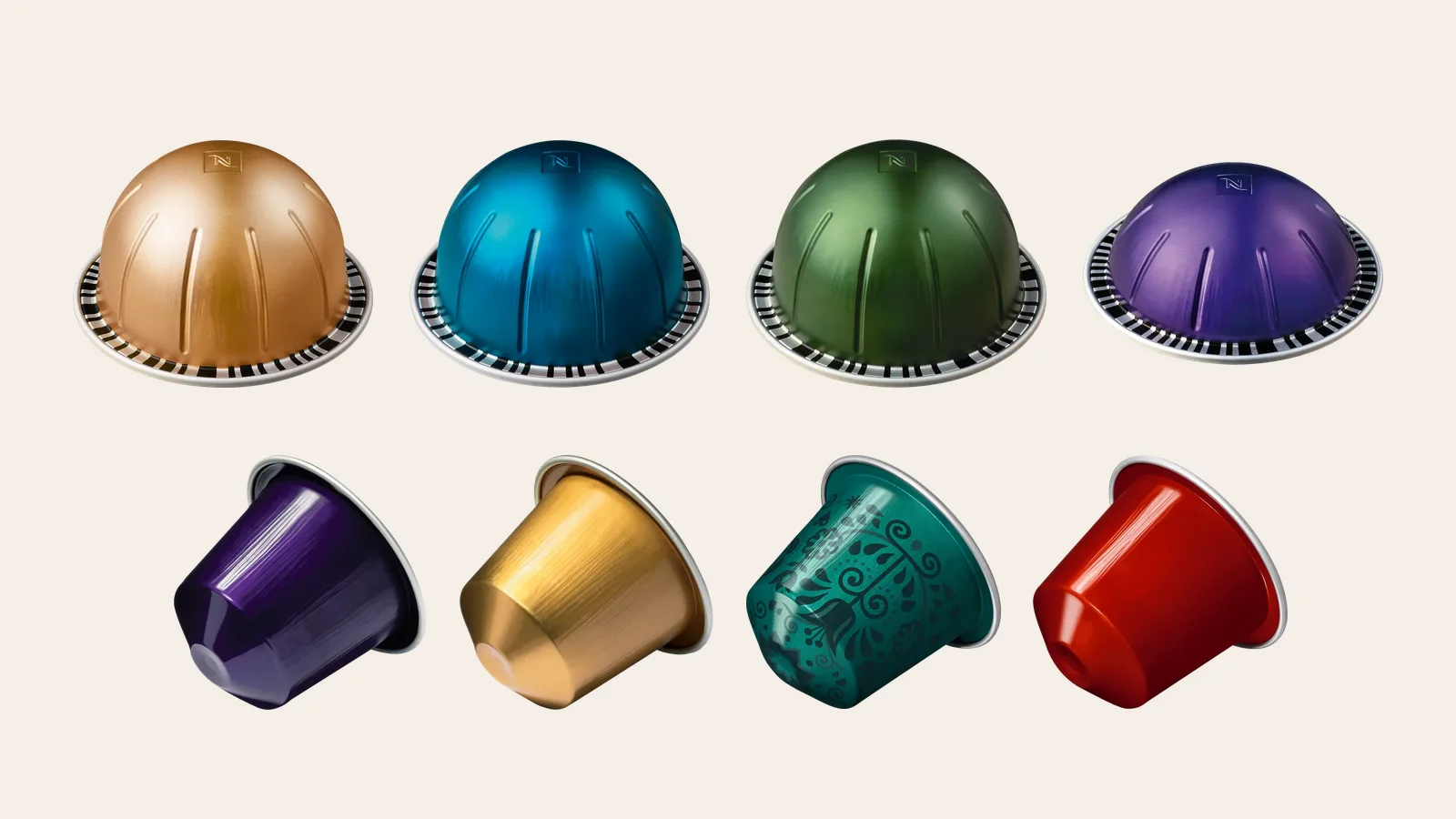
Vertuo owners have no compostable option from Nespresso or anyone else, because Vertuo machines read a barcode that only Nespresso's own aluminum pods carry.
WhichCapsule note: Aluminum plus recycling, or a third-party compostable; Vertuo has no compostable pod at all.
Compare on Amazon
Paid links. Prices can change; the price at checkout applies.
What people actually ask
Did Nespresso discontinue its paper capsules?
Yes. Swiss news agency AWP reported the phase-out on September 28, 2026, and a Nestlé spokesperson confirmed it. Remaining stock was sold down over about a month.
Why did Nespresso stop the paper capsules?
Two reasons were given: the coffee did not stay fresh long enough in paper, and customer feedback on the product experience was mixed.
Were Nespresso paper capsules sold in the US?
No. They launched in 2023 in a group of European markets. The US Original range has always been aluminum.
Were paper capsules better for the climate?
Only slightly. Reported figures put a small espresso at 79 g of CO₂e in paper against 81 g in aluminum, and recycled aluminum narrows that further.
Are there compostable pods for Nespresso Original machines?
Yes, from third-party brands. They fit Original machines, but freshness varies and some need a warm home compost to break down.
Is there a compostable Vertuo pod?
No. Vertuo machines only brew Nespresso's own aluminum pods, because the machine reads a barcode printed on the rim.
Is there a quick way to find the right Nespresso capsule?
Yes. WhichCapsule's free Find My Capsule quiz asks which machine you have and how you like your coffee, then ranks only the capsules that fit that machine, such as Firenze Arpeggio and Volluto, with the reason for each match. Take the quiz.
Who should buy which version
- You want Nespresso's own coffee: stay with aluminum Original capsules and use the recycling bag or a curbside program that takes them.
- You want to compost: choose a third-party compostable Original capsule and buy small amounts so they stay fresh.
- You own a Vertuo: nothing changes, and there is no compostable option; recycling the aluminum pods is the route.
The bottom line
The paper capsule was a reasonable idea that lost on freshness. Its climate advantage over recycled aluminum was small, and coffee that tastes flat after a few months is a hard sell. For US owners the news changes nothing on the shelf.
If you are still deciding which Original coffees to buy, the capsule finder ranks them by intensity, roast and cup size for your machine.