
Why people reach for vinegar or citric acid
Both are cheap and easy to find, and both dissolve limescale. That is why home cleaning advice mentions them. A coffee machine is different from a kettle, though: the descaling cycle is designed around a specific solution, and the water path includes small seals and a pump.
The risks
Vinegar. The acid can attack rubber seals and some metals, and the smell and taste can linger in the water path if you do not rinse thoroughly.
Citric acid. It is milder than vinegar, but it can leave deposits if the machine is not rinsed well, and the strength you mix matters.
Warranty and results. The machine's descaling program runs for a set time and volume that assumes the recommended solution. A different liquid may not clean evenly, and damage caused by an unapproved product may not be covered.
The safe way to descale
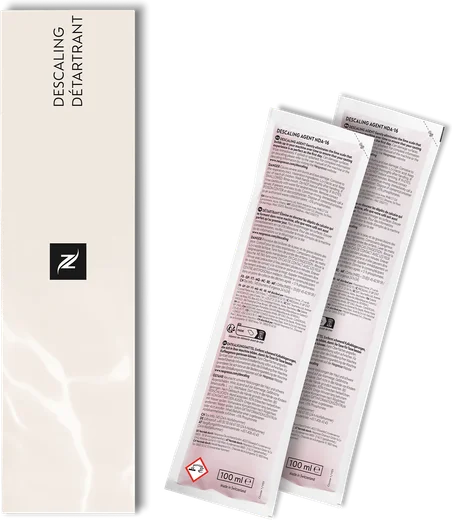
1. Use the descaling solution Nespresso recommends and check the pack for the right amount.
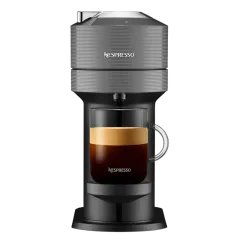
2. Run the descaling program for your model. Original and Vertuo machines use different steps, so follow the manual or our step-by-step descaling guide.
3. Rinse with several tanks of clean water until no trace of solution is left.
4. Repeat as often as your water hardness and the machine's indicator require. If you live in a hard-water area, descale more often and follow our step-by-step descaling guide.
Signs your machine needs descaling
Common signs are a descaling light or reminder on the machine, slower flow, coffee that comes out cooler than before, a louder pump and less volume in the cup. White or chalky deposits in the tank are another clue. Several of these also have other causes, such as a blocked capsule holder, so rule those out first with our guide to blinking lights.
Hard water changes how often you descale
Hard water carries more dissolved minerals, so scale builds up faster. Your water supplier can tell you how hard your tap water is, and filtered or softer water slows the build-up. If you live in a hard-water area, expect to descale more often than the manual's general interval.
Why a descaler made for coffee machines is the safer choice
A descaling solution sold for coffee machines is made to run through the machine and be rinsed out by the descaling program, which is designed around it. Home remedies were not made for that job. A packaged solution also gives you a measured amount and clear instructions, which removes the guesswork about concentration and rinse time.
Cannot find the recommended solution?
Check the Nespresso website and your manual for the descaler recommended for your model, or ask the retailer you bought the machine from. Buying the right product takes a few days at most, while a damaged seal or an unclear warranty can take much longer to fix.
Before you start: a quick checklist
Remove any capsule, empty and rinse the water tank, empty the drip tray and the used-capsule container, put a large container under the outlet and keep the machine plugged in. Read the instructions on the descaling pack. Do not interrupt the program unless your manual says you can.
After descaling
Run clean water through the machine as the manual describes, refill the tank with fresh water and brew a first cup to throw away. Wipe the outside, rinse the drip tray and note the date so you know when it is due again. Our maintenance routine guide lists what else to clean.
If you already used vinegar
Rinse the water tank, then run clean water through the machine several times until there is no smell or taste. If the machine leaks, makes unusual noise or gives errors afterward, stop using it and contact Nespresso or the retailer.
Questions people ask
Is it OK to use white vinegar to descale a Nespresso?
No. Beyond Nespresso's recommendation, the practical problem is rinsing: the smell and taste of vinegar can stay in the water path, so you would need several rinse cycles before the coffee tastes normal again.
Can I use citric acid instead?
Not recommended. Citric acid is milder than vinegar, but a home mix has an unknown strength: too weak does little, and too strong adds risk to the seals and the pump. Use Nespresso's own descaling kit, which is dosed for the machine.
How do I know my machine needs descaling?
Many machines show a blinking light or a descaling reminder, and slower flow or lukewarm coffee can be signs of scale. See our guide to blinking lights.
How often should I descale my Nespresso?
Every three months or every 300 capsules, whichever comes first, according to Nespresso's guidance. Descale sooner if you have hard water or the descaling light comes on.
Does descaling replace regular cleaning?
No. Descaling removes mineral scale inside the machine. You still need to rinse the tank, empty the drip tray and wipe the machine as part of normal care.
Is there a quick way to choose the right Nespresso machine?
Yes. WhichCapsule's free Find My Machine quiz asks seven questions about your drinks, milk, counter space and budget, then ranks the Original and Vertuo machines with the reason for each match. Take the quiz.
Canadian care note
Water hardness varies a lot across Canada: much of the Prairies and southern Ontario has hard water, while coastal British Columbia is much softer. In a hard-water area, descale more often than the default reminder and consider filtered water. For repairs or parts under warranty, contact Nespresso Canada or the retailer you bought from.