

Make the area safe before tracing the water
Do not reach through pooled water to operate a switch or pull a wet plug. Disconnect power only when the plug and surrounding area are dry and safely accessible; otherwise arrange safe isolation and qualified help. Let the machine cool before handling permitted removable parts. Do not lift or tilt an operating appliance to inspect its underside. A towel should not stay wrapped around the body or block ventilation for a later brew.
With the appliance safely disconnected, describe where the wet area begins: rear tank, front tray, capsule container, coffee outlet or milk accessory. Note whether it appeared while idle, during brewing or after capsule ejection. The color of the liquid can help your description but does not prove the internal source. If water is coming from underneath the housing or the origin remains uncertain, leave the machine out of use and contact support. Do not add water and energize it just to reproduce that failure.
Empty the tray and capsule container
Remove the drip tray and used-capsule container only as shown in the manual. Empty them, rinse away residue and check visible removable pieces for cracks or incorrect positioning. Refit each part fully without forcing it. A tray that overflowed can wet the counter even when the brewing circuit is not leaking, so note how full it was before you emptied it.
Some liquid collecting inside the intended waste area can be normal after brewing and ejection. Nespresso specifically explains extra liquid in the Vertuo Up waste container as part of its capsule-ejection process. That model-specific behavior is not permission to accept every puddle on every machine. There is no universal safe milliliter allowance here. A sudden increase, a tray filling unusually fast, substantial coffee bypassing the cup or repeated overflow after correct emptying should be reported. A small amount inside a designed tray and liquid beneath the appliance are different observations.
Inspect the removable water tank
Check the detached tank in the sink for visible cracks and damage around its accessible bottom connection. Do not dismantle its valve or test it by pressing tools into it. Water spilled while filling or removing a tank should be distinguished from a tank that leaks while properly installed. Dry its outside and the accessible mounting area when safe, then follow the manual’s placement instructions. Do not push harder on a damaged fitting.
If you can see a cracked tank, distorted connection or damaged seal, ask for the part specified for the exact model and region. Tape, glue and an improvised gasket are not suitable repairs. A similarly named model may have a different tank or connector; a matching color is not enough to order a replacement. If a detached tank appears sound but water continues from beneath the body, do not assume the tank was cleared of responsibility or that an internal pipe has been identified. Give support the observation and stop there.
Capsule fit: do not force a stuck head
When the appliance is stopped and the manual allows opening, eject the used capsule normally. If the head or lever will not move as usual, do not pull harder, insert tools or continue brewing. Empty a full used-capsule container when safe. Keep fingers away from piercing parts. A jam deserves the stuck-capsule guide, not an improvised internal repair.
Check that a fresh undamaged capsule belongs to the right system. Original and Original-compatible capsules are not Vertuo capsules; Vertuo must also use a format supported by the machine. If a previous leak occurred only with one Original-compatible capsule, stop using that capsule and retain the packaging details. A correctly fitting official capsule may be a useful comparison only after an external, non-electrical cause has been clearly resolved and the manual permits use. Do not perform that comparison while water still appears under the body. A leak near the capsule area that persists needs service, not repeated changes of capsule brand.
Clean only the outlet surfaces the manual permits
Once the machine is unplugged and cool, wipe accessible coffee residue with a soft damp cloth and clean the removable parts listed by the manual. Dried coffee around the outlet is not a reason to put a needle, knife, stiff brush or wire into the water path. Do not remove internal seals or lubricate the capsule mechanism. Cleaning the outside also does not establish that a leak inside has been repaired.
Descaling addresses mineral deposits and follows a separate model-specific process. Nespresso lists it among some flow and leakage troubleshooting steps, but it cannot restore a cracked tank, loose removable tray or damaged internal connection. Do not automatically pour descaler into a machine with an unresolved leak. Ask support first if the body leaks or circulation is absent. Once safe operation is restored, follow the maintenance reminder and complete the required rinse. Our descaling guide explains maintenance without promising a cure for every puddle.
Separate milk spills from coffee-circuit leaks
A Lattissima milk container, Creatista steam system and Aeroccino have different cleaning and assembly rules. Identify whether the liquid is beside a milk jug, from a removable tube or around a frother’s electrical base. Do not taste unknown liquid to identify it. If it reaches electrical parts, stop and use the same safety rule as for the coffee machine. Never immerse the appliance or an electrical base to clean a spill.
After cooling, inspect and reassemble only the removable milk components specified by their own manual. Confirm the lid, tube and connection are seated and the relevant fill mark is respected. A quick after-drink rinse does not replace full cleaning of removable milk parts. Do not disconnect hot fittings or scrape a steam tip to stop a drip. If plain coffee previously worked while milk spilled, that is useful context, not proof that the entire machine is safe. Report which function was active and where liquid appeared rather than calling every spill a leaking coffee pump.
When another cycle is appropriate—and when it is not
A documented rinse may be appropriate only after a clearly identified external cause, such as an overflowing removable tray, has been corrected, all electrical areas are dry and undamaged, and the manual allows use. Use the exact model’s procedure and the specified container. An Original rinse and Vertuo cleaning program are not the same button sequence. Remain nearby without putting hands beneath the running appliance; stop if unexpected liquid appears.
Do not test again when a leak is unexplained, comes from the body or recurs after those checks. Contact support with the exact model, country, location and timing of the leak, recent maintenance and whether the tray or tank was damaged. A safe photograph of the wet area can help; you do not need to recreate the fault for a video. Ask about diagnosis, warranty, repair and correct replacement parts before considering a new machine. These observations do not justify declaring an internal seal failed, and continuing to brew is not a way to confirm it.
Repair or replace
When a new machine is the better fix
Contact Nespresso support before you buy anything. Give them the model, the light pattern or symptom and what you have already tried, and ask whether the machine is still covered and whether a repair or exchange is offered.
Replacement starts to make sense when support confirms the fault cannot be fixed, when the same fault returns after descaling and the checks above, or when the machine is out of warranty and the repair quote is close to the price of a new entry model.
Stay with the capsules you already buy: Original capsules fit only Original machines, and Vertuo capsules only Vertuo machines. These are the entry models in each system.
Ready to buy? Check today's Amazon prices

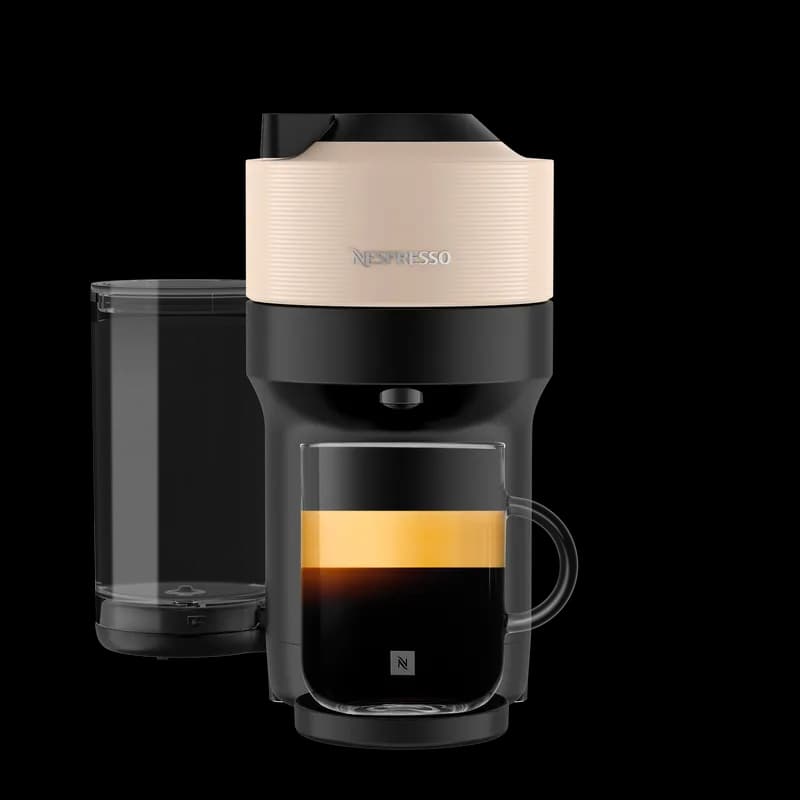
Paid links. Prices can change; the price at checkout applies.
Original machines: Essenza Mini review · CitiZ review
Vertuo machines: Vertuo Pop+ review · Vertuo Next review
All models: Best Nespresso machines · Compare all Nespresso machine models
Frequently asked questions
Can I keep using a leaking Nespresso?
Not with water beneath the housing, near electrics or from an unexplained source. Stop and get help. A documented rinse is only a possible next step after a clearly external cause is corrected and safe use is restored.
Is water in the capsule container always a leak?
No. Some liquid in the intended waste area can be normal, and Vertuo Up has specific ejection behavior. A sudden increase or liquid outside that area needs investigation; there is no universal normal quantity.
Will descaling stop water leaking underneath?
Do not assume so. It treats deposits, not cracks or damaged connections. With an unresolved body leak, contact support before running descaling solution or another test.
Can I replace the tank with one from a similar model?
Check the exact part reference first. Similar names or colors do not establish connector compatibility. Use the specified tank rather than tape, glue or an improvised seal.
Is there a quick way to choose the right Nespresso machine?
Yes. WhichCapsule's free Find My Machine quiz asks seven questions about your drinks, milk, counter space and budget, then ranks the Original and Vertuo machines with the reason for each match. Take the quiz.