Cold Nespresso coffee does not always mean the heating element has failed. In many cases, the drink feels too cool because the cup is cold, milk is added straight from the fridge, the first brew of the day passes through a cold machine, or the water flow is slowed by residue or limescale. The key is to separate normal temperature loss from a real heating fault.
This guide keeps the checks safe. It does not ask you to open the machine body or guess button sequences.
Safety first: cold is different from unsafe
A drink that feels less hot than expected is usually a comfort issue. A machine that does not heat at all, leaks from the base, smells electrical, makes unusual noises, or behaves differently after being plugged in is different. Do not keep cycling water through a machine that appears unsafe.
Also avoid opening the housing. Heating problems can involve electrical parts, seals, thermostats, or internal water paths. Those are not safe DIY areas for most users.
Step 1: Test without milk or ice
Make one small black coffee into a normal cup. Do not add cold milk, chilled foam, syrup from the fridge, ice, or a much water. This gives you a baseline.
Milk drinks cool quickly because cold milk changes the temperature more than many people expect. If black coffee is hot enough but your latte or cappuccino feels cold, the machine may not be the problem. Warm the cup, warm the milk if that suits your drink, or use freshly frothed milk rather than adding cold milk directly.
Step 2: Preheat the cup and the coffee path
A thick ceramic cup can pull heat from a small espresso very fast. Rinse the cup with hot water, then empty it before brewing. If your machine allows a water-only rinse without a capsule, run one short cycle first. This can warm the outlet, cup area, and water path.
Brew the same capsule again. If the second drink is noticeably warmer, the issue may be normal first-cup temperature loss rather than a fault.
Step 3: Check the drink size you are brewing
A small espresso and a larger lungo, mug, or Vertuo-style long coffee do not feel identical. Larger drinks travel through more water and sit longer in the cup, so the cup material and room temperature matter more.
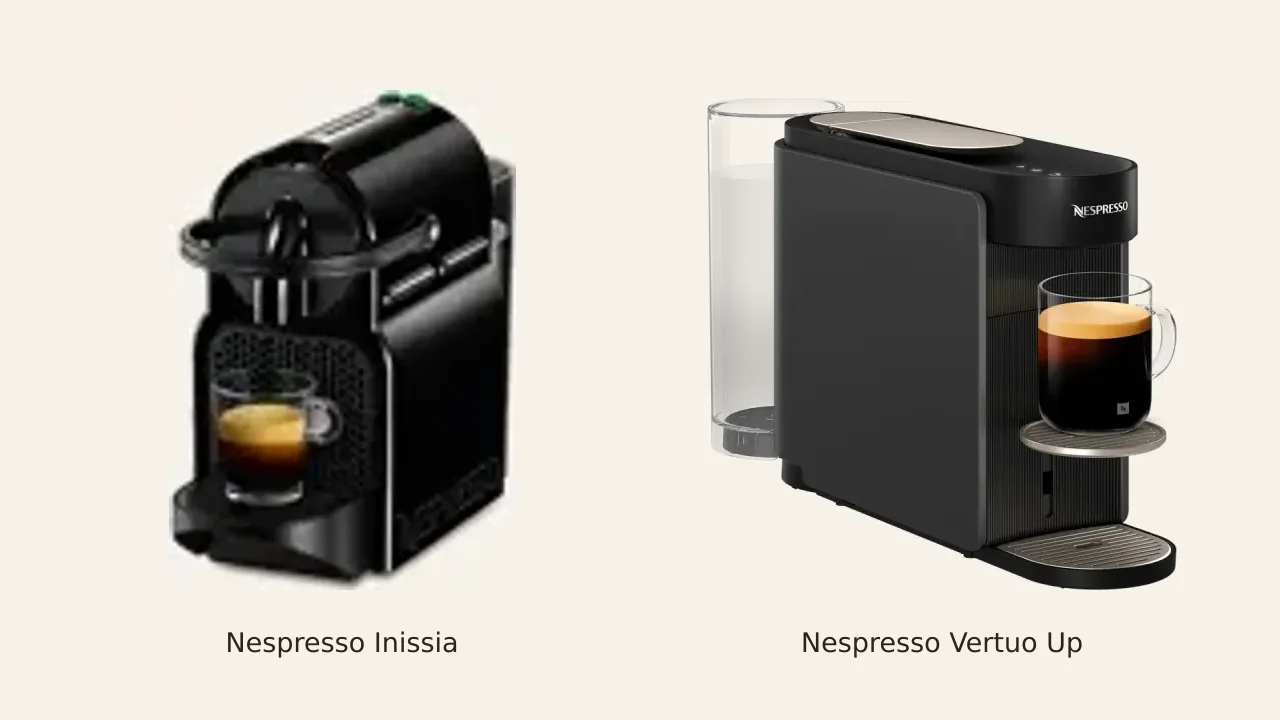
For Nespresso Original, check whether you are brewing espresso or lungo and whether the programmed volume has changed. For Vertuo, make sure you are using the correct Vertuo capsule and cup size. Original and Vertuo capsules are separate systems, so do not force one format into the other.
Step 4: Watch the flow speed
Slow, weak, or uneven flow can make coffee taste thin and feel cooler. Remove the capsule, empty the used capsule container, rinse the drip tray, refill the tank with fresh water, and run a rinse cycle if your model supports it.
Look for simple placement issues too: the tank may not be seated correctly, the capsule may not have closed cleanly, or the outlet area may need a wipe. Do not scrape the outlet or capsule chamber with metal tools.
Step 5: Separate cleaning from descaling
Cleaning removes visible coffee residue. Descaling deals with mineral buildup inside the water path. If you live in a hard-water area, have slow flow, repeated alerts, or coffee that has gradually become cooler over time, descaling may be due.
Use a suitable descaling product and your model manual. Do not use vinegar, bleach, dish soap, scented cleaner, or homemade acid mixes inside the machine.
Common mistakes
Judging after a cold latte
- Why it matters
- Cold milk can dominate the final temperature
- Better move
- Test black coffee first
Brewing into a cold thick mug
- Why it matters
- Small drinks lose heat fast
- Better move
- Preheat the cup
Ignoring slow flow
- Why it matters
- Limescale or residue may affect extraction
- Better move
- Clean visible parts, then descale if due
Guessing button codes
- Why it matters
- Models differ
- Better move
- Use the manual for your machine
Opening the machine body
- Why it matters
- Electrical and water parts are risky
- Better move
- Contact support
When the machine may need support
Contact support if the coffee remains barely warm after a black-coffee test, the machine no longer heats water, water leaks from the base, the cable is damaged, the machine smells hot, or the same fault returns immediately after correct cleaning and descaling.
Canadian care note
Water hardness varies a lot across Canada: much of the Prairies and southern Ontario has hard water, while coastal British Columbia is much softer. In a hard-water area, descale more often than the default reminder and consider filtered water. For repairs or parts under warranty, contact Nespresso Canada or the retailer you bought from.
FAQ
Can I make my Nespresso machine brew hotter?
Most models are not designed for casual user temperature adjustment. Try preheating the cup, running a rinse cycle if allowed, and avoiding cold milk. Use the manual before changing settings.
Is cold coffee always a heating-element problem?
No. Cold cups, cold milk, first-cup heat loss, slow flow, limescale, and incorrect drink size can all make coffee feel cooler.
Is there a quick way to choose the right Nespresso machine?
Yes. WhichCapsule's free Find My Machine quiz asks seven questions about your drinks, milk, counter space and budget, then ranks the Original and Vertuo machines with the reason for each match. Take the quiz.
Final next step
Start with the simple black-coffee test. If that improves the result, your issue is likely cup, milk, or warm-up related. If it does not, clean visible parts, descale when due, and stop if the machine still fails to heat safely.