WHICHCAPSULE

Coffee Guide / Capsule / Buying guide

Whole Bean vs Capsule Coffee: The Choice That Changes Every Cup

Whole bean or capsule coffee? Compare aroma, control, consistency, speed, milk drinks, real cost and environmental trade-offs before choosing your daily system.

Guided recommendation · No sign-up

Find My Machine

Step 1 / 7

What do you usually drink?

Reviewed by WhichCapsule· Updated Sep 18, 2026
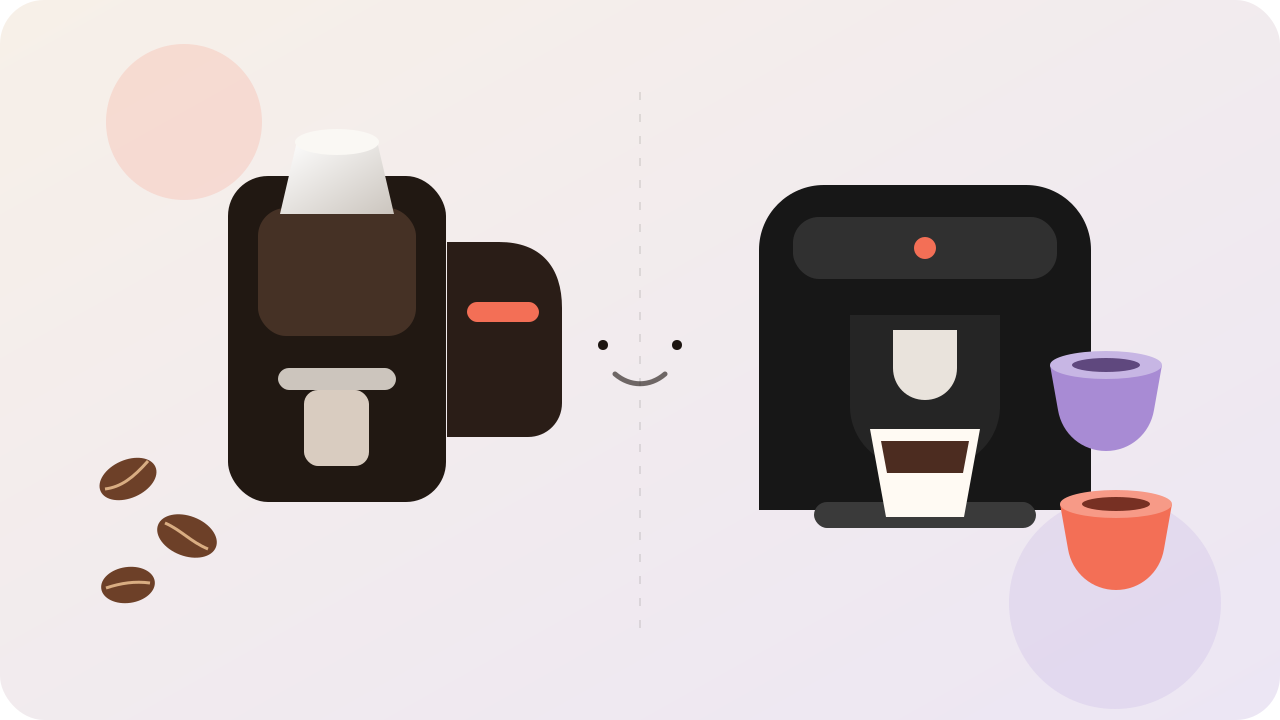
Illustrative image of whole beans, a grinder and capsule coffee arranged as two brewing paths

Whole bean coffee usually offers the wider flavour ceiling; capsule coffee offers the shorter path to a repeatable cup. Neither wins every kitchen. The better choice depends on whether you want to shape the brew or remove decisions from it. Let’s examine it together—without pretending that fresh beans are automatically delicious or that every capsule tastes identical.
The 30-second answer: choose the friction you can live with

Choose whole beans if aroma, origin character and the ability to adjust grind, dose and extraction are the pleasures you want from coffee. Choose capsules if speed, clean-up and consistency matter more than fine control. If weekday mornings and weekend coffee are different rituals, a hybrid setup can be more sensible than forcing one system to do everything.

Your Priority

Maximum flavour control

Better Starting Point
Whole bean
Why
Grind, dose and recipe can be tuned
Watch For
Grinder quality and learning time

Your Priority

Fast, repeatable mornings

Better Starting Point
Capsule
Why
Pre-portioned dose and programmed brewing
Watch For
Locked capsule format and smaller flavour range

Your Priority

Milk-heavy drinks

Better Starting Point
Either
Why
Strong espresso-style bases work in both
Watch For
Milk workflow matters as much as coffee

Your Priority

Several users, one button

Better Starting Point
Capsule
Why
Low variation between operators
Watch For
Confirm system compatibility first

Your Priority

Exploring roasters and origins

Better Starting Point
Whole bean
Why
Far broader choice of coffees and roast styles
Watch For
Buy amounts you can finish while fresh

Your Priority

Small, tidy counter

Better Starting Point
Capsule, often
Why
Compact machine and little loose coffee
Watch For
Frother and capsule storage still take space
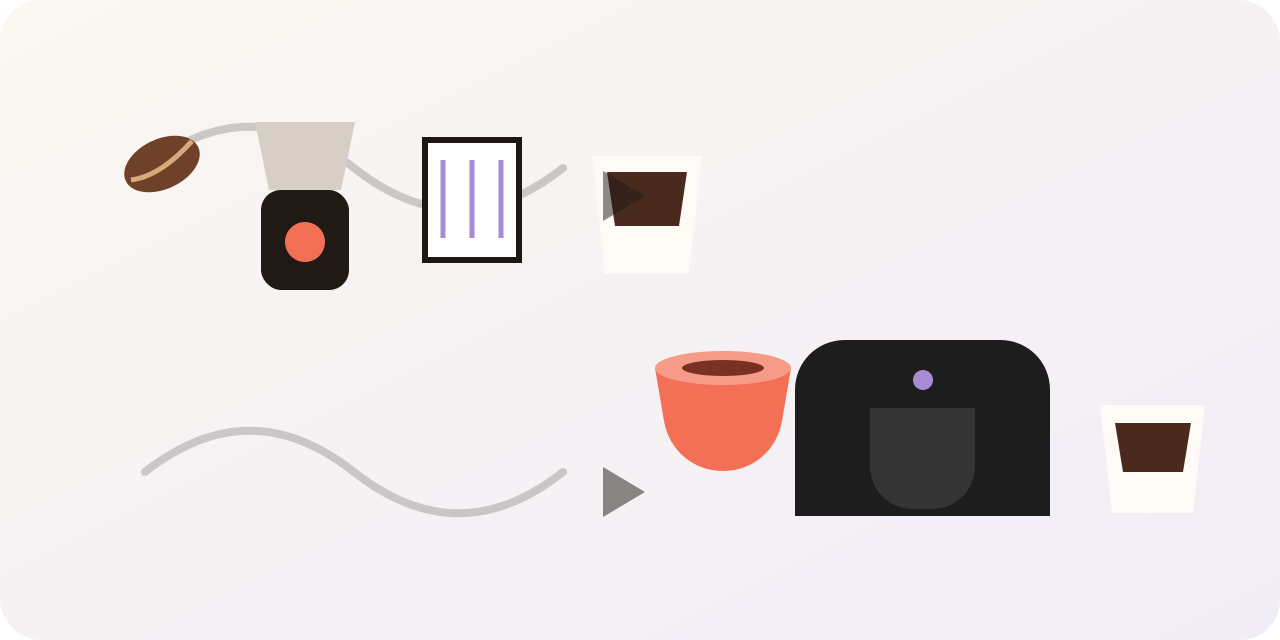
Two distinct routes to a finished cup: adjustable whole-bean brewing and repeatable capsule brewing
Illustrative image. Two brewing workflows, not a performance ranking.

What are we really comparing? Coffee format is only half the story

‘Whole bean’ describes coffee stored as roasted beans and ground before brewing; it does not name one method. The same bag can feed an espresso machine, filter brewer, moka pot, AeroPress or French press, and each asks for a different grind and recipe. ‘Capsule coffee’ combines a measured portion, protective package and a machine-specific brew programme. Its main promise is not that the coffee is inherently better—it is that several variables have already been decided for you.

That distinction matters. A good capsule machine compared with stale pre-ground coffee is an easy capsule victory. A carefully dialled-in grinder and fresh beans can reveal more texture and aromatic detail than most capsules. Compare complete routines, not idealised ingredients: coffee, equipment, water, skill, time and cleaning all belong in the result.

Aroma and freshness: why grinding changes the clock

Roasted coffee contains volatile aromatic compounds. Grinding dramatically increases exposed surface area, so aroma can escape and oxidation can progress more quickly. This is the strongest sensory argument for keeping coffee whole until close to brewing. It is also why grinder consistency matters: fresh but wildly uneven particles can extract unevenly and produce both sharp and bitter flavours in the same cup.

A capsule takes a different route. Coffee is ground and sealed during production, so the package protects a fixed recipe until it is opened by the machine. That can preserve a dependable profile for storage, but sealing cannot recreate the flexibility of grinding a chosen coffee moments before brewing. With beans, freshness and recipe are yours to manage; with capsules, preservation and dosing are mostly handled upstream.

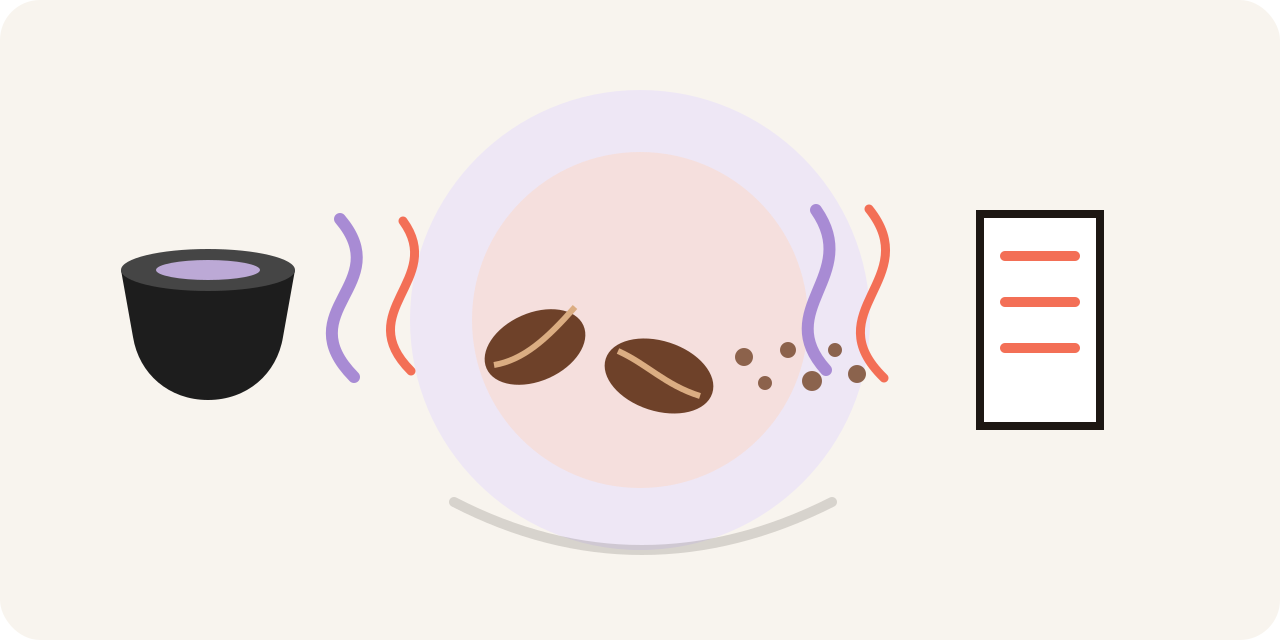
Aromatic compounds are better protected before coffee is exposed, while grinding increases exposed surface area
Illustrative image. Conceptual aroma and control diagram; not a laboratory measurement.

Control versus consistency: the real dividing line

Whole-bean brewing gives you levers. Grind finer or coarser, change the dose, alter the coffee-to-water ratio, adjust temperature where the brewer allows it, and change contact time. These controls can rescue a coffee that tastes hollow or harsh—but every lever is also a way to make tomorrow’s cup different from today’s.

Capsules narrow the operating range. Dose and grind are fixed; the machine controls water delivery according to its system. That is useful in a shared kitchen, a rushed morning or for someone who simply does not want a calibration hobby. The trade-off is that a capsule you dislike offers fewer meaningful corrections. You can change serving size within the producer’s guidance or adjust added water and milk, but you cannot regrind the coffee inside.

Speed and clean-up: count the whole routine

A capsule routine is usually insert, brew, eject and occasionally empty the container. Whole-bean preparation can include weighing, grinding, distributing or filtering, knocking out grounds and cleaning the grinder area. Yet machine type changes the gap: an automatic bean-to-cup machine is faster than manual espresso, while a capsule milk system may need more care than a simple hand brewer.

Time one complete cycle—from reaching for coffee to leaving the counter ready for the next person. Include filling the tank, heating, milk preparation and cleaning. Marketing often times only extraction; your kitchen experiences the entire workflow.

Taste is not just ‘strong’ or ‘weak’

Strength can mean concentration, roast bitterness, body or caffeine, and those are not interchangeable. A dark capsule may taste intense without containing more caffeine than a lighter larger serving. A whole-bean espresso may be concentrated yet sweet and balanced. Use words that describe the cup you want: chocolate-like or fruity, bright or low-acid, silky or light-bodied, clean or roast-forward.

For black coffee, whole beans make it easier to explore origin, processing and roast nuance. In a latte, milk softens acidity and bitterness and can hide subtle aromas; body and concentration become more important. Capsules designed for short extraction can make a convincing milk base, but a very large capsule coffee diluted again with milk may taste diffuse. Match coffee volume to milk volume rather than relying on an intensity number.

The cost question: calculate what you actually consume

Do not compare only the price of a bag with the price of a capsule sleeve. For beans, include the usable dose per cup, grinder cost, filters or maintenance and coffee wasted while dialling in. For capsules, include the number of capsules used per drink, especially if a large milk drink needs two, plus system-specific availability. Machine price matters, but daily coffee cost often dominates over a long ownership period.

A fair personal calculation is simple: record thirty normal drinks, including failed brews and second capsules, then divide the coffee spend by cups actually enjoyed. No universal number stays accurate across countries, roasters, pack sizes and promotions, so this guide does not invent one.

Environmental impact: packaging is visible, but it is not the whole footprint

A used capsule makes packaging waste obvious; loose grounds look more natural. That visual difference matters, but life-cycle comparisons also depend on coffee farming, the amount of coffee dosed and wasted, machine manufacture, heating water, standby energy, milk, cup washing, transport and the local end-of-life route. Change the system boundary and the winner can change.

Capsules can limit over-dosing and leftover brewed coffee, while beans avoid a package around every serving and spent grounds may be accepted by local organic-waste systems. Recycling claims are only useful if your exact capsule material is accepted and you actually use the programme. ‘Compostable’ also needs a named route: home composting and industrial composting are not the same. The honest decision is behavioural—buy coffee you will drink, brew only the water and dose you need, maintain the machine, and use the disposal option that truly exists where you live.

The footprint of a cup includes coffee, dose, energy, packaging and end-of-life rather than packaging alone
Illustrative image. Life-cycle factors vary by product, behaviour and local waste system.

Which drinker should choose whole beans?

Whole beans are the stronger fit when you enjoy tasting differences between origins, want to adjust extraction, regularly drink coffee black, or see preparation as a rewarding ritual. They also suit households that can buy smaller quantities frequently and store them well. You do not need café-level equipment, but a capable burr grinder is usually more important than decorative accessories.

Start with one brew method, one repeatable recipe and a simple log. Change only one variable at a time. This turns ‘fresh beans’ from a slogan into a controllable process.

Which drinker should choose capsules?

Capsules suit people who value a predictable cup with minimal mess, households where several users need the same result, and routines in which coffee must happen quickly. They can also reduce the barrier to switching between caffeinated, decaf and different flavour profiles one cup at a time.

The non-negotiable is compatibility. Original, Vertuo, Dolce Gusto, Keurig, Tassimo and other formats are not interchangeable merely because they are all called pods or capsules. Identify the exact machine system before buying. Then choose by drink size and milk use—not capsule colour alone. Our capsule library and capsule finder can narrow the compatible options.

The underrated answer: a deliberate hybrid kitchen

A capsule machine for 7 a.m. and a hand grinder with a filter brewer for slow weekends is not indecision. It separates two jobs: reliability when time is scarce and exploration when attention is available. The hybrid only becomes wasteful when both systems are bought aspirationally and rarely used. Decide the job of each before adding equipment.

If counter space is limited, compare the full footprint—including grinder, knock box, filters, frother and capsule storage. If you are still choosing a capsule machine, the machine finder uses drink, milk, space and routine to build a shortlist; our Original versus Vertuo guide explains that system decision separately.

Five mistakes that make either system taste worse

  • Using water with an unpleasant taste or ignoring scale build-up.
  • Stretching a small coffee dose into an oversized cup instead of adding clean hot water afterward.
  • Letting beans sit open beside heat, light or moisture.
  • Treating capsule intensity as a universal caffeine scale.
  • Buying equipment for an imagined routine rather than the drinks made most days.

Frequently asked questions

Is bean coffee always fresher than capsule coffee?

Not automatically. Whole beans ground just before brewing offer a freshness advantage, but old or poorly stored beans can disappoint. Capsules protect pre-ground coffee in a sealed portion, producing a different kind of storage stability. Freshness, roast date, package integrity and handling all matter.

Can capsule coffee make a good latte?

Yes. Choose a short, concentrated capsule with enough body to remain present in milk, and control the milk quantity. The frothing and cleaning workflow may matter more to daily satisfaction than small differences between coffee machines.

Which is more sustainable?

There is no honest universal winner without defining the coffee dose, energy mix, packaging, machine life, milk, waste rate and local recycling or composting route. Use life-cycle evidence for the specific system and avoid conclusions based on packaging alone.

Which should a beginner buy?

Choose capsules if you want dependable coffee with almost no learning curve. Choose beans if learning the process sounds enjoyable rather than burdensome. A beginner who likes experimentation can grow quickly with a grinder and simple brewer; a busy expert may still prefer capsules on weekdays.

Final verdict: choose the system that survives an ordinary Tuesday

Whole beans have the higher ceiling for aroma, variety and control. Capsules have the lower floor for effort and inconsistency. The best system is not the one that wins an abstract tasting—it is the one that makes the drink you actually want, at the moment you usually want it, with a routine you will maintain. Begin with that ordinary Tuesday, then let the capsule quiz or machine quiz turn your priorities into a practical shortlist.