WHICHCAPSULE

Comparisons

Aluminum vs Plastic Pods: Flavor, Fit and Machine Health

Compare aluminum and plastic coffee pods by flavor freshness, extraction, Nespresso Original compatibility, machine care and country availability.

Guided recommendation

Machine Library

Explore machines by system, milk setup and daily use.

Browse products

Find My Machine

Choose habits, budget and space to discover the right machine.

Start quiz now

Reviewed by WhichCapsule· Updated 9 Jul 2026, 22:26
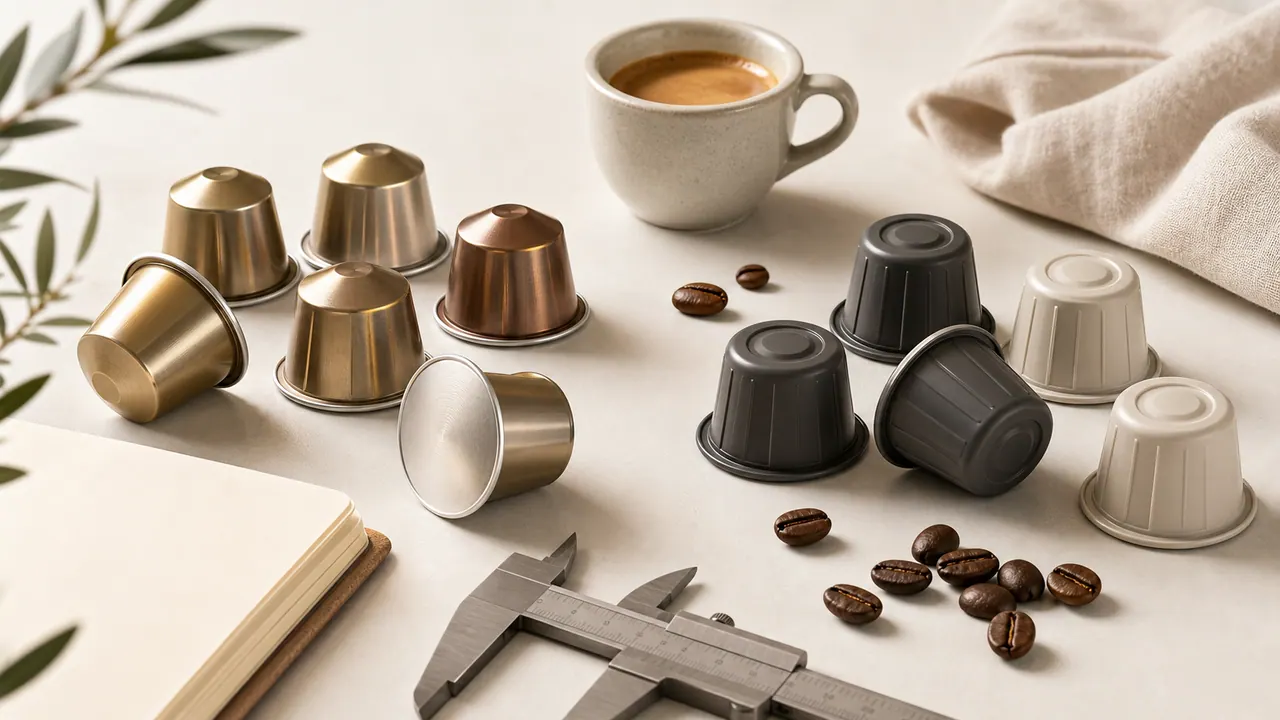
Aluminum vs Plastic Pods: Flavor, Fit and Machine Health image-generated editorial coffee scene.

As an Amazon Associate I earn from qualifying purchases.

Aluminum vs Plastic Pods: Impact on Coffee Flavor and Machine Health

Choosing between aluminum and plastic coffee pods can affect freshness, extraction and machine care. Material matters, but roast profile, coffee dose, grind, seal quality, capsule shape and compatibility matter just as much.

This guide focuses on Nespresso Original users comparing compatible capsules. It does not claim every aluminum pod tastes better or every plastic pod is risky. The right question is: which pod is better made for your machine and drink style?

Quick Answer

Aluminum pods often have an advantage for freshness protection and structural rigidity, while plastic pods can still be a good everyday option if they are well sealed, correctly shaped and clearly marked as compatible with your machine. For machine health, fit matters more than material alone. Avoid pods that jam, leak, deform or require force. For Vertuo, do not assume third-party pods work unless compatibility is clearly verified; most compatible-pod discussion belongs to Nespresso Original. Availability varies by country.

What you are really comparing

When people compare aluminum and plastic pods, they usually mix together three separate questions: taste, machine safety and sustainability. Those topics overlap, but they should be judged separately.

For taste, the biggest material-related factor is freshness protection. Coffee loses aroma when exposed to oxygen, moisture and time. A sealed pod helps, but seal quality matters more than the label. Aluminum is often used because it creates a strong barrier and holds its shape well. Plastic pods vary more by brand and design.

For machine health, the key issue is fit. A pod must sit correctly, pierce cleanly, withstand brewing pressure and eject without fragments or grounds left behind. A capsule that feels tight, bends, sticks or leaks should not be forced.

For sustainability, local recycling decides the practical answer. Aluminum may be recyclable through specific schemes; plastic pods may or may not be accepted locally. Always check the guidance on the packaging.

Who should choose aluminum pods?

Aluminum pods are usually the safer starting point if you want a premium-feeling capsule with strong freshness protection. The material is rigid, which can help the capsule hold its shape during brewing. That can support cleaner piercing and more predictable extraction, provided the capsule is made to the correct dimensions.

Choose aluminum pods if you:

  • care about aroma retention and buy capsules in larger quantities;
  • want a capsule that feels close to official Nespresso Original construction;
  • often make espresso or ristretto-style drinks where small differences in extraction are more noticeable;
  • are comfortable using the relevant recycling or return scheme in your country;
  • want to compare official Nespresso Original capsules with premium compatible alternatives.

Aluminum is not automatically better in the cup. If the coffee inside is stale, too dark, too light, under-dosed or poorly ground, the capsule material will not rescue it. But when comparing otherwise similar pods, aluminum can feel more consistent because it is less likely to flex during piercing and brewing.

Who should choose plastic pods?

Plastic pods can make sense when you want everyday convenience, broad supermarket availability or a lower-pressure way to try many compatible brands. Many Nespresso Original-compatible capsules use plastic or mixed materials. Some perform well; others are less convincing. The difference is usually not “plastic versus aluminum” on its own, but how well the brand has engineered the capsule.

Choose plastic pods if you:

  • want to sample several roast profiles without committing to large boxes;
  • mainly drink milk drinks where minor espresso differences may be softened by milk;
  • prefer capsules that are widely available in your local shops;
  • are checking value but do not want to rely only on current prices;
  • have already tried a specific plastic pod and know it works smoothly in your machine.

Be careful with plastic pods that feel soft, irregular or difficult to close in the machine. If the lever needs extra force, stop. A compatible capsule should not require a fight.

Main comparison table

Factor
Freshness
Aluminum Pods
Strong barrier
Plastic Pods
Varies by design
What To Check
Seal quality
Factor
Extraction
Aluminum Pods
Rigid structure
Plastic Pods
May flex
What To Check
Clean piercing
Factor
Machine fit
Aluminum Pods
Usually firm
Plastic Pods
Variable
What To Check
No force needed
Factor
Flavor
Aluminum Pods
Depends on coffee
Plastic Pods
Depends on coffee
What To Check
Roast and freshness
Factor
Milk drinks
Aluminum Pods
Good for strong shots
Plastic Pods
Can work well
What To Check
Intensity level
Factor
Recycling
Aluminum Pods
Scheme-dependent
Plastic Pods
Local rules vary
What To Check
Country guidance
Factor
Best use
Aluminum Pods
Espresso focus
Plastic Pods
Everyday sampling
What To Check
Machine compatibility

Flavor: does material change the taste?

The material does not create the coffee flavor by itself. The coffee inside the capsule matters more: origin, roast level, grind size, dose and freshness. However, pod material can influence how well those qualities are protected before brewing and how consistently water flows through the capsule during extraction.

Aluminum pods can help protect aroma because they are usually designed as tight, rigid containers. That may be useful if you buy in bulk or drink capsules slowly over several weeks. Plastic pods can still taste good when they are well sealed and recently packed, but they may vary more by brand and design. The best practical test is simple: compare small packs, brew the same cup size, and note whether the shot is balanced, watery, harsh or flat.

Avoid big claims like “aluminum always tastes better” or “plastic ruins coffee.” Those are too broad. A strong aluminum capsule with coffee you dislike will not beat a plastic capsule with a roast profile you enjoy.

Machine health: what actually matters

Machine health is about smooth operation. The capsule should drop into the chamber easily, close without force, brew without spraying or leaking, and eject cleanly. Problems usually come from poor fit, weak sealing, deformation or grounds escaping into the capsule cage.

Watch for these warning signs:

  • the lever is hard to close;
  • the capsule crushes unevenly;
  • coffee leaks into the tray instead of the cup;
  • extraction is suddenly very slow or very fast;
  • the capsule sticks after brewing;
  • grounds appear around the capsule holder.

If a pod causes these problems repeatedly, stop using it in that machine. Clean the capsule area, run a water cycle if your machine manual allows it, and switch to a capsule that fits better. Do not assume the issue is only “plastic” or only “aluminum.” Poor fit can happen with any material.

Original vs Vertuo compatibility note

This article mainly applies to Nespresso Original-compatible capsules, where third-party aluminum and plastic options are common. Nespresso Original and Vertuo are separate systems. Original machines use Original-style capsules. Vertuo machines use Vertuo capsules with a different shape and brewing system.

Do not buy an Original-compatible plastic or aluminum capsule for a Vertuo machine. For Vertuo users, the safest buying path is to compare official Vertuo options through the capsule hub or official retailer pages.

Country availability and recycling

Availability varies by country. Some markets have many aluminum-compatible capsules; others are dominated by plastic supermarket pods. Recycling rules also differ. One country may offer return bags, drop-off points or postal schemes; another may not.

Before you buy a large box, check:

  • the compatibility label;
  • the capsule material;
  • local recycling instructions;
  • whether the brand offers return options;
  • whether small trial packs are available;
  • whether other users of your exact machine report fit issues.

Which should you choose?

Choose aluminum pods if you want a more robust capsule, strong freshness protection and a premium espresso-style experience. They are especially sensible if you drink black espresso or lungo, buy capsules in advance, and can use a local recycling route.

Choose plastic pods if you want accessible everyday options, local supermarket availability and a practical way to try different roasts. They can be a good fit for milk drinks, office use or casual sampling, provided they work smoothly in your machine.

Choose official Nespresso Original capsules if you want the least compatibility uncertainty. Choose clearly labelled Original-compatible alternatives when you want more choice. Choose official Vertuo capsules if you own a Vertuo machine.

FAQ

Are aluminum pods better than plastic pods? Not always. Aluminum often gives stronger barrier protection and rigidity, but coffee quality, freshness, roast and fit matter more than material alone.

Do plastic pods damage Nespresso machines? A well-made compatible pod should not damage the machine. The risk comes from poor fit, deformation, leaks or forcing the lever.

Do aluminum pods taste better? They can protect aroma well, but taste depends mainly on the coffee inside and the extraction. Do not judge by material only.

Can I use aluminum or plastic pods in Vertuo? Only if they are specifically made and verified for Vertuo. Most third-party compatible capsule discussion applies to Nespresso Original.

Which pod type is better for milk drinks? Both can work. Focus on intensity, roast profile and smooth extraction, because milk can soften small espresso differences.

Are aluminum pods easier to recycle? Only if a suitable recycling route exists and you use it. Local rules vary, so check your country and retailer guidance.

Should I buy a large pack first? No. Start with a small pack to check flavor, fit and extraction before buying in bulk.

Final verdict

For flavor and machine health, capsule quality matters more than material alone. Aluminum pods are a strong choice when you want rigidity and freshness protection. Plastic pods can still be practical when they are well designed, clearly compatible and easy to buy locally. The safest route is to test small packs, avoid forcing your machine, keep Original and Vertuo separate, and choose the pod that fits your drink style.

Keep exploring

View all guides

Guided recommendation

Machine Library

Explore machines by system, milk setup and daily use.

Browse products

Find My Machine

Choose habits, budget and space to discover the right machine.

Start quiz now

Reviews

Not yet rated