WHICHCAPSULE

Buying guide / Machine / Comparisons

Coffee Pod Machine vs Espresso Machine vs Bean-to-Cup

Compare pod, capsule, manual espresso and bean-to-cup coffee machines by convenience, control, milk drinks, cleaning, space and ongoing cost.

Guided recommendation · No sign-up
Find My Capsule

Choose your capsule system

Choose your capsule system

Reviewed by WhichCapsule· Updated Sep 14, 2026
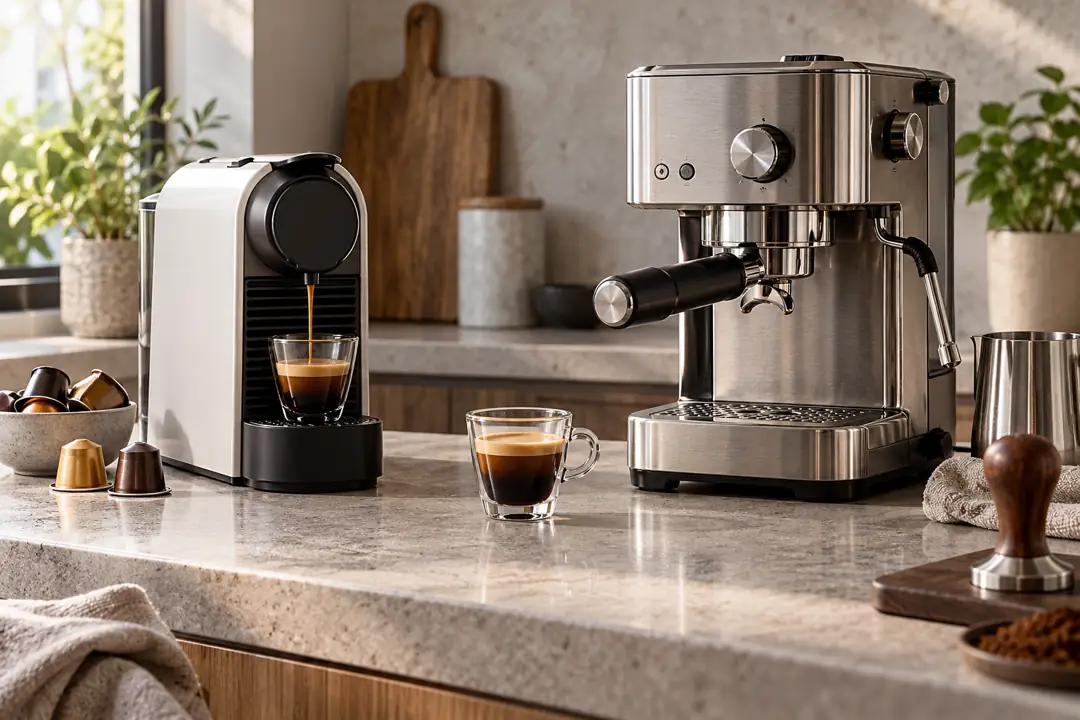
Compact capsule machine beside a manual portafilter espresso machine

Choose a coffee machine type before choosing a model. A pod or capsule coffee machine prioritises speed, consistency and low mess. A manual espresso machine prioritises control and learning. A bean-to-cup machine grinds beans and automates more of the process, while a filter machine is designed for larger batches of black coffee. This guide compares the workflows and trade-offs using published product categories and practical decision criteria; it does not claim hands-on testing or rank every machine on the market.

The short answer

Choose a coffee pod or capsule machine if you want one drink quickly, prefer minimal coffee preparation and accept buying a specific capsule format. Choose a manual espresso machine if learning, adjusting grind and controlling extraction are part of the appeal. Choose a bean-to-cup machine if you want freshly ground beans with a more automated workflow and can accommodate a larger machine and cleaning routine. Choose a filter coffee machine if you mainly prepare several larger black coffees together.

None is universally best. The right type depends on the drink you make most, the number of daily users, available space, milk routine, cleaning tolerance and ongoing coffee format. If capsule convenience is the clear winner, the coffee machine finder can narrow the Nespresso Original and Vertuo options.

Coffee machine type comparison

Machine Type

Pod or capsule machine

Best For
Fast single servings, consistency and low mess
Main Control
Capsule choice, programmed cup size and milk method
Main Trade-Off
Locked to one capsule system or compatibility family

Machine Type

Manual espresso machine

Best For
Learning espresso and controlling grind, dose and extraction
Main Control
Grinder, dose, tamp, time and milk steaming
Main Trade-Off
Requires skill, separate equipment and more cleanup

Machine Type

Bean-to-cup machine

Best For
Freshly ground coffee with push-button automation
Main Control
Strength, drink settings and sometimes milk recipes
Main Trade-Off
Larger footprint, higher maintenance complexity and internal cleaning

Machine Type

Filter coffee machine

Best For
Several cups of black coffee
Main Control
Coffee-to-water ratio and batch size
Main Trade-Off
Not designed to produce concentrated espresso

What is a pod or capsule coffee machine?

A pod coffee machine uses a pre-portioned coffee format intended for a defined brewing system. “Pod” and “capsule” are often used interchangeably in shopping searches, although manufacturers may use one term more precisely. Nespresso Original, Nespresso Vertuo, Dolce Gusto, Tassimo, Keurig, Lavazza A Modo Mio and illy systems do not share one universal format. A listing that says “coffee pod machine” does not mean every pod fits it.

The main advantage is a short, repeatable workflow: insert the correct capsule, select the supported serving and remove the used capsule according to the machine instructions. There is no separate grinder, loose dose or tamping step. That makes capsule machines attractive for busy mornings, offices with light use and people who want predictable preparation.

The trade-off is the ecosystem. The machine determines which capsule family, serving sizes and sellers are available. Ongoing cost should be compared per drink using current local pack information, not an old generic price. Capsule material, recycling routes and third-party compatibility also vary by system and country.

What is a manual espresso machine?

A manual or semi-automatic espresso machine normally uses ground coffee in a portafilter. The user or grinder determines grind size and dose; the user distributes, tamps, starts the extraction and often steams milk. This creates more room to adjust flavour, but it also creates more ways for a drink to vary.

The machine alone is not the full setup. A suitable grinder, scale, tamper, milk jug, storage and cleaning tools may be part of the real footprint and budget. Fresh beans also need sensible storage. Someone who wants to explore espresso can value this process; someone who wants coffee with one button at 7 a.m. may find it frustrating.

Do not assume that “manual” always means superior coffee or that a pressure number predicts the result. Coffee freshness, grinder quality, preparation, temperature behaviour and user technique all influence the cup. Compare the complete routine you are willing to repeat.

What is a bean-to-cup coffee machine?

A bean-to-cup machine contains a grinder and automates grinding, dosing and brewing. Many models add programmed drinks or automatic milk systems. This can combine fresh grinding with push-button convenience, but the internal brew group, grinder path, grounds container and milk components introduce maintenance tasks that capsule machines do not have in the same form.

Bean-to-cup suits households making several coffees and wanting to use whole beans without manually preparing a portafilter. It usually needs more counter depth and height than the smallest capsule machines. Water tank, bean hopper and service-door access matter as much as the listed width.

Before buying, walk through refilling beans and water, emptying grounds, rinsing milk parts and accessing the brew unit where applicable. A feature is only valuable if the household will maintain it as the manual requires.

Which machine type is best for latte and cappuccino?

The machine type does not answer the milk question by itself. A compact capsule machine can be paired with a separate frother. Integrated capsule models can automate milk recipes. A manual espresso machine uses a steam wand and gives the user more texture control. A bean-to-cup machine may use a wand, tube or automatic carafe.

Choose between three workflows:

  1. Separate frother: simple to replace and easy to keep separate, but occupies additional space.
  2. Automatic milk system: fewer preparation steps, but every milk-contact part needs prompt cleaning.
  3. Steam wand: greater control over texture and temperature, but requires practice and wiping or purging after use.

For someone who mainly drinks milk-heavy coffee, cleaning tolerance is a stronger decision factor than the total number of recipes. An unused milk feature is not value.

Which is best for a small kitchen?

Pod machines include some of the narrowest home coffee machines, but measure the full workflow. Record width, depth and height; then add clearance for the lever, lid, removable tank, capsule bin, cup platform and any frother. A rear tank can force a small machine forward under a cabinet. A top-loading bean hopper can require vertical clearance.

A manual machine may be compact while the grinder, knock box and accessories occupy another section of the counter. Bean-to-cup machines combine several functions but can be deeper. Filter machines need room for a carafe and lid. Our compact Nespresso machine guide compares capsule-focused choices, but the same measuring method applies to every category.

Compare ongoing cost without using a misleading price

Live prices change with country, seller, pack, bundle and promotion. Use a repeatable calculation instead:

  • For capsules, divide the current pack price by the number of capsules actually included.
  • For beans, divide the bag price by the number of drinks produced at the dose you use.
  • Add milk, water filters, descaling supplies and wasted coffee where relevant.
  • Spread accessories and necessary equipment across a realistic ownership period.
  • Do not compare one espresso capsule with a much larger bean drink as if the servings were identical.

Manual and bean-to-cup setups can offer lower coffee cost per gram, but they may require a grinder or a higher initial machine budget. Capsule systems can cost more per gram while reducing preparation time and wasted loose coffee. The useful comparison is total cost for your actual weekly drinks.

Capsule machine decision: Original or Vertuo?

If a pod machine fits your routine, choose the capsule system before the model. Nespresso Original focuses on ristretto, espresso and lungo-style servings and supports a broad Original-compatible market in many countries. Vertuo uses a different rounded capsule and offers system-assigned cup sizes, including larger coffees depending on the product and machine.

Original and Vertuo capsules are not interchangeable. Third-party “Nespresso compatible” wording commonly refers to Original and does not establish Vertuo compatibility. Read the Nespresso pod compatibility chart, then compare Original and Vertuo.

Five questions that decide the category

  1. Is the normal drink espresso, milk-based coffee, a large black coffee or a batch for several people?
  2. Is one-button speed more important than changing grind, dose and extraction?
  3. How much counter space and operational clearance are genuinely available?
  4. Which cleaning tasks will the household perform consistently?
  5. Is the preferred coffee format—capsule, whole bean or ground coffee—easy to buy locally?

If speed, consistency and minimal loose coffee dominate, start with a capsule machine. If hands-on control is part of the hobby, investigate manual espresso. If fresh grinding and automation matter together, compare bean-to-cup. If multiple black coffees are made at once, include filter machines.

Once the category is clear, avoid reopening the entire market. Capsule shoppers can use the Best Nespresso machines guide and machine finder. Existing owners should use the capsule finder only after confirming the machine system. The best choice is the workflow you will still enjoy cleaning and using after the first week.

Keep exploring

View all guides

Guided recommendation

Blog

Tips, guides and stories about coffee.

View

Find My Machine

Choose habits, budget and space to discover the right machine.

Start quiz now