
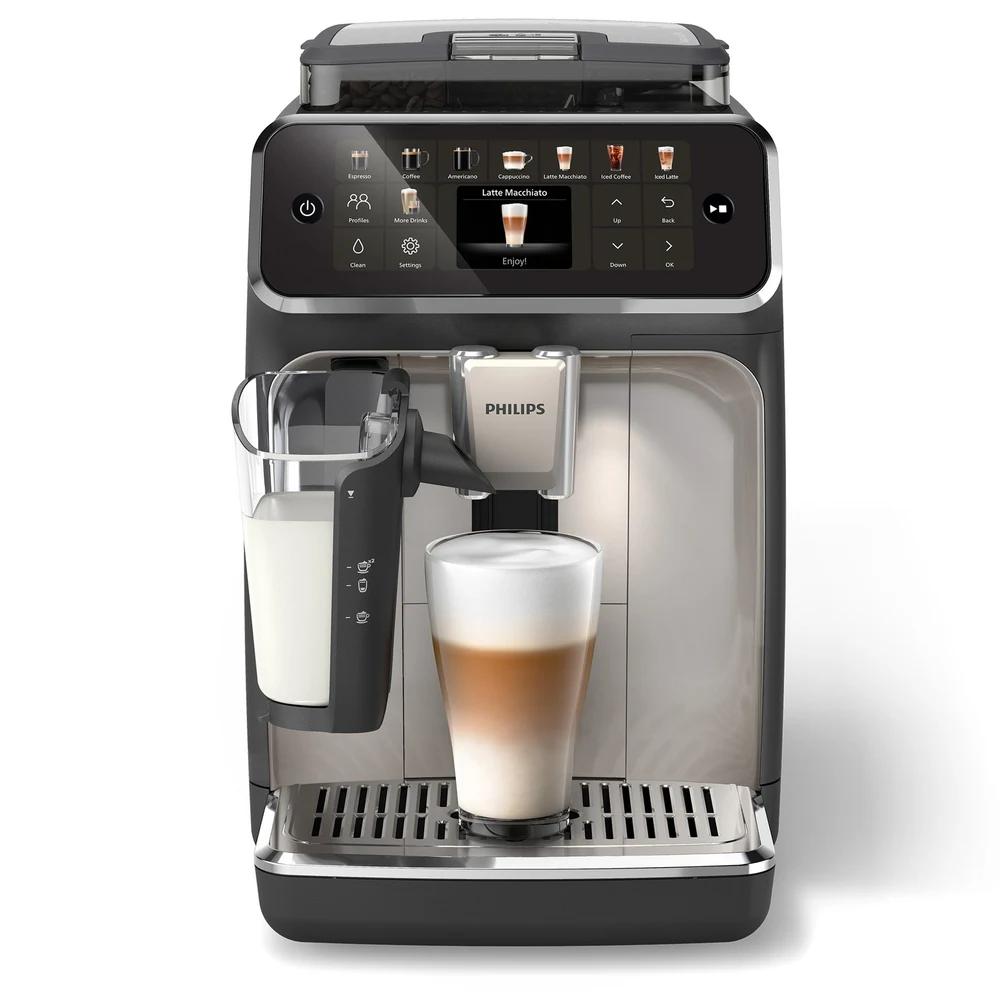
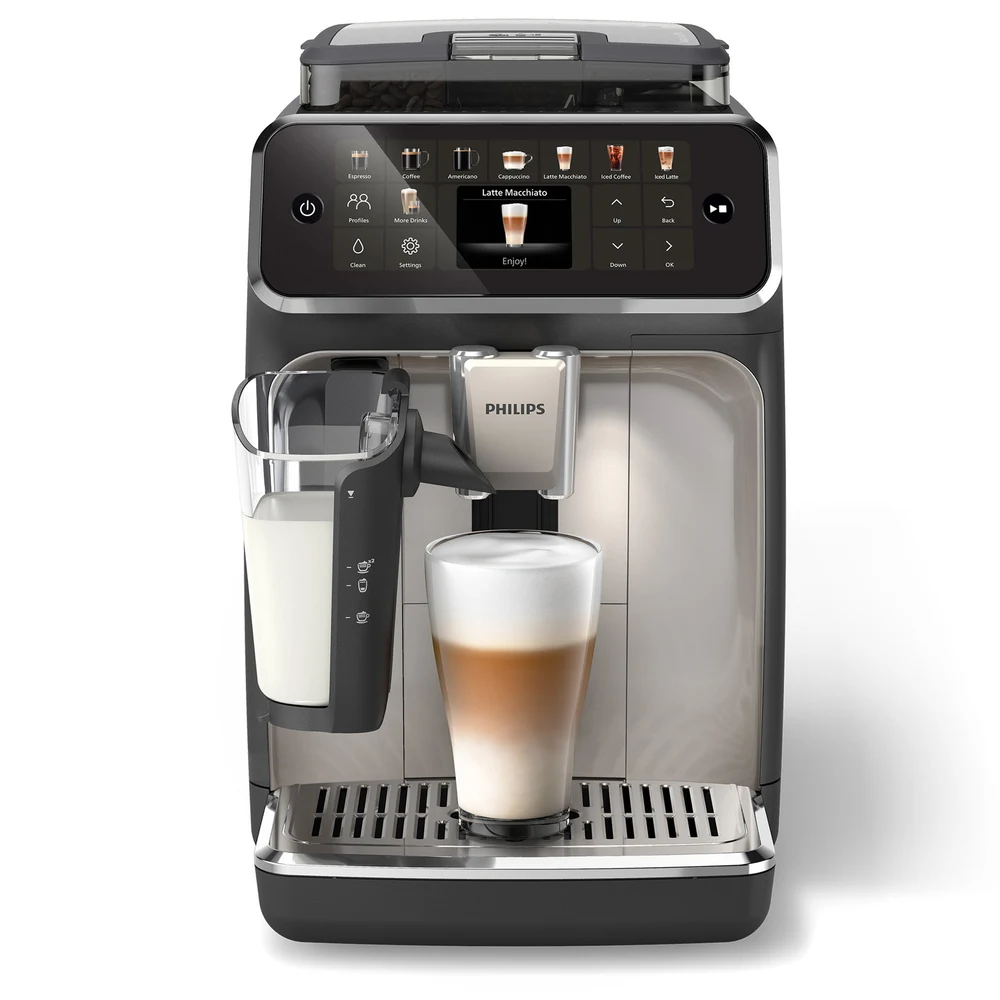
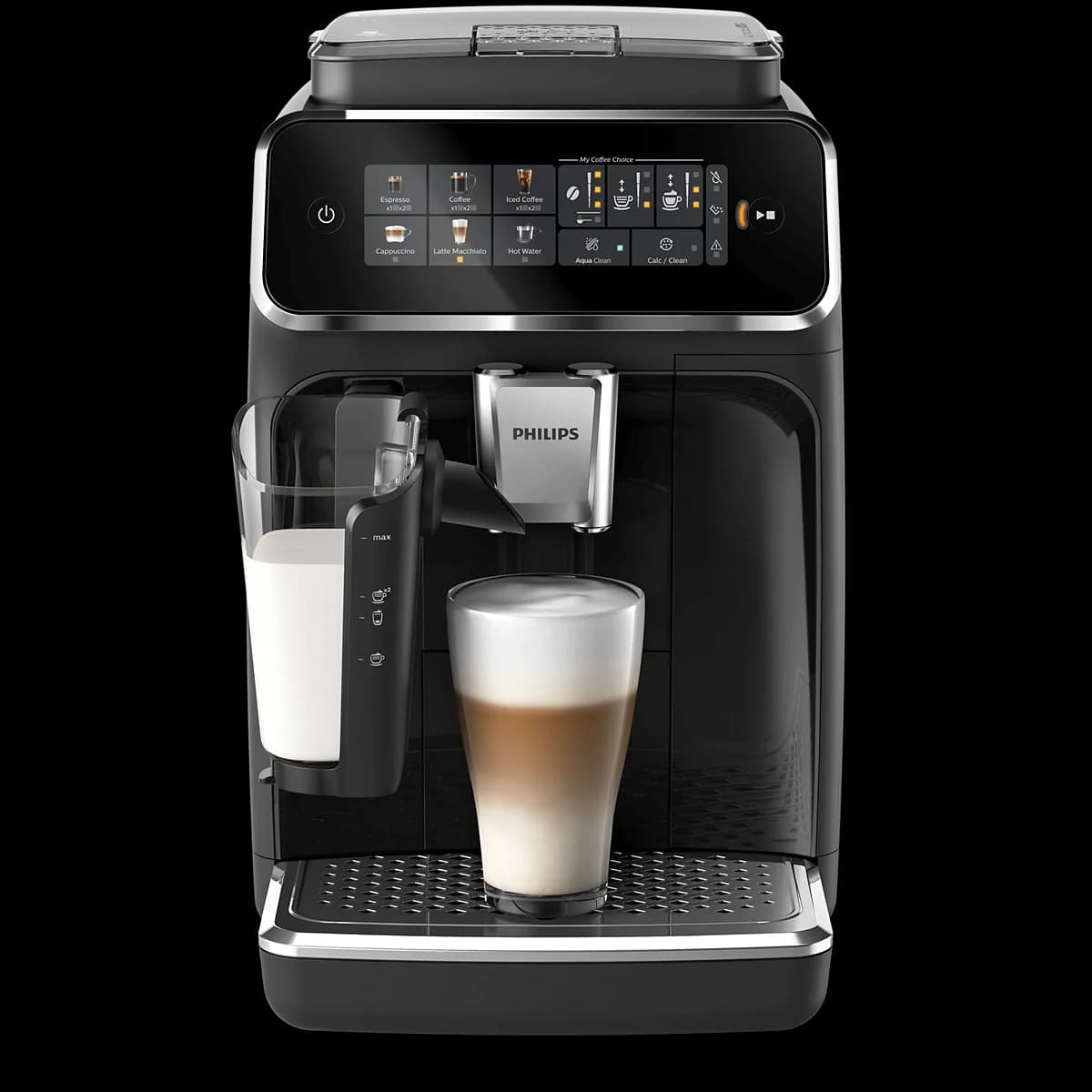
Like every fully automatic machine, it grinds, tamps and brews by itself and drops the used puck into an internal bin. There is no portafilter. You still refill beans and water, empty the grounds and drip tray, rinse the brew group weekly and wash LatteGo after milk drinks.
The real question is whether you need the 5500 at all. For one person, or a household that agrees on one cappuccino recipe, the Philips 3300 makes the same kind of coffee and milk with less to pay for. The sections below are there to help you decide which of the two fits your mornings.
Philips 5500 LatteGo EP5544/94 at a glance
Drinks
- EP5544/94 detail
- 20 hot and iced presets, including Americano, flat white and iced latte
- What it means day to day
- More named buttons; the core espresso and milk hardware is the same family as the 3300
Profiles
- EP5544/94 detail
- Four saved user profiles plus a guest mode
- What it means day to day
- Each person keeps their own version of a drink; guest changes are not saved
ExtraShot
- EP5544/94 detail
- Adds an extra ristretto to a selected drink
- What it means day to day
- A stronger cup without changing the aroma setting
Milk
- EP5544/94 detail
- LatteGo: two-part container, no milk tubes
- What it means day to day
- Quick milk clean, then take it apart and rinse or put it in the dishwasher
Iced
- EP5544/94 detail
- Coffee brewed with warm water over ice
- What it means day to day
- An iced coffee, not cold brew and not cold milk foam
Power
- EP5544/94 detail
- 120 V (Philips US specification)
- What it means day to day
- Check the model code and voltage on the listing before ordering
Features from Philips’ US EP5544/94 page, the US comparison chart and the 4400/5500 manual. A drink count is not a taste score.
US review written November 24, 2026, from Philips’ US product page and comparison chart for EP5544/94 and the 4400/5500 North American manual. It covers EP5544/94 Gray Chrome; other 5500 suffixes are different variants. It is a buying and workflow assessment; we did not run our own taste, speed, noise or reliability test.
What the profiles actually solve
Picture two people who both drink cappuccino. One wants it small and strong, the other wants more milk. On a machine without profiles, whoever brews second either accepts the first person’s settings or changes them back. On the 5500, each person picks their colored profile before choosing the drink, adjusts it once, and the manual says the settings are saved to that profile when brewing finishes.
There are four saved profiles plus guest. Guest mode is for a visitor or an experiment: the changes are not stored. It is not a fifth saved user. Philips’ US product page text is inconsistent about the count, so this review follows the comparison chart and the manual.
Profiles do not turn the machine into four separate stations. Everyone shares the same beans, grinder setting, water tank and milk container. A profile cannot switch you to decaf; for that, the manual describes a separate pre-ground coffee route with its own dosing steps.
The habit that matters is selecting your profile before you touch a drink. Forget it, and you change someone else’s recipe. Households that build that step into the morning get real use out of the feature. If nobody adjusts anything, profiles add nothing.
WhichCapsule note: This is EP5544/94 in Gray Chrome. Philips’ US page URL ends in ep5544-95 while its specification lists EP5544/94; the card matches the specification and the Amazon title.
The 20-drink menu: count the ones you will use
Philips markets the 5500 as 20 hot and iced presets. The useful additions over the 3300 are Americano, flat white and more named iced drinks, including iced latte. If those are on your weekly list, the 5500 puts them one tap away. If you would try them once and go back to cappuccino, they are variety, not a reason to pay more.
Without a dedicated Americano button, you can still pour espresso and add hot water yourself on the 3300. It is a two-step job rather than impossible. Decide whether that extra step bothers you before paying for the button.
ExtraShot adds an extra ristretto to a selected coffee or milk drink. The manual treats it as separate from the aroma strength control. It is a way to make a recipe stronger, not proof that the base espresso is better than the 3300’s.
The iced drinks use warm water brewed over ice. LatteGo is a hot-milk system, so there is no cold foam and no cold brew program. If cold foam is the point, look at the De’Longhi Magnifica Duo below.
WhichCapsule note: Neither the recipe total nor the color display is evidence of better taste. We have not measured extraction, milk temperature or brewing time on this machine.
LatteGo cleanup and the weekly routine
LatteGo is the reason Philips machines are easy to live with. The container and frame separate in one motion, with no milk tubes. After your milk drinks, run Quick milk clean, then take LatteGo apart and rinse it or put it in the dishwasher. The manual is clear that Quick milk clean is not a substitute for washing it.
The coffee side needs the same care as any bean-to-cup machine. Empty the grounds bin and drip tray every few days. Rinse the brew group weekly. Run the coffee-oil remover monthly as the manual directs, with lubrication handled separately. Descaling depends on your water hardness and whether you use the AquaClean filter.
AquaClean extends the time between descaling only under Philips’ stated conditions, including replacing the filter on schedule. It does not clean milk parts, empty the grounds or remove coffee oils.
Plan two milk drinks as consecutive cups: brew the first, move the cup, brew the second, then wash LatteGo once. A two-cup coffee function does not make two milk drinks at the same time.
WhichCapsule note: The manual’s maintenance table is the authority for timing, cleaning products and removing the brew group safely.
Philips 5500 or 3300: the decision most buyers face
The Philips 3300 LatteGo EP3341/50 has six drinks: espresso, coffee, cappuccino, latte macchiato, iced coffee and hot water. It uses the same LatteGo milk system and the same style of routine. What it lacks are saved profiles, the Americano and flat white buttons, the extra iced recipes and ExtraShot.
Write down every drink your household made last week, with the cup size and strength next to each name. If the list fits the 3300’s menu and nobody fights over settings, buy the 3300. If two people want different versions of the same drink, or Americanos and flat whites appear on the list every week, the 5500 earns its higher price.
Our 3300 vs 5500 comparison goes through that list in detail, and the Philips 3300 review covers the cheaper machine on its own.
WhichCapsule note: This is the US EP3341/50 in Glossy Black. Other 3300 suffixes are different variants.
View this model
Paid links. Prices can change; the price at checkout applies.
Philips 5500 vs De’Longhi Magnifica Duo
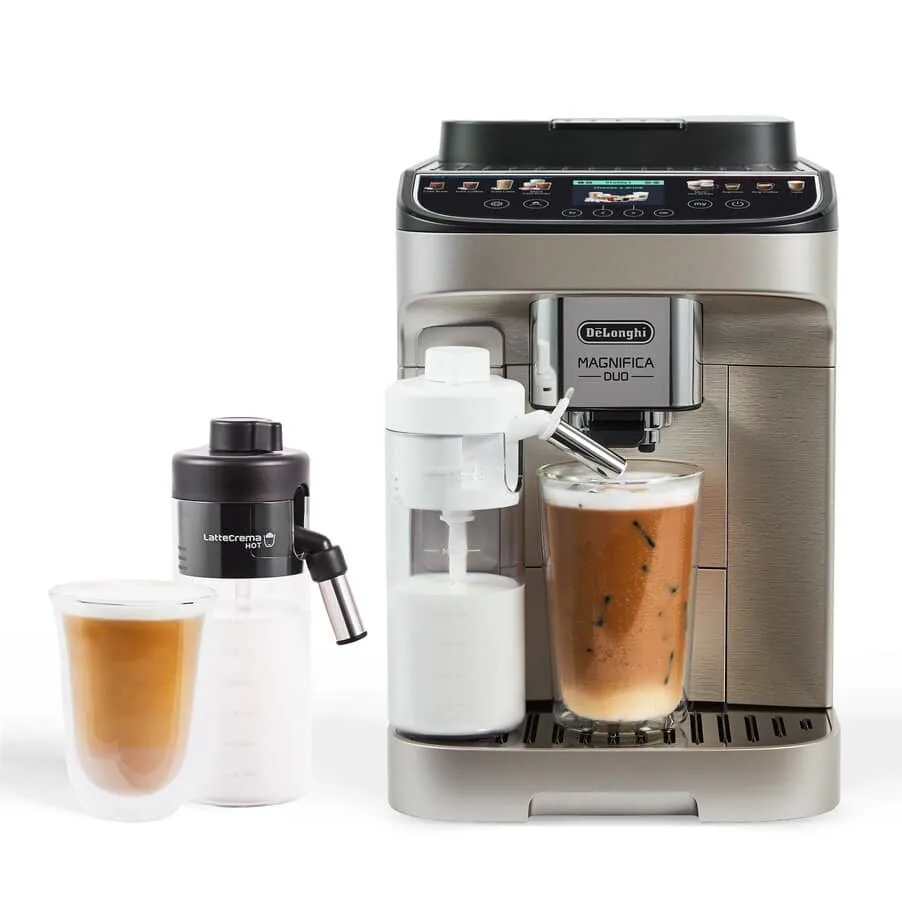
If the 5500 appeals for its screen and profiles, the De’Longhi Magnifica Duo ECAM33080SXB is the rival to check. It adds cold milk foam, a cold brew function, a color display and saved profiles. Its LatteCrema carafe has more parts to wash than LatteGo.
Choose the Philips if quick milk cleanup matters most. Choose the De’Longhi if you want cold foam or cold brew from the same machine. De’Longhi Magnifica Duo vs Evo explains what the Duo’s extras change in daily use.
WhichCapsule note: This is the US ECAM33080SXB. Check the model code on the listing.
View this model
Paid links. Prices can change; the price at checkout applies.
Coming from a pod machine?
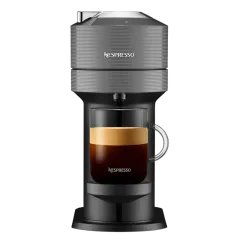
The 5500 is a big step up from capsules: fresh beans and a long menu instead of disposable pods, in exchange for a weekly maintenance routine and more counter space. If the grinder, brew group and grounds bin put you off, a Nespresso milk machine is the lighter option; Philips 3300 vs Gran Lattissima compares the two ways of making a one-touch latte. If you are unsure whether beans suit you at all, start with whole bean vs capsule coffee.
Buying it on Amazon
Check that the listing says EP5544/94 and confirm the seller, condition, US 120 V specification and box contents before ordering. During an earlier check, the Amazon detail table showed a conflicting 230 V field; resolve that against the exact offer rather than assuming. Sellers, finishes and bundles change, and Renewed or used offers are separate choices.
View this model
Paid links. Prices can change; the price at checkout applies.
What people actually ask
Is the Philips 5500 worth it over the 3300?
Only if you will use saved profiles or the extra drinks. The milk system and routine are the same family. If the 3300’s six drinks cover your week and shared settings are fine, the 3300 is the better buy.
How many user profiles does the Philips 5500 have?
Four saved user profiles plus a guest mode, per Philips’ US comparison chart. Guest changes are not stored, so it is not five saved users. Select your profile before adjusting and brewing a drink.
Does the Philips 5500 make cold brew or cold milk foam?
No. Its iced drinks are brewed with warm water over ice, and LatteGo is a hot-milk system. The De’Longhi Magnifica Duo is the alternative with cold foam and a cold brew function.
What does ExtraShot do on the Philips 5500?
It adds an extra ristretto to a selected coffee or milk drink. It is separate from the aroma strength setting and makes that recipe stronger.
Does Quick milk clean replace washing LatteGo?
No. The manual separates the quick program from taking LatteGo apart and rinsing it or putting it in the dishwasher after use.
Is the Philips 5500 EP5544/94 the same as EP5544/95?
Philips’ US page URL ends in ep5544-95, but its specification lists EP5544/94, which matches the Amazon US listing this review links to. Check the model code on the listing before ordering.
Philips 5500 LatteGo pros and cons
Pros
- Four saved user profiles plus a guest mode
- 20 hot and iced presets, including Americano, flat white and iced latte
- LatteGo milk system with no tubes: two parts, dishwasher-safe
- ExtraShot adds a ristretto without changing the aroma setting
Cons
- No cold foam or cold brew: iced drinks are warm coffee brewed over ice
- Costs more than the 3300, which uses the same LatteGo system
- Profiles share one bean hopper, so decaf needs the separate pre-ground route
- Weekly brew-group rinse and monthly coffee-oil cleaning, like any bean-to-cup machine
Should you buy the Philips 5500?
- Buy the 5500 if two or more people want their own saved recipes, or you regularly drink Americanos, flat whites or iced lattes.
- Buy the 3300 if its six drinks cover your week and everyone is happy with shared settings.
- Buy the Magnifica Duo if cold foam or cold brew matters more to you than the easiest milk cleanup.
The bottom line
The Philips 5500 LatteGo is the 3300 for busier households: same easy milk cleanup, plus profiles that stop people overwriting each other’s drinks and a menu that covers Americanos and flat whites.
If nobody in your house will select a profile or use the extra drinks, save the money and buy the 3300. If they will, the 5500 is the Philips to get.
Still choosing the machine itself? See the best espresso machines for home: seven picks sorted by how you make coffee, from learning espresso by hand to one-touch lattes.
Choose your buying option
Paid links. Prices can change; the price at checkout applies.