
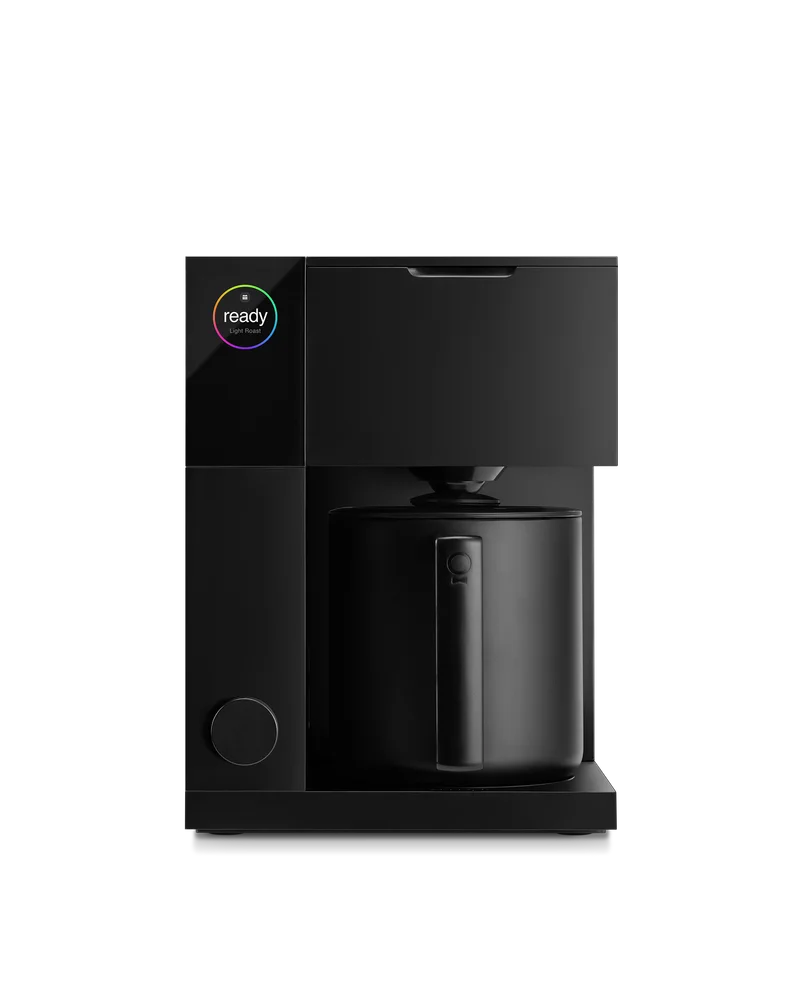
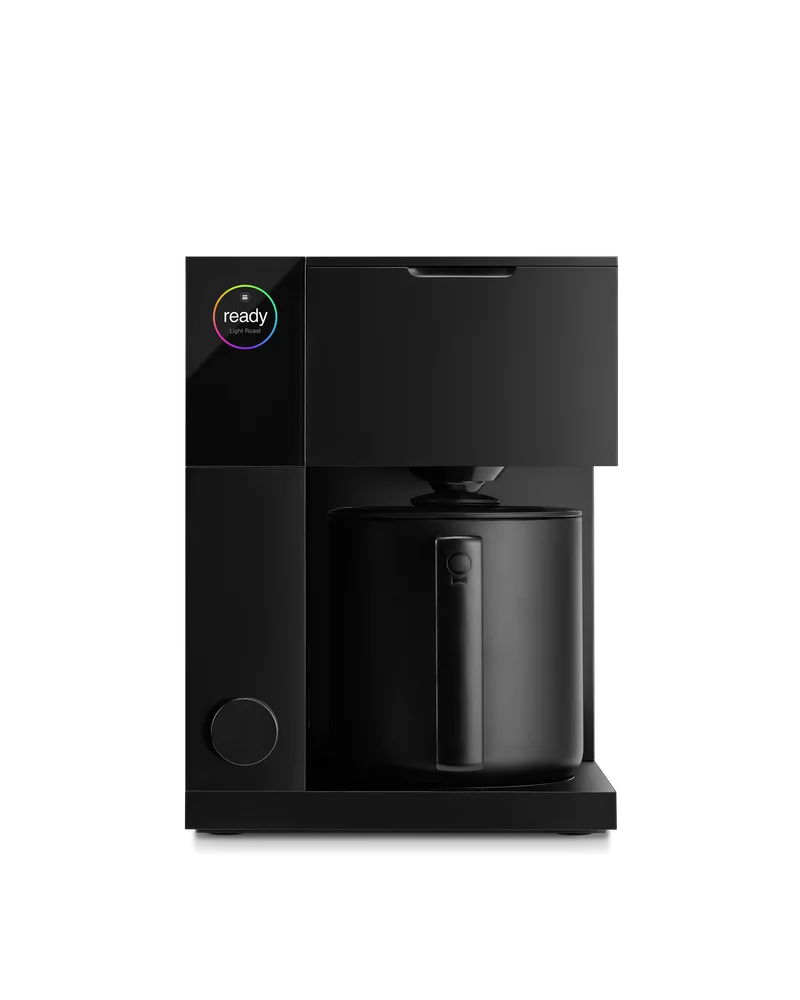
Aiden is a drip brewer, not an espresso or capsule machine. You weigh and grind the coffee, choose the single-serve or batch basket with its matching filter, and the machine handles the water for the recipe you pick. Everyday brewing works from the controls on the machine; Fellow’s app adds saved profiles, scheduling and firmware updates.
The real alternative is a brewer with the grinding and weighing built in, such as the xBloom Studio. Our xBloom Studio vs Fellow Aiden comparison covers that choice. This page looks at Aiden on its own: who it suits, what the box leaves out and how a pod-machine owner should think about it.
Fellow Aiden at a glance
Brewing modes
- Aiden detail
- Single-serve and batch arrangements
- What it means day to day
- One machine for a solo cup on weekdays and a pot for guests
Capacity
- Aiden detail
- 1.5 L stated maximum
- What it means day to day
- A manufacturer limit, not a promise of a set number of your mugs
Carafe
- Aiden detail
- Thermal carafe included
- What it means day to day
- Batch coffee waits in the carafe instead of on a hot plate
Single-serve filter
- Aiden detail
- #2 cone filter
- What it means day to day
- Keep a box of #2 cones for one-cup brews
Batch filter
- Aiden detail
- Standard 8–12 cup basket filters
- What it means day to day
- A second filter type to stock for batches
Grinder and scale
- Aiden detail
- Neither built in (Fellow support)
- What it means day to day
- Keep or buy a grinder and a gram scale, or use pre-ground coffee
App
- Aiden detail
- Optional; adds saved profiles, scheduling and firmware updates
- What it means day to day
- Daily brewing works from the machine’s own controls
Details from Fellow’s Aiden product page and support documentation. The capacity figure is Fellow’s stated maximum, not a measured yield.
US review written November 24, 2026, from Fellow’s product page, Fellow support documentation and Breville’s US grinder page. It covers the Aiden Matte Black brewer-only listing. It is a buying and workflow assessment; we did not run our own taste, speed, noise or reliability test. Aiden brews filter coffee, not espresso.
Who the Fellow Aiden is for
Aiden makes the most sense in a house where the coffee pattern changes during the week. One person drinks a single cup before work; at the weekend, three people want the same coffee at the same time. A one-cup brewer handles the first case badly, and a basic batch machine handles the second but not the first. Aiden covers both with one footprint on the counter.
It also suits someone who already owns a good burr grinder and a gram scale. In that case the missing parts are not a cost at all: you keep the tools you trust and replace only the brewer. If you change grinders later, the brewer stays.
It is a poorer fit if each person wants a different bean, or one person drinks decaf. A shared carafe only helps when everyone drinks the same coffee. With different coffees you are back to separate one-cup brews, each with its own grounds and filter.
WhichCapsule note: This card is the Aiden Matte Black brewer with thermal carafe, sold without a grinder or scale.
Single cup or batch: what changes when you switch
Switching from one cup to a batch is not only a menu choice. The single-serve setup uses a #2 cone filter; the batch setup uses standard 8–12 cup basket filters. Keep both types in the drawer, and lay out the right basket and filter with the coffee before you start, so a weekend batch does not stall because only cones are left.
The dose changes too. A batch needs considerably more ground coffee than one cup, and Aiden does not weigh it for you. Weigh the coffee on your scale for the recipe you selected rather than guessing by scoops; that step is yours on every brew.
For batches, the thermal carafe is the serving point. Pour for several people from one brew instead of repeating the process cup by cup. Treat the 1.5 L figure as the ceiling and brew for what people will actually drink.
WhichCapsule note: Filter types are from Fellow’s product page. Check the current box contents for any starter filters before you order a supply.
The grinder and scale Aiden leaves to you
Fellow’s support pages say plainly that Aiden has no built-in grinder or scale. For whole-bean coffee you need both. Before you compare Aiden with an all-in-one machine, write down what you already own: a suitable grinder, a gram scale with enough capacity and resolution for a batch dose, and the two filter types.
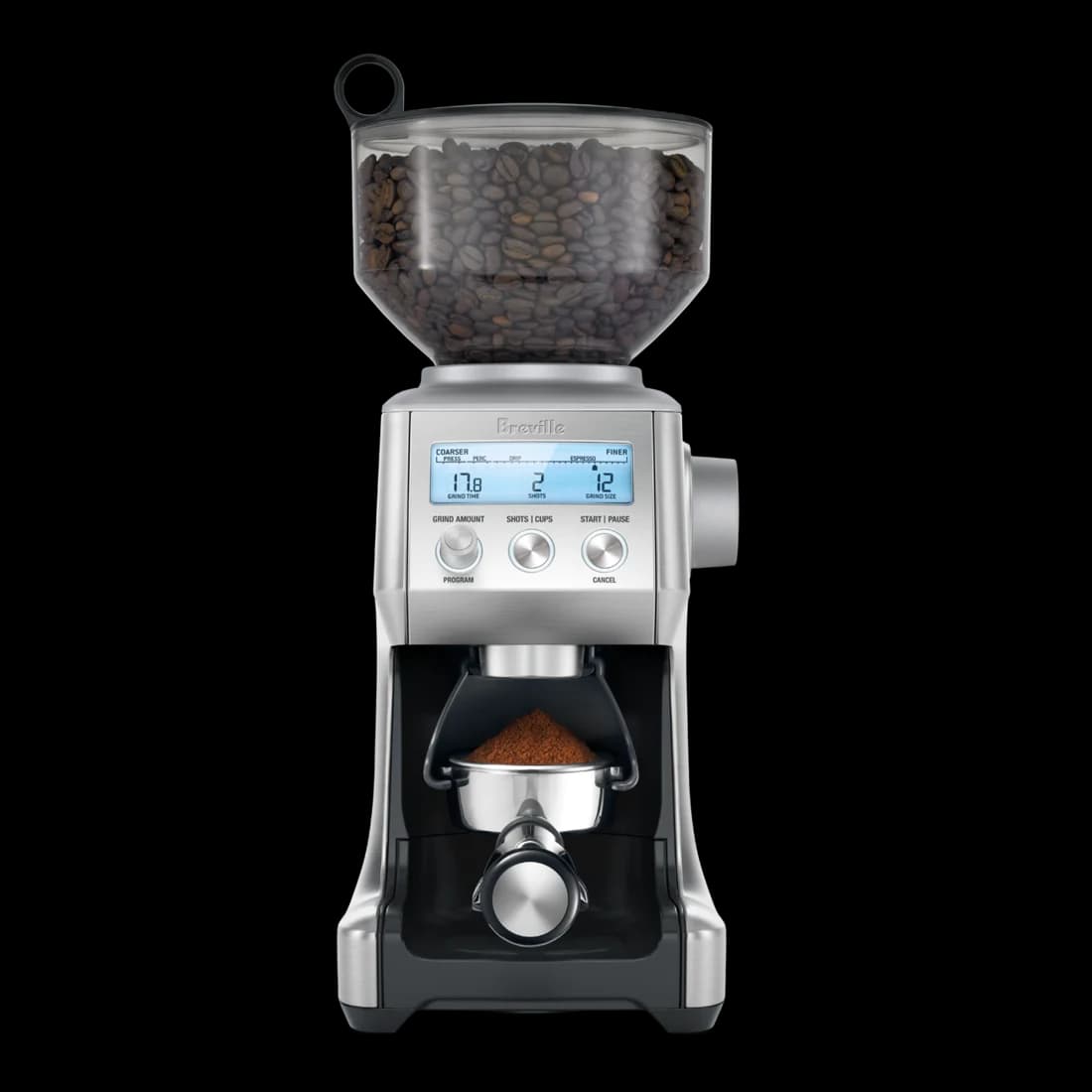
The Breville Smart Grinder Pro BCG820BSS shown here is one separately sold option with a filter-coffee grinding range. Its dosing is timed, not weighed, so the same number of seconds will not give the same grams with every bean. Use it with your scale, not instead of it. If you already have a grinder that handles filter coffee, keep it.
Pre-ground coffee removes the grinder from the list but not the scale, and you lose the freshness benefit that usually leads people to a brewer like this. Our built-in vs separate grinder guide goes through that trade-off for the whole setup.
WhichCapsule note: The grinder is a separate purchase example, not part of an Aiden bundle. A scale is still needed and is not shown as a card.
View this model
Paid links. Prices can change; the price at checkout applies.
Fellow Aiden vs xBloom Studio
The xBloom Studio takes the opposite approach. Its grinder and scale are part of the machine, and it brews pour-over style coffee one recipe at a time. If you drink alone, start from whole beans and own nothing yet, that integration is the reason to look at Studio first.
Aiden wins when the carafe matters, or when you already own a grinder and a scale. Compare the full stations, not the brewers alone: Studio as one machine, Aiden plus whatever grinder, scale and filters you still need. The xBloom Studio vs Fellow Aiden comparison lays both setups out item by item, and the xBloom buying guide covers the Studio range.
WhichCapsule note: The Studio is sold through xBloom’s own store, so it has no Amazon card here; its card is on the comparison page.
Coming from a pod machine?
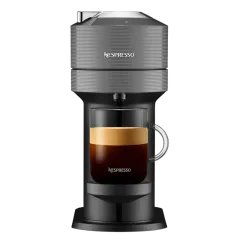
If you own a Nespresso machine, Aiden does not replace it; it adds a different drink. A Nespresso Original or Vertuo machine makes espresso-style coffee from sealed capsules with no weighing or grinding. Aiden makes filter coffee from grounds you prepare. Nothing on Aiden makes espresso, and it has no milk system, so lattes and cappuccinos stay with your capsule machine.
Where Aiden helps a pod household is volume. If you are running three or four Vertuo mugs for guests one capsule at a time, a single batch into a carafe is a different routine. The cost is the prep that pods skip: weighing, grinding, filters and rinsing the basket. Whole-bean vs capsule coffee and xBloom vs Nespresso walk through that change in routine.
Buying it on Amazon
The card on this page is the Fellow Aiden Precision Coffee Maker in Matte Black, brewer only, from Fellow Industries with Amazon shipping when we checked. Separate used or resale listings are a different offer. Confirm the finish, the condition and what is included before ordering; the brewer does not come with a grinder or scale. Prices change often; the cards show Amazon’s current price.
View this model
Paid links. Prices can change; the price at checkout applies.
What people actually ask
Does the Fellow Aiden have a built-in grinder?
No. Fellow’s support documentation says Aiden has neither a built-in grinder nor a scale. For whole beans, keep or buy a suitable grinder and weigh the coffee on a separate gram scale.
Can the Fellow Aiden brew a single cup?
Yes. It has a single-serve arrangement that uses a #2 cone filter, and a batch arrangement that uses standard 8–12 cup basket filters and brews into the included thermal carafe.
How much coffee does the Fellow Aiden make?
Fellow states a maximum capacity of 1.5 L for batch brewing. That is the brewer’s limit, not a guarantee of a particular number of mugs; how many cups you get depends on the size you pour.
Do you need the app to use the Fellow Aiden?
No. Fellow says Aiden brews single-serve or batch coffee from the controls on the machine. The app adds saved profiles, scheduling and firmware updates.
Can the Fellow Aiden make espresso?
No. Aiden is a filter-coffee brewer. A concentrated filter recipe is not espresso, and it has no milk system. Keep an espresso or capsule machine for espresso and milk drinks.
Fellow Aiden or xBloom Studio: which should I buy?
Aiden if several people want the same coffee at once, or you already own a grinder and a scale. Studio if you drink one coffee at a time and want the grinder and scale built into the machine.
Fellow Aiden pros and cons
Pros
- Single cup or shared batch from one brewer, up to a stated 1.5 L
- Thermal carafe included, so batch coffee is not kept on a hot plate
- Everyday brewing works from the machine's own controls
- Optional app adds saved profiles, scheduling and firmware updates
Cons
- No grinder or scale built in: you supply measured ground coffee
- Two filter types to stock: #2 cones and 8–12 cup basket filters
- Filter coffee only: no espresso and no milk
- 1.5 L is a stated maximum, not a fixed number of mugs
Should you buy the Fellow Aiden?
- Buy Aiden if your week mixes solo cups and shared batches, and you are fine preparing measured grounds.
- Buy Aiden first if you already own a burr grinder and a gram scale; you only need the brewer.
- Look at the xBloom Studio instead if you drink alone, start from whole beans and want grinding and weighing built in.
- Keep your Nespresso machine for espresso and milk drinks; Aiden only covers filter coffee.
The bottom line
The Fellow Aiden is the filter brewer I would point to when one machine has to handle both a single morning cup and a carafe for the table. The single-serve and batch setups, with a thermal carafe in the box, are the reason to buy it.
Go in knowing what it leaves out. With no grinder or scale inside, the real price of an Aiden setup is the brewer plus whatever tools and filters you do not own yet. If that list is empty, Aiden is an easy choice; if it is long, compare it with the xBloom Studio first.
Choose your buying option
Paid links. Prices can change; the price at checkout applies.