
That is the whole review in two sentences. The rest explains what the routine actually looks like on a weekday, where beginners get stuck, and why the Ninja Luxe Café ES601 is the better buy for a different kind of person.
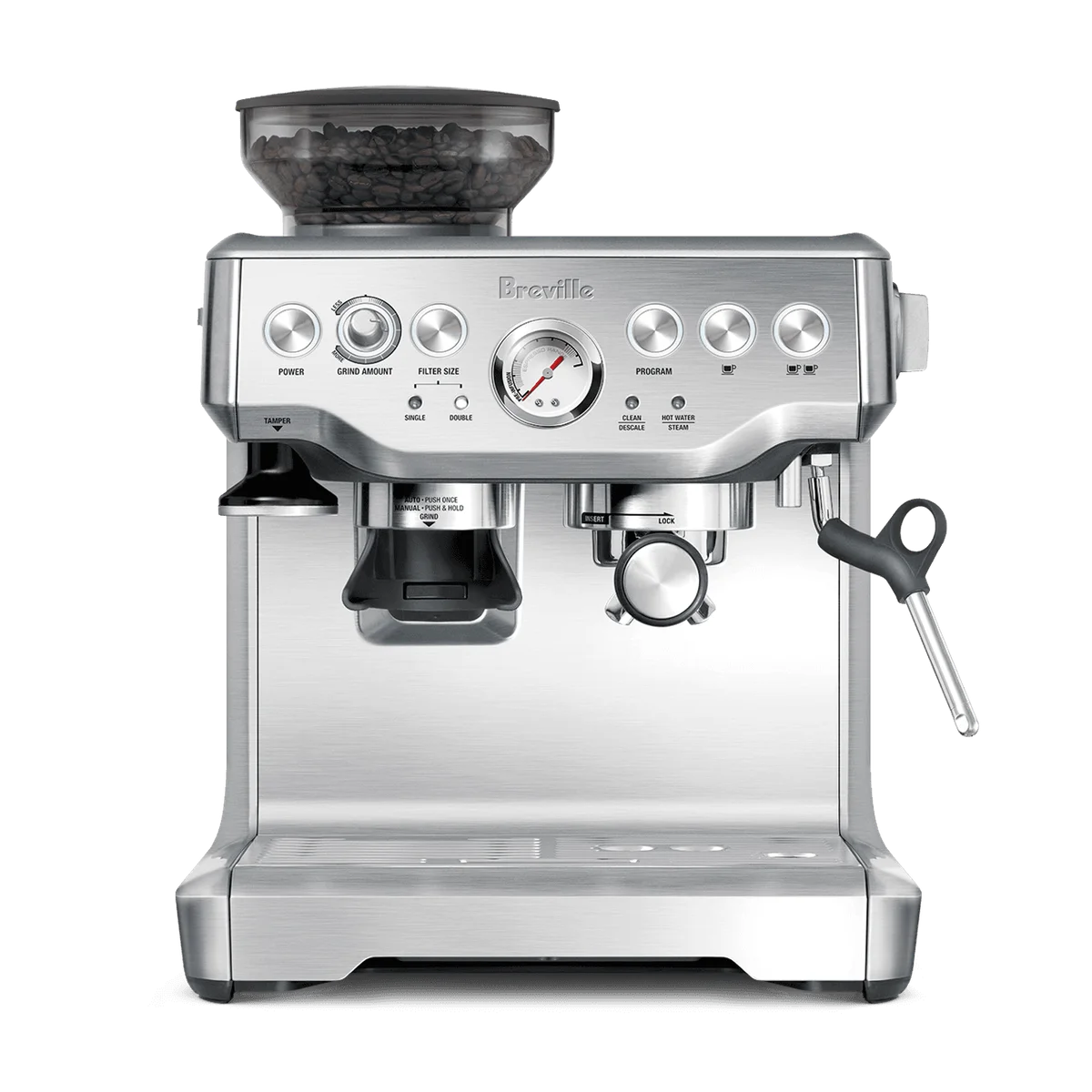
One naming trap first. Breville sells several machines with “Barista” in the name. This review is the standard BES870XL. The Express Impress adds assisted tamping, and the Barista Pro and Barista Touch change the heating system and controls. Check the model number on the exact listing before you order.
Barista Express BES870XL at a glance
Grinder
- BES870XL detail
- Integrated conical burr grinder, 16 grind settings
- What it means day to day
- No separate grinder to buy; you choose and adjust the setting
Dose
- BES870XL detail
- Grind-amount dial; grinds straight into the portafilter
- What it means day to day
- Not a scale. Expect to adjust amount and grind together at first
Portafilter
- BES870XL detail
- 54 mm, single- and dual-wall baskets, tamper included
- What it means day to day
- Dual-wall forgives pre-ground or stale coffee; single-wall rewards fresh beans
Brewing
- BES870XL detail
- One- and two-cup buttons plus manual control, pressure gauge
- What it means day to day
- The gauge shows where your shot sits; it is a guide, not a taste verdict
Temperature
- BES870XL detail
- Digital (PID) temperature control
- What it means day to day
- Steadier brew temperature between shots than a basic thermostat
Milk
- BES870XL detail
- Manual steam wand
- What it means day to day
- You texture milk yourself; there is no automatic frothing mode
Other drinks
- BES870XL detail
- Dedicated hot-water outlet
- What it means day to day
- Americano and tea water; no drip-coffee or cold-brew program
Capacities
- BES870XL detail
- Half-pound bean hopper, 67 oz removable water tank
- What it means day to day
- Enough for a few days of two-person espresso before refilling
Specifications from Breville’s US product page and manual for the BES870XL. A larger number of grind settings is not a taste score.
US review written November 15, 2026, from Breville’s product page and US/Canada/Mexico instruction book. It covers the standard BES870XL, not the Express Impress, Barista Pro or Barista Touch. It is a buying and workflow assessment; we did not run our own taste, speed, noise or reliability test.
What the Barista Express does well
The appeal is control without a second appliance. You get a burr grinder, a 54 mm portafilter, a pressure gauge and a real steam wand in one footprint. That combination teaches you how espresso works: change the grind, watch the shot speed up or slow down, taste the difference. Few one-body machines at this level let you learn that cause and effect so directly.
The two basket types make the first weeks easier than its reputation suggests. Start with the dual-wall basket while you get used to dosing and tamping, then move to the single-wall basket once you buy fresh beans and want more say in the result. Breville’s manual describes this progression, and it is the right way to use the machine.
The steam wand is the other reason to buy it. Manual steaming takes practice, but once you can stretch and swirl milk, you are not limited to a machine’s foam presets. If latte art or a flat white with tight microfoam is part of why you want an espresso machine, an automatic frother will feel like a ceiling. The Express does not have that ceiling.
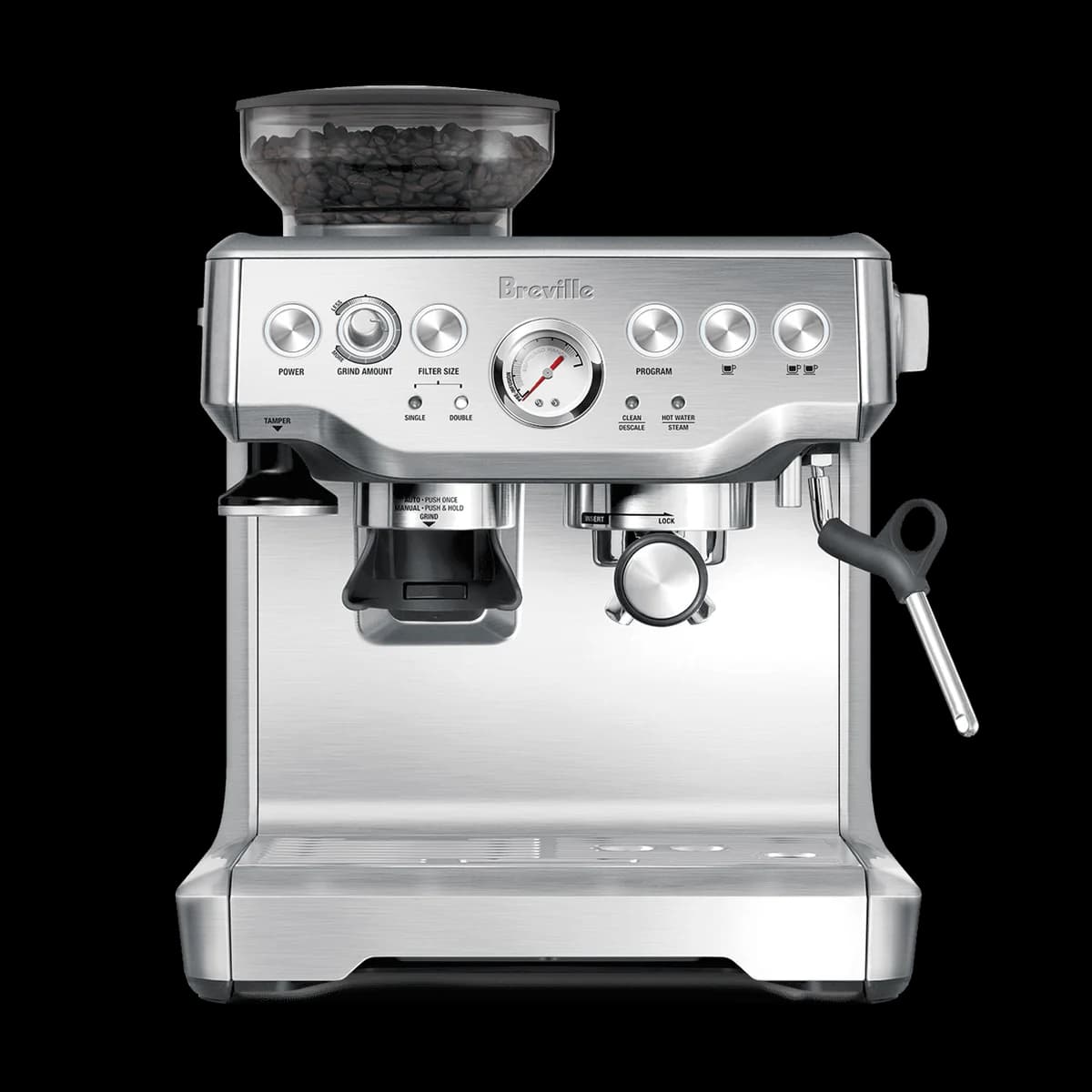
WhichCapsule note: This is the standard BES870XL in brushed stainless steel. Express Impress, Barista Pro and Barista Touch are different listings with different features.
Where beginners get stuck
The grind-amount dial is the first surprise. It controls how long the grinder runs, not how many grams land in the basket. Change the grind size and the dose changes with it. New owners often adjust both at once and lose track of what fixed the shot. Change one thing at a time, and if repeatability matters to you, add an inexpensive scale.
The second is chasing the pressure gauge. A needle in the middle of the zone is a useful sign, but it does not guarantee a good-tasting shot, and different beans behave differently. Use the gauge to diagnose a shot that runs far too fast or too slow, then let taste decide the final setting.
The third is milk. Expect a few weeks before steaming feels natural. That is normal and it is exactly the skill the machine is built to teach. If the person who will make most of the drinks has no interest in learning it, buy a machine with assisted frothing instead. A capable wand is wasted on someone who resents using it.
WhichCapsule note: Breville’s manual lists the adjustment steps for under- and over-extracted shots. Follow it before changing several settings together.
A weekday with the Express
Here is the real routine for one latte: grind into the portafilter, level and tamp, lock it in, brew, steam milk, pour, then knock out the puck, rinse the basket and wipe and purge the wand. For two drinks, repeat the coffee half and plan whether you steam milk once or twice. None of this is difficult, but it is several minutes of hands-on work.
Two habits keep the routine pleasant. Purge and wipe the steam wand straight after every use, before milk dries on it. And keep a knock box or bin close to the machine, so emptying the puck does not mean a trip across the kitchen with a hot portafilter.
If that list reads like a hobby you would enjoy, the Express fits. If it reads like a chore between you and the door, no amount of build quality will change your mind on a busy morning. Be honest about this before you buy; it matters more than any spec in the table.
WhichCapsule note: If you want to avoid handling a portafilter at all, start with Philips 3300 vs Magnifica Evo, which compares automatic bean-to-cup machines.
The better buy for some people: Ninja Luxe Café ES601
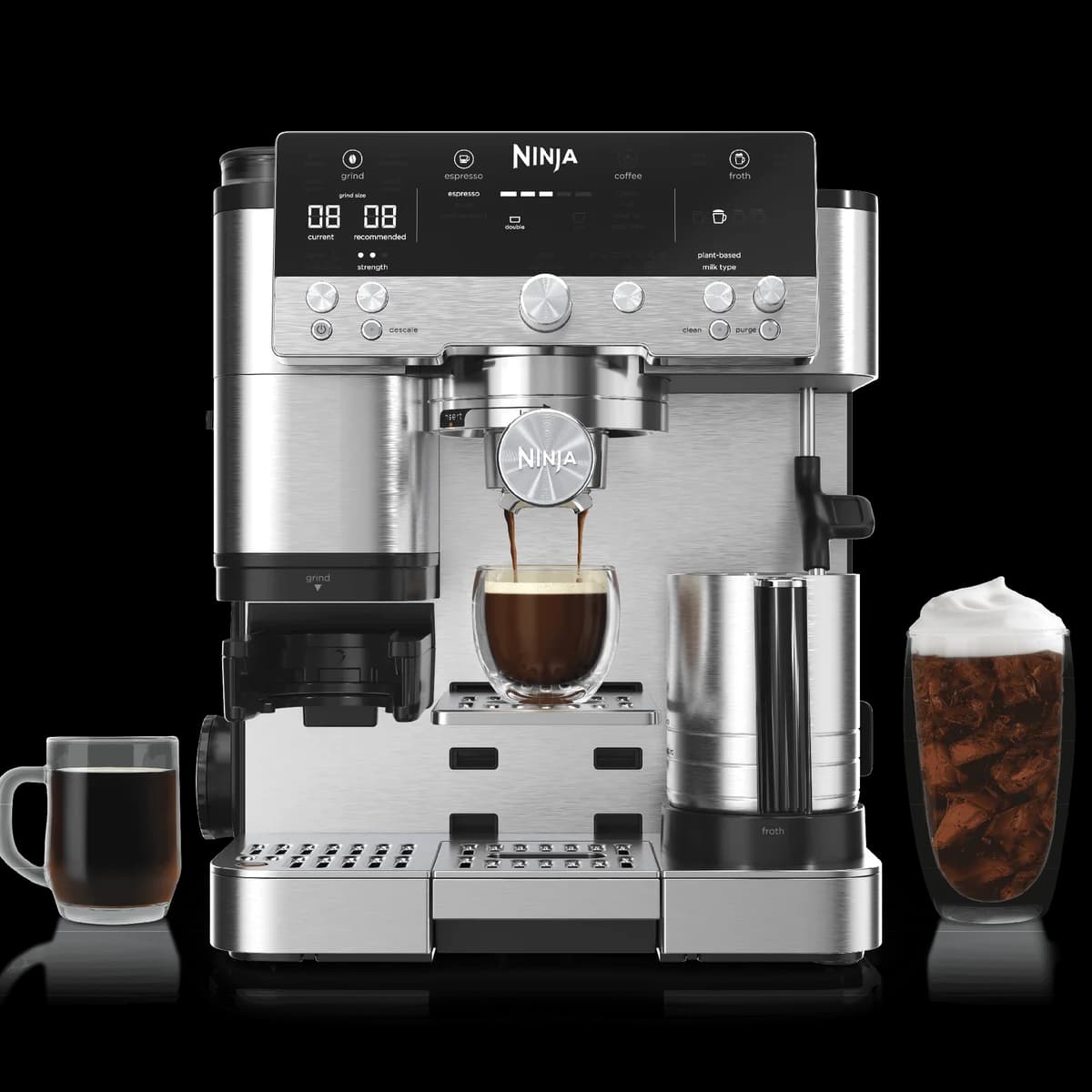
The Ninja Luxe Café Premier ES601 is the strongest alternative for someone who likes the idea of real espresso but does not want to learn every adjustment. It adds grind guidance with 25 settings, weight-based dosing built in, and assisted milk frothing in its dedicated jug. You still tamp and clean a portafilter, but more of the decisions are made for you.
It also brews more than espresso. The ES601 has drip-style coffee and rapid cold brew modes, which matters in a house where one person wants espresso and another wants a mug of regular coffee. The Express can only offer espresso or an Americano made with hot water.
Choose the Express if the learning is the point and manual milk is part of the appeal. Choose the Ninja if you want help with dosing and milk and value the extra drink modes. Our Ninja Luxe Café vs Barista Express comparison walks through both routines task by task.
WhichCapsule note: This is the Ninja Luxe Café Premier ES601, not the Pro ES701. For the difference, see Premier vs Pro.
View this model
Paid links. Prices can change; the price at checkout applies.
Cleaning and care you should plan for
Daily: rinse the basket and portafilter, wipe and purge the steam wand, and empty the drip tray when its indicator rises. Weekly or as the manual directs: backflush with the cleaning disc and tablets, and clean the grinder burrs and hopper so old coffee oils do not build up.
Descaling follows the machine’s instructions and depends on your water. Keep the cleaning tablets and descaler made for the machine rather than borrowing a routine from another brand. A few minutes of upkeep a week is the price of a machine that keeps brewing consistently.
Should you add a separate grinder later?
You do not need one to start. The built-in grinder is the reason most people choose the Express. If you later become serious about light roasts or very fine adjustment, you can grind with an external grinder and keep using the machine for brewing and steaming. The integrated grinder stays in the body either way.
If you already know you want to choose the grinder separately, compare the Express with a two-part setup first in Bambino Plus vs Barista Express. For grinder choices on their own, see Encore ESP Pro vs Fellow Opus 2.
Buying it on Amazon
Check the model code BES870XL and the brushed-stainless-steel finish on the listing. Sellers, colors and bundles change, so confirm the model number, condition and seller before ordering. Free beans or accessories offered on Breville’s own store are not automatically included with an Amazon purchase.
View this model
Paid links. Prices can change; the price at checkout applies.
What people actually ask
Is the Breville Barista Express good for beginners?
Yes, if the beginner wants to learn. The dual-wall basket and one- and two-cup buttons make the first shots manageable, but you still grind, tamp and steam milk yourself. Someone who wants the machine to handle dosing and milk will be happier with a guided machine such as the Ninja Luxe Café.
Does the Barista Express weigh the coffee dose?
No. The grind-amount dial controls grinding time, not weight. Changing grind size also changes the dose. Use a separate scale if you want repeatable doses.
Barista Express vs Express Impress: what is the difference?
The Express Impress adds an assisted dosing and tamping system. The standard BES870XL reviewed here is tamped by hand. Check the model number, because the two are easy to confuse on retail listings. Barista Express vs Express Impress compares them step by step.
Can the Barista Express make regular drip coffee?
No. It makes espresso and dispenses hot water, so you can make an Americano. It has no drip-coffee or cold-brew program. If you want both espresso and a regular mug, the Ninja Luxe Café ES601 covers both.
Can I use pre-ground coffee in the Barista Express?
Yes, use the dual-wall basket, which is designed to be more forgiving with pre-ground coffee. Put pre-ground coffee in the basket, never in the bean hopper. Fresh beans ground in the machine will give you more control.
How long does it take to learn to steam milk?
It varies, but expect practice over several weeks rather than a perfect result on day one. Purging and wiping the wand after each use keeps it working well while you learn.
Should you buy the Barista Express?
- Buy it if you want to learn espresso and manual milk steaming, and like having a grinder and brewer in one body.
- Buy the Ninja Luxe Café ES601 instead if you want dosing and milk guidance, or a household that also drinks regular coffee.
- Skip both and look at a bean-to-cup machine if you want lattes without handling a portafilter.
The bottom line
The Barista Express is a learning machine, and a very good one. It gives you every control you need to understand espresso and a steam wand that will not limit you as your skill grows. It asks for your attention every morning in return.
If that trade sounds right, buy the standard BES870XL and start with the dual-wall basket. If it sounds like work, the Ninja Luxe Café ES601 gets you to a good latte with fewer decisions.
Choose your buying option
Paid links. Prices can change; the price at checkout applies.