

Is Nespresso bad for you? The short answer
No, not for most healthy adults who drink it in moderation, and Nespresso pods are not toxic. A Nespresso cup is brewed coffee, and the large studies on moderate coffee drinking show no harm and some links to lower risk. The questions that are specific to capsules have mostly reassuring answers: the coffee does not touch bare aluminium, the measured aluminium in the cup is tiny, and capsule coffee carries far less of the cholesterol-raising oil than French press or boiled coffee. The two things worth paying attention to are caffeine, which adds up fast with Vertuo's large cups, and furan, a compound that is higher in capsule coffee and drops a little as the cup cools. So is Nespresso healthy? About as healthy as any other coffee, which is a fair answer, not a sales line. Below is what the evidence says on each point, with links to the sources.
How much caffeine is in a Nespresso cup?
Nespresso gives ranges rather than a figure per pod: 60–90 mg for an Original capsule, 70–150 mg for a Vertuo Espresso or Gran Lungo, 170–200 mg for a Vertuo Mug or Alto and 220–250 mg for the Vertuo Carafe (Nespresso FAQ). Decaf is not caffeine-free: Nespresso says its decaf contains less than 0.1% caffeine, a few milligrams per cup. Our Nespresso caffeine guide explains what moves a pod up or down within those ranges.
Original Espresso or Lungo
- Caffeine (Nespresso)
- 60–90 mg
- Share of a 400 mg day
- 15–23%
Vertuo Espresso or Gran Lungo
- Caffeine (Nespresso)
- 70–150 mg
- Share of a 400 mg day
- 18–38%
Vertuo Mug or Alto
- Caffeine (Nespresso)
- 170–200 mg
- Share of a 400 mg day
- 43–50%
Vertuo Carafe (to share)
- Caffeine (Nespresso)
- 220–250 mg
- Share of a 400 mg day
- 55–63%
Original or Vertuo decaf
- Caffeine (Nespresso)
- A few mg
- Share of a 400 mg day
- About 1%
Intensity numbers on the sleeve describe roast and body, not caffeine. A mild Vertuo Mug pod can carry two or three times the caffeine of an intense Original espresso.
How many cups a day is safe?
For healthy adults, the European Food Safety Authority puts the safe amount at up to 400 mg of caffeine a day and up to 200 mg in one sitting (EFSA summary). The NHS advises under 200 mg a day in pregnancy (NHS). Using Nespresso's own ranges, this is how those limits look in cups:
400 mg (healthy adult, EFSA)
- Original cups (60–90 mg)
- About 4–6
- Vertuo Mug cups (170–200 mg)
- About 2
200 mg in one go (EFSA)
- Original cups (60–90 mg)
- 2–3
- Vertuo Mug cups (170–200 mg)
- 1
200 mg (pregnancy, NHS)
- Original cups (60–90 mg)
- About 2
- Vertuo Mug cups (170–200 mg)
- 1
A Vertuo Carafe pod (220–250 mg) is designed to be shared. Drunk by one person it goes past the single-dose figure and the pregnancy limit on its own. Tea, cola, energy drinks and chocolate count towards the same total.
Are Nespresso aluminium capsules bad for you?
Nespresso's own Original and Vertuo pods are aluminium, not plastic, and the worry is that some of the metal ends up in the cup. It does, but very little, far below any level linked to aluminium toxicity. Nespresso says the inside of its aluminium capsules is coated with a food-grade lacquer, so the coffee and hot water do not touch bare metal (Nespresso). Germany's Federal Institute for Risk Assessment (BfR) reviewed coated capsules and did not expect aluminium to transfer into the coffee in meaningful amounts (BfR).
The most useful measurement comes from a 2020 Austrian study that compared five brewing methods. Capsule coffee had 18.3 µg of aluminium per litre, the lowest of the five, while an aluminium stovetop moka pot produced 72.6 µg per litre. Drinking half a litre of capsule coffee a day works out to roughly 0.09% of the weekly intake that EFSA considers tolerable (Windisch et al. 2020).
What about Alzheimer's? The idea that aluminium in food or cookware causes it dates back to studies from the 1960s and 70s that later research did not confirm. EFSA concluded that dietary aluminium is not considered a risk factor for Alzheimer's disease (EFSA), and the Alzheimer Society lists the aluminium link among common myths (Alzheimer Society).
One caution we will not overstate: Nespresso does not describe its lacquer as "BPA-free" in the sources we checked, so we do not claim it is either way.
Are Nespresso pods made of plastic? Microplastics explained
Nespresso's own Original and Vertuo capsules are aluminium. Many compatible pods from other brands are polypropylene (recycling code 5), a plastic that is stable at brewing temperatures. A 2025 University of Birmingham study counted 7 to 17 microplastic particles per cup from capsule machines, and the authors linked the difference to the age of the machine and its plastic water tank rather than to the capsules (Al-Mansoori et al. 2025). The headline "billions of particles per cup" comes from studies of plastic tea bags, not coffee capsules. The FDA says current evidence does not show that the microplastics found in food pose a risk, while noting that research is still limited (FDA).
Nespresso's home-compostable paper capsules were never sold in the US and the company has said it is phasing them out (World Coffee Portal). If plastic contact bothers you, the practical steps are the same for any machine: empty and rinse the water tank regularly instead of topping up stale water, and replace a very old machine rather than worrying about the pod.
Is Nespresso bad for cholesterol?
Coffee oils called diterpenes, mainly cafestol, raise LDL cholesterol. In controlled trials, about 10 mg of cafestol a day raised total cholesterol by around 5 mg/dL (0.13 mmol/L) (Urgert et al.). How much cafestol reaches your cup depends on whether the coffee passes through a paper filter, which traps almost all of it.
Paper-filtered drip
- Cafestol in the cup
- Close to none
Capsule coffee
- Cafestol in the cup
- Low: 0.4–0.9 mg per serving in one lab study
French press
- Cafestol in the cup
- High
Boiled or Scandinavian-style coffee
- Cafestol in the cup
- Highest
In one comparison, capsule coffee had 10–41 mg/L of cafestol esters against 79 mg/L for French press and 232 mg/L for boiled coffee (PMC); another study of capsules sold in Brazil measured 0.38–0.92 mg of cafestol per dose (study). Nespresso's own figure is about 0.75 mg of cafestol per Original cup, which it places between paper-filtered coffee (0–1 mg) and espresso (1–2 mg) (Nespresso). So capsule coffee sits a little above filter coffee and well below French press. No study has measured LDL directly in Nespresso drinkers, and there is no data for Vertuo's larger cups. If your LDL is high and you drink many cups a day, paper-filtered coffee is the lowest-cafestol option, and that is worth discussing with your GP or pharmacist.
Furan and acrylamide: where capsule coffee does score worse
Furan is a volatile compound that forms when coffee is roasted. A 2011 Barcelona study found 117–244 ng/mL of furan in capsule coffee, higher than coffee from espresso machines (43–146), drip machines (20–78) and instant coffee (12–35), because the sealed capsule keeps the compound in until brewing (ScienceDaily). EFSA raised a possible health concern for high consumers in 2017, based on high-dose studies in rats (EFSA).
Three things put that in proportion. The capsule figure comes from a single study and is per millilitre, so a 40 mL espresso may contain no more furan in total than a large mug of drip coffee. A Swiss study found that letting coffee cool to drinking temperature (55–60 °C) cut furan exposure by roughly 8–17% (ZHAW). And waiting a few minutes also keeps you away from very hot drinks above 65 °C, which the WHO's cancer agency classifies as probably carcinogenic, in the same evaluation that moved coffee itself to its lowest-concern group (IARC).
Acrylamide also forms during roasting and is present in all coffee, not just capsules. The FDA advises a balanced diet rather than cutting out any one food (FDA). In 2019 California exempted coffee from its Proposition 65 cancer warning, after the state's health agency concluded that drinking coffee does not pose a significant cancer risk (OEHHA).
Is Nespresso coffee mold-free?
Ochratoxin A, a mycotoxin produced by some molds, is a real and regulated contaminant in coffee; the EU limit for roasted coffee is 3.0 µg/kg (EU regulation 2022/1370). A 2015 Spanish survey found a few unnamed capsule brands above the limit in force at the time, and the authors described the results as not alarming. Levels depend on the quality of the green coffee and how it is stored, not on the capsule format. We found no peer-reviewed evidence that "mold-free" marketed coffee is safer than mainstream brands, and no safety recall of Nespresso capsules.
Mold you find in a used capsule or the recycling bag is a different thing: Nespresso says it is the wet grounds decomposing after brewing, and advises emptying the bag often (Nespresso). It says nothing about the coffee you drank.
What do the big coffee studies say?
An umbrella review in the BMJ, which pooled more than 200 meta-analyses, found that three to four cups a day was linked to about 17% lower all-cause mortality compared with none, with the clear exceptions of pregnancy and a possible fracture risk in women (Poole et al., BMJ 2017). In the UK Biobank study of nearly 450,000 people, the lowest risk of heart disease and death was seen at two to three cups a day, including decaf (UK Biobank).
A randomised trial published in the New England Journal of Medicine in 2023 found that coffee did not increase extra beats from the heart's upper chambers, but did increase extra beats from the lower chambers (154 against 102 a day) and cut sleep on coffee days (CRAVE trial). These studies are mostly observational, and researchers are clear that the evidence does not justify starting coffee to prevent disease (Harvard Chan School). The fair summary: moderate drinking shows no sign of harm for most people, which is different from coffee being a health food.
What goes into the cup often matters more than the capsule. A large flavoured latte with syrup and whole milk can carry more calories and sugar than a light lunch, so milk drinks are where most of the health trade-off actually happens.
Who should be careful with Nespresso?
- Pregnant or breastfeeding: keep to the limit in the table above. One Vertuo Mug is close to the whole daily allowance, so an Original espresso or decaf is easier to fit in.
- Heart rhythm problems: the CRAVE trial found more ventricular extra beats on coffee days. If you have an arrhythmia, ask your GP or pharmacist what amount suits you.
- Poor sleep or anxiety: caffeine has a half-life of several hours, so an afternoon Vertuo Mug can still be working at bedtime. Decaf or a morning-only rule helps more than switching brands.
- Children and teenagers: a single Vertuo Mug is more caffeine than most young people should have in a day.
- Medicines: some antibiotics, antidepressants, thyroid and asthma medicines interact with caffeine. Check the leaflet or ask your GP or pharmacist.
- High LDL cholesterol: capsule coffee is low in cafestol, but paper-filtered coffee is lower still.
Choosing a machine with your health in mind
If you have not bought a machine yet, the system decides how much caffeine and milk you end up drinking more than any single pod does.
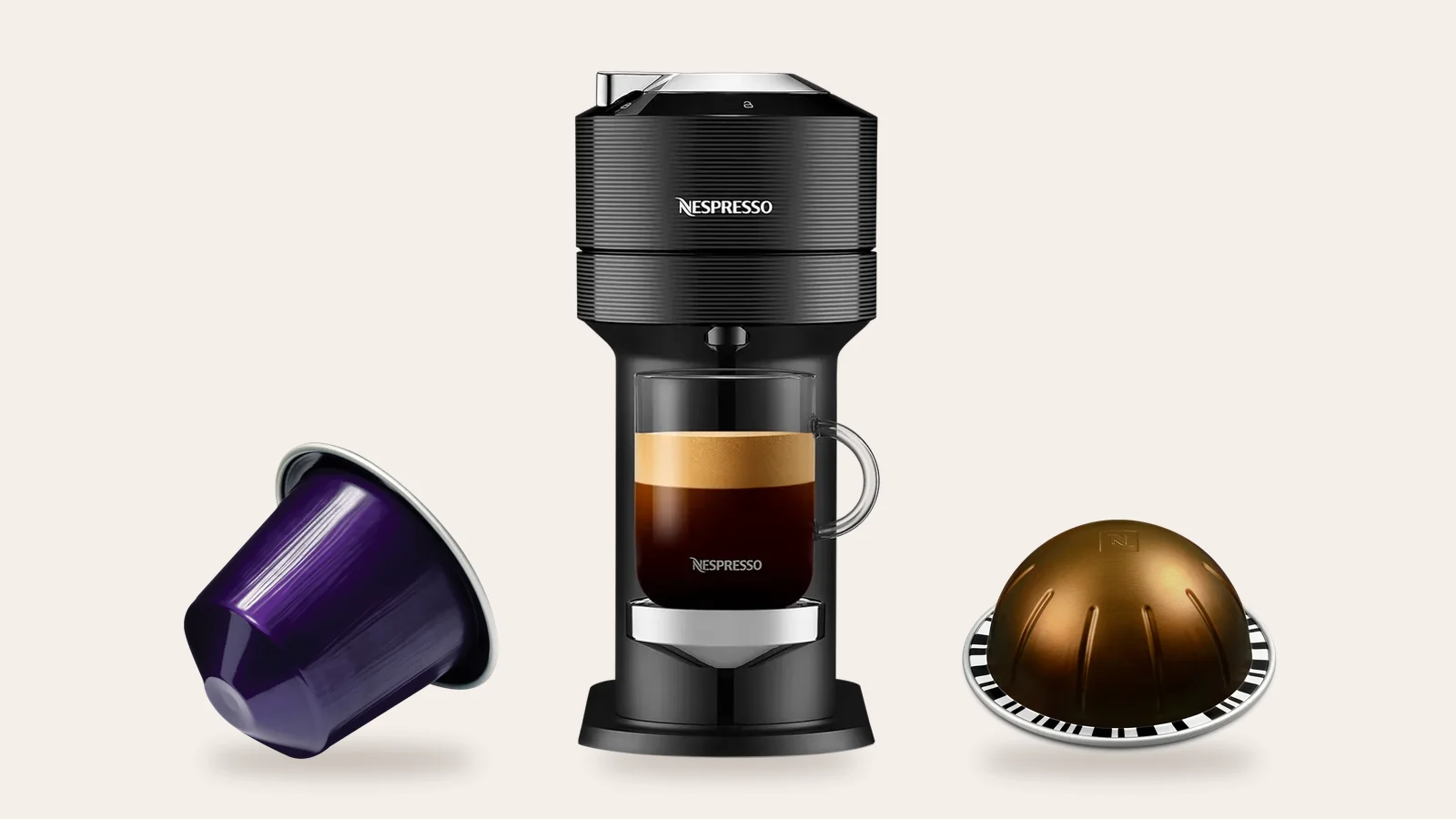
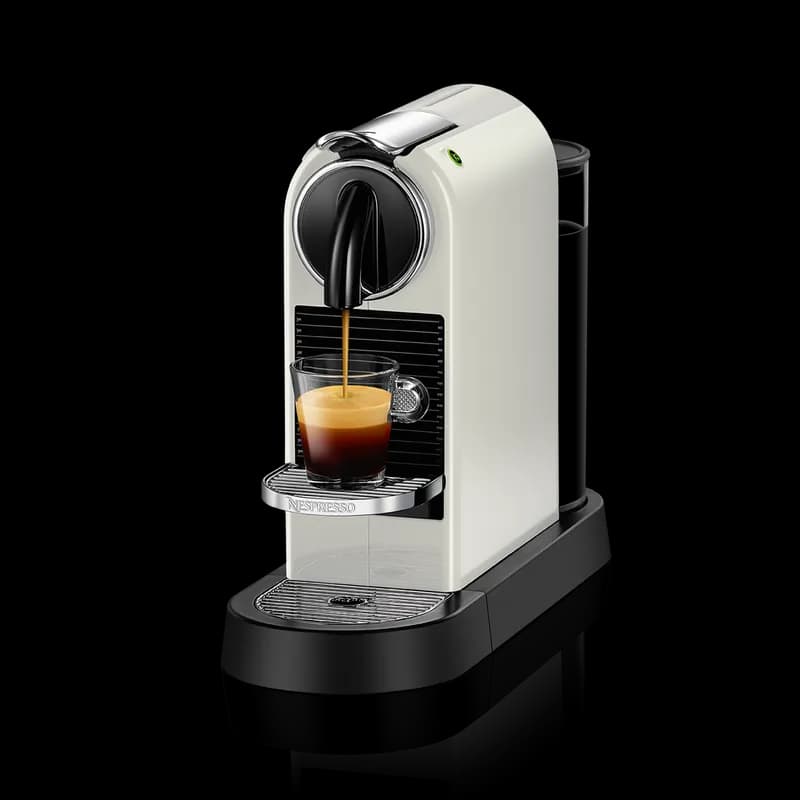
- Original suits small, controlled cups. Espresso and lungo sizes of 40–110 mL (1.35–110 ml) keep each cup in the 60–90 mg band, and Original has the widest choice of decaf. A compact model such as the Essenza Mini is the simplest way in.
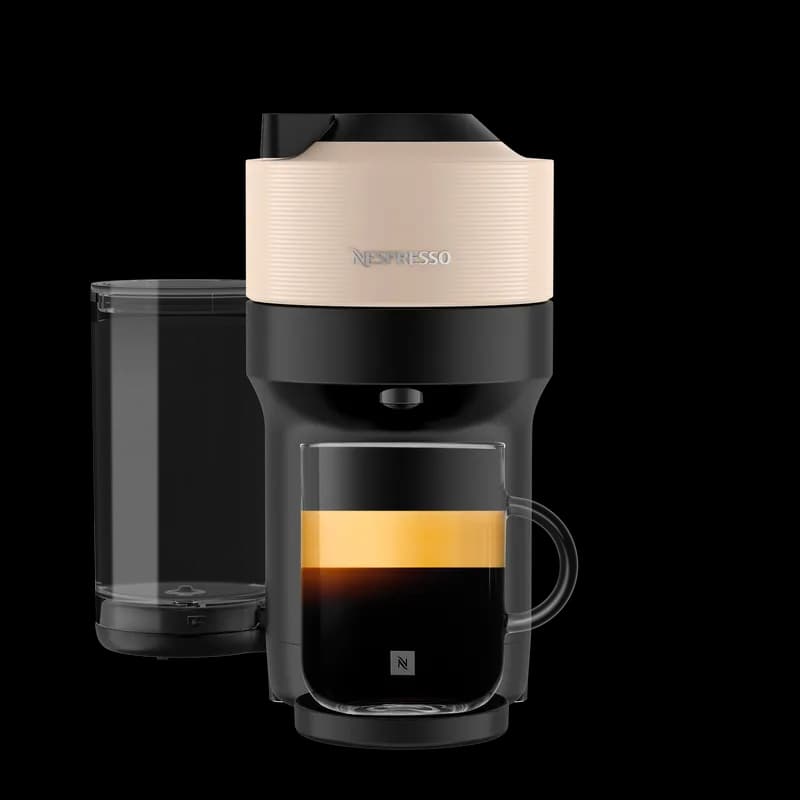
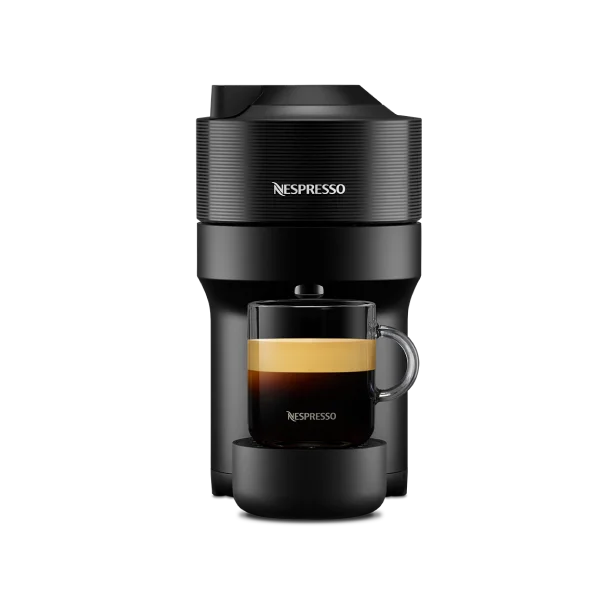
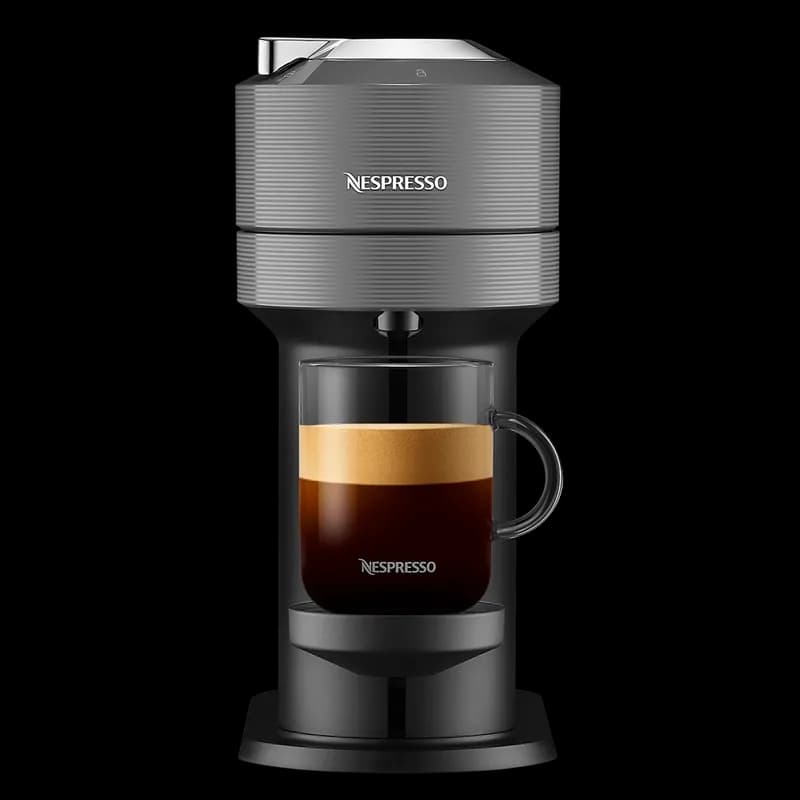
- Vertuo suits people who want a full mug. That convenience is also its risk: one Mug or Alto pod is 170–200 mg. If you go Vertuo, keep Espresso and Gran Lungo pods or decaf in the drawer for later in the day. The Vertuo Pop+ is the entry model most people compare against the Essenza Mini; our Vertuo Pop vs Essenza Mini comparison covers that choice.
- Built-in milk systems make lattes easy, which cuts both ways. If you want milk drinks, choose a machine you will clean, and decide on the milk before the machine; our milk guide compares dairy, oat and almond.
- Hygiene beats any capsule choice. Change the tank water daily, run a water-only rinse after milk drinks and descale on schedule; our step-by-step descaling guide covers both systems.
Still deciding between the two systems? Our Original vs Vertuo guide compares cup sizes and running costs, and the machine finder matches a model to how much and what you actually drink in about 30 seconds.
Is Nespresso healthier than Dolce Gusto or Tassimo?
No study compares the health effects of Nespresso with Dolce Gusto or Tassimo, so nobody can honestly call one of them healthier. All three are pod coffee, and the same three things decide the result: how much caffeine each cup carries, how many cups you drink and what goes in with the coffee. Dolce Gusto and Tassimo both sell sweetened milk and hot-chocolate pods, and those add sugar and calories that a black Nespresso espresso does not.
The pods are built differently. Nespresso's Original and Vertuo capsules are aluminium with a lacquer inside, and both Nespresso and Dolce Gusto pods can go into the Podback recycling scheme (Nestlé UK). If you are choosing between systems, choose by the drink you want: small espressos, large mugs or milk drinks. The machine finder matches a machine to that in about 30 seconds.
Is Nespresso bad for the environment? B Corp, recycling and carbon claims
Nespresso was certified as a B Corp in April 2022 with a score of 84, just over the minimum of 80. Several coffee roasters that are B Corps themselves publicly objected, arguing that a Nestlé brand selling single-use aluminium capsules should not qualify (Daily Coffee News). The company's 2025 report quotes a higher score of 105.4, but that number is not among the figures checked by its auditor, and B Lab is moving companies to a new standard at their next recertification, so read the score as self-reported.
Recycling: Nespresso says that 96% of its customers have access to a capsule recycling option, but its own 2025 report puts the actual collection rate at about 33%, and it lowered its 2030 target from 60% to 50% (Nespresso TPC 2025). In the UK you can return aluminium capsules through Nespresso's free recycling options, which include collection with a delivery, drop-off points and, in some council areas, the shared Podback kerbside scheme. Check your postcode before relying on the kerbside option.
Aluminium sourcing: Nespresso was the first coffee company certified against the Aluminium Stewardship Initiative performance standard, in 2019 (ASI). It says Original capsules contain at least 80% recycled aluminium and most Vertuo capsules 85%; those percentages are company figures, not audited ones.
Carbon: Nespresso declared every cup "carbon neutral" in 2022. Nestlé dropped carbon-neutral claims across its brands in 2023 after moving away from offsets (Just Food), and a French consumer group's greenwashing case over claims such as "100% carbon neutral" was ruled admissible in March 2024. By Nespresso's own figures, net emissions in 2025 were only about 3% below 2018. None of this changes what is in your cup, but it is the honest picture behind the green packaging.
Claims from Reddit and social media vs what the evidence says
"Aluminium pods give you Alzheimer's"
- What the evidence says
- Not supported. Capsules are lacquered inside, measured aluminium is the lowest of five brewing methods, and EFSA does not treat dietary aluminium as an Alzheimer's risk.
"Pods are full of microplastics"
- What the evidence says
- Nespresso's own pods are aluminium. One study found 7–17 particles per cup, linked to machine age and plastic tanks, not the pod.
"Capsule coffee raises cholesterol like French press"
- What the evidence says
- Exaggerated. Capsule coffee has far less cafestol than French press or boiled coffee, though more than paper-filtered.
"Capsule coffee has more furan"
- What the evidence says
- True per millilitre in one 2011 study. Smaller cups and letting it cool for a few minutes reduce exposure.
"Coffee causes cancer (the Prop 65 warning)"
- What the evidence says
- California exempted coffee in 2019; the WHO's cancer agency places coffee in its lowest-concern group.
"A Vertuo pod is just one coffee"
- What the evidence says
- A Mug pod is 170–200 mg, about half of a 400 mg day. Count Vertuo cups by caffeine, not by number.
"Nespresso is carbon neutral"
- What the evidence says
- Nestlé dropped the claim in 2023.
Questions people ask
Is Nespresso healthy?
For most adults, Nespresso coffee is as healthy as any other black coffee: moderate drinking of two to four cups a day is linked to lower risk of several diseases in the large studies, and a black espresso has almost no calories. Coffee is not a health food, though. Keep to the caffeine limit, watch the size of Vertuo cups, and remember that syrups, sugar and large milk drinks change the picture more than the capsule does.
Is Nespresso healthier than regular coffee?
It is roughly the same drink. Capsule coffee has less cholesterol-raising cafestol than French press but a little more than paper-filtered coffee, and more furan per millilitre in one study. Cup size and what you add matter more than the brewing method.
Are Nespresso pods toxic?
No. Nespresso pods are aluminium with a food-grade lacquer inside, and the coffee does not touch bare metal. The aluminium measured in capsule coffee was the lowest of five brewing methods, and no safety authority treats Nespresso capsules as toxic. The real limits are the ordinary ones for coffee: caffeine per day and how hot you drink it.
Is Nespresso healthier than instant coffee?
In some ways yes, in others no. Instant coffee carries more acrylamide: the EU benchmark level is 850 µg/kg for instant coffee against 400 µg/kg for roasted coffee (EU regulation 2017/2158). Capsule coffee had more furan per millilitre in the 2011 Barcelona study (117–244 ng/mL against 12–35 for instant). Both are coffee with the same caffeine logic, so the difference matters far less than how many cups you drink and what you add.
Is Nespresso healthier than Dolce Gusto?
No study says so either way. Both are pod coffee; caffeine per cup and sugary milk or chocolate pods make more difference than the brand.
Is Nespresso coffee filtered?
Not in the paper-filter sense. Nespresso brews espresso-style under pressure, and its own figure of about 0.75 mg of cafestol per Original cup sits between paper-filtered coffee and espresso (Nespresso). That is far below French press or boiled coffee.
Are Nespresso pods gluten-free?
Yes. Nespresso says its capsules do not contain common food allergens, including gluten, dairy, nuts, soy and eggs. Flavoured blends get their taste from named food sources such as vanilla or cocoa, so check the sleeve if you have a specific allergy (Nespresso).
Are Nespresso pods recyclable?
Yes, the aluminium is recyclable, but not loose in your normal recycling bin. Use Podback kerbside collection where your council offers it, a Podback drop-off point or a Nespresso Boutique (Nespresso UK).
How many Nespresso pods a day is too many?
For a healthy adult, EFSA's 400 mg is about four to six Original cups or two Vertuo Mug cups. In pregnancy the NHS advises under 200 mg, about two Original cups or one Vertuo Mug.
Do Nespresso pods contain aluminium that gets into the coffee?
The capsules are aluminium with a food-grade lacquer on the inside, so the coffee does not touch bare metal. An independent 2020 study measured less aluminium in capsule coffee than in coffee from four other brewing methods.
Is Nespresso decaf healthy, and is it really caffeine-free?
Nespresso decaf contains less than 0.1% caffeine, a few milligrams per cup, so it is very low but not zero. It is a good choice in pregnancy, at night or for anyone sensitive to caffeine.
Is Vertuo or Original better for your health?
Neither pod is healthier as such. Original makes smaller cups with 60–90 mg of caffeine and has more decaf options, which makes intake easier to control. Vertuo's Mug and Carafe sizes make it easy to drink more caffeine than you realise.
Is Nespresso safe during pregnancy?
Yes, within the 200 mg a day limit from all sources: about two Original cups or one Vertuo Mug. Decaf adds almost nothing.
Is there a quick way to choose the right Nespresso machine?
Yes. WhichCapsule's free Find My Machine quiz asks seven questions about your drinks, milk, counter space and budget, then ranks the Essenza Mini, the Vertuo Pop+ and the other Original and Vertuo machines with the reason for each match. Take the quiz.
Sources
- Nespresso caffeine figures: Nespresso customer FAQ
- Caffeine limits: FDA, EFSA summary (EUFIC), Health Canada, NHS
- Aluminium: Nespresso lacquer FAQ, BfR, Windisch et al. 2020, EFSA
- Microplastics: Al-Mansoori et al. 2025, FDA
- Cafestol: Urgert et al., brewing-method comparison, capsule study, Nespresso cafestol FAQ
- Furan and acrylamide: Barcelona study via ScienceDaily, ZHAW cooling study, EFSA, IARC, FDA, OEHHA Prop 65, EU acrylamide benchmarks, ANSES 2014 capsule study
- Allergens and mold: Nespresso allergen FAQ, Nespresso FAQ on mold in used capsules
- Recycling in the UK: Nespresso UK, Podback launch (Nestlé UK)
- Health outcomes: BMJ 2017 umbrella review, UK Biobank, CRAVE trial, Harvard Chan School
- B Corp, recycling and carbon: Nespresso TPC report 2025, Daily Coffee News, ASI, Just Food
This guide is general information, not medical advice. If you have a heart condition, are pregnant or take regular medication, ask your GP or pharmacist what amount of caffeine is right for you.
For UK readers
UK packs list cup sizes in millilitres. Amazon may open your local store, where the range, pack size or seller can differ. Original-compatible capsules from brands such as L'OR and Starbucks by Nespresso are sold in the big supermarkets. Used aluminium capsules can be recycled through Nespresso's UK service or Podback where your council takes part.
 vs

 vs